Going to the Opera With Grandma: ‘Count Ory’

Quentin Tarantino coined the term “hang-out movie” to describe good-natured films that are in no particular hurry to get the plot in motion. The plot is actually rather superfluous to the real action—luxuriating in the company of the characters, watching them interact with one another and cohere as a unit. The term has two meanings: the characters are hanging out with each other, sure, but the most important aspect of this genre is that the viewer is hanging out with them as well.

The Wicked Adventures of Count Ory is a hang-out opera. It’s filled with fun characters—the drunken, amiably self-pitying Tutor (that’s his job, his name is not mentioned), amorous page Isolier, deceptively innocent Countess Adele and, of course, Count Ory himself, whose adventures often drift beyond the confines of gentle decency. There’s a lot to like about Count Ory. The sets are endearingly unrealistic—the opera seems to take place in a kind of cartoon wonderland; I was reminded of Adventure Time more than once. The music, by Gioachino Rossini, is absolutely gorgeous. The costumes are… well, there’s plenty more about that later.

What I enjoyed most of all was the show’s freewheeling buoyancy. The word that kept sticking in my brain throughout was breezy. I wonder if that’s why it’s such a rarely-produced opera. Do opera fans demand a certain amount of austerity in each show? Because Count Ory isn’t austere at all. I went to the show with Seattle’s foremost opera fan girl—the one known as Evelyn Troughton, AKA my beloved grandmother. She was just as enamored with the frivolity as I was, but she found the plot (or lack thereof) a bit tricky. You’ll get the general idea pretty much right off the bat in the following interview.

(PS: My good friend and frequent plus-one Sarah Coyle also participated in our discussion. She adds a few things during the interview. Oh, and also Seattle Opera dramaturge Jonathan Dean came by at one point. It was our own little hang-out movie!)

Intermission

Repeat what you were saying about… you were saying you didn’t have a clue what was going on?

No! I’ve read about it and I knew it was funny. I did not get to see the dress rehearsals that I usually do, but things happen. So, I’ve heard that it was so funny and the sets were so different and I agree with them, it’s wonderful, it’s different it’s humorous, and I have an idea about what it is, but…

Well, you didn’t get to see the rehearsals a dozen times.

No, I didn’t! I wasn’t able to make it. 

Jonathan Dean: So this is actually very exciting. An opera that your grandmother has never seen!

This is the first time that I’ve heard her say that.

What’s more, I’d never heard of it until they announced it! But I did get to go and find out a little bit about it, but what I read didn’t clarify it for me. [Laughs] But the sets are actually fabulous. Everything throughout is funny. It’s so clever and the costumes are wonderful and extravagant and stupid and…

Yeah, Count Ory is wearing these ridiculous leopard print boots. And then there was that… thing… that they all wore.

The what?

He had like a horn or a sheath or something in his crotch area.

Oh, right, THAT! [Laughs] He probably needed it to protect himself! Somebody was going to go after him and get him where it was really important. It’s just that, I’m so confused. It hits you with so much. It’s different.

[Count Ory] is on the lam in the way that only randy noblemen can be. The Countess is kind of heartsick for her brother, who’s off fighting in the crusades. And everyone wants to have sex with her, but she’s like “I could never,” so she cloisters herself off in the castle.

It brings me back to a story. A play that I saw, thirty some years ago, when I was single and dating. And he was a retired doctor and…

Is this going to be admissible in the interview?

Well, it’s what this reminds me of! You can wipe it out if you want.

We’ll see how good the story is.

Okay. He took me to this play that the UW drama class did. I can’t remember what play it was. But the men were off to the crusades and the women were so unhappy that they were gone so much that when they finally came home, unless they promised not to go again, they were not going to be welcome in the house for anything. So the men were all distraught…

That’s based on a Greek thing, isn’t it?

Yeah, it wasn’t the Crusades, it was a Greek play!

So it was the Greek one. That’s a classic.

Yes. And the costumes they had, all of the men’s extremities were greatly exaggerated and I was terribly embarrassed. It was rather blunt. But this reminds me of that. Here he is, Count Ory and he’s lusting after this woman and the other men are all gone.

Maybe he’s running from fighting in the Crusades, because he would seem to be of age, whereas his page is too young to go to war. That would explain why he’s a full-fledged man and he’s not in the war.

Sarah: He’s a draft dodger!

Grandma: Maybe you’re right! I’m coming again Wednesday night and maybe I’ll understand it more. But it doesn’t matter right now whether it makes sense to me; it’s just funny. It entertained me!
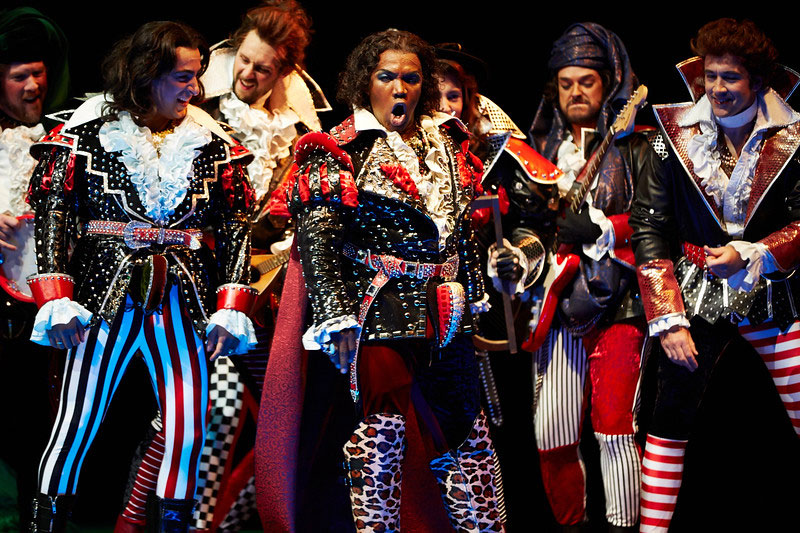
Count Ory - Seattle Opera
Cast of Count Ory

It is funny! It reminds me a lot of Pepe Le Pew. Do you know about him? From Looney Tunes?

Oh-oh-oh! The skunk!

And they’re both French, so it works out.

Yes! [Laughs]. I think this was before Pepe’s time.

Maybe Pepe comes from this, though, because he’s a lot more harmless than Don Giovanni, who kills at least one person. Count Ory is like a cartoon—always jumping into the bed and coming down from clouds. I think I saw Pepe Le Pew do that once.

You see, I don’t remember that. I would never have dreamed of sets like this. I know they’re doing a lot more with projections nowadays. Just like in the comics, the clouds were like thought bubbles when they projected the libretto above the singers.

It’s really cartoonish!

I think they intended it that way, now that I think about it. But this is like attending an opera for the first time.

You are literally attending this opera for the first time!

After the Show

I’m still not quite sure what’s going on.

I don’t think there’s much to it, really. But go on.

Well, I couldn’t figure out… the Countess is talking about her brother, and then the Duke is coming, that’s Ory’s father. Now. Which army is it? She’s talking about her brother coming home. The rest of the ladies are all waiting for their husbands. What’s the Duke doing there?

I think he’s home because he’s probably elderly, and he’s just sort of in charge of everything. When the soldiers come back he knows about it first.

If the Duke is Ory’s father, what does the Countess have to do with it?

I think she’s just from some separate family. The whole point of that character is that she’s available. She’s the only woman who isn’t married. She’s pining for her brother instead. So she’s fair game, romantically.

It’s so confusing in my mind about who belongs to whom. But it’s funny. [Laughs] And it’s really clever. The clouds, the sets, the way that they moved everything around. I wouldn’t call it minimalistic.

It felt to me like the set from a really sophisticated children’s play, because it was really simple but at the same time, huge and with lots of moving parts.

And the costumes—bizarre! To say the least! Bordering on gaudy. I don’t know how they come up with ideas to do all of this. I think that they all work together, the general director works with the director and the designers and they talk it all over. The scenery and costumes were built by Seattle Opera; this was a brand new production.

That’s really impressive. The costumes were bonkers.

Those seamstresses down there are something.

Sarah: The boots. I just kept staring at those boots.

Grandma: I’ve been a super in an opera. Three times. It’s like being an extra in a movie. You don’t say a word; you’re just there. And the first time I went in, they measured me for a costume. All different measurements. And then they built the costume, and I went in for a fitting and it fit perfectly! Just from measurements! Those seamstresses are something else again! That boggled my mind, because you know I sew. But back to the opera. I just don’t know what to say about it, it’s just so absolutely… different.

I thought it was the lightest opera that I’ve seen. None of it was heavy. Ariadne auf Naxos was funny in the first half, less so in the second. Marriage of Figaro had those moments with the Countess where she was sad about her marriage, but there was nothing heavy about this one at all. It was pure fun. What did you think of the scene where everyone was getting drunk?

Hilarious. [Laughs] Hilarious. I’m gonna have to go home to my book, I’ve got a book about operas, and see what it says about it. This is definitely one of the operas that are seldom done, so I need to know more. This music was really nice. I was concentrating tonight so much on the action that I didn’t have a chance to listen to the music that much. So that’s what I’m gonna do when I go next Wednesday. I usually need a couple viewings, especially with something as different as this was.

So this was new for you for a whole lot of reasons.

Never heard of it. And it’s never been done in Seattle, and I’ve never been anywhere else to see it because nobody else has ever done it, to my knowledge. And not having seen a dress rehearsal to familiarize myself with it. It was kind of overwhelming. Opera is not like anything else. It’s opera.
15 Reasons to Get Excited About Seattle Opera’s 2016–17 Season

Once you develop a taste for opera, each new show becomes exciting in its own way. The Seattle Opera has an uncanny knack for putting together satisfyingly diverse seasons. “One of the ideas is to make sure season subscribers don’t get too much of the same thing,” explains Jonathan Dean, the Opera’s in-house dramaturge.“There’s a lot of different operas we could choose from—four centuries of opera history in a bajillion different countries, so to give them a good smattering within only a five opera season is a fun challenge.”

I sat down with Dean in a coffee house in South Lake Union to pick his brain about the upcoming shows. I tried my best to cut this down to a reasonable length but it’s not easy, as Dean knows pretty much everything about opera’s past, present and future (well, maybe not future) and pretty much everything he says is fascinating to a newly-minted opera enthusiast like myself. To avoid this article becoming an e-book, I weeded out the best stuff, trying to stick to three factoids per show. These are the reasons I absolutely cannot wait for August.

The Wicked Adventures of Count Ory

(Gioachino Rossini. August 6–20)

It’s the first time the show has been done by Seattle Opera.
“[Ory has] never even been done in Seattle, as far as I know. It’s not an opera that gets done a huge amount in the US. Many will be watching it for the very first time.”

It’s Looney Tunes.
Rossini is most famous for composing The Barber of Seville, which itself is famous because of the classic Bugs Bunny short “Rabbit of Seville.” If you think the animated treatment is a misappropriation of the source material, you’d be wrong. “’Rabbit of Seville’ is a great production of Barber of Seville,” says Dean. “It’s exactly what every stage production tries to be, though it’s hard for a live action opera to be as nuts as Chuck Jones.” Ory is in the same manic Rossini tradition.

It’s also Pythonesque.
For this brand-new production, director Lindy Hume and designer Dan Potra had a very specific inspiration: “Their idea was, ‘Let’s do this à la Monty Python and the Holy Grail,’” Dean explains, “1970’s medieval, where the knights look like glam rockers—kind of campily historical. Certainly it has nothing to do with any actual history on planet earth at all.”

If you’re like two-years-ago me and you generally associate operas with tragedy and seriousness, trust me: they can be genuine gut busters. During last season’s Marriage of Figaro the entire row behind me was absolutely coming unglued. And Count Ory might be the funniest yet. “Rossini’s music is kind of like a laugh track before there were laugh tracks,” says Dean. “There’s a lightness to it that almost subliminally makes you want to smile.”

Hansel and Gretel

(Engelbert Humperdinck. Oct 15–30)

It’s not that Engelbert Humperdinck.
I’ll be honest with you. When I first saw the name of the composer of this opera, I thought for a few moments that the once-famous 1960s and ’70s British pop singer also had a side career as an opera composer. This both intrigued and worried me, as I am not exactly a fan of the crooner’s work. Fortunately, there was also an opera composer (and Wagner acolyte) who went by the same name, and he did it nearly 100 years earlier. As Dean puts it, “As far as I know, that guy got his name from this guy. Mostly because he thought it was a great name.”

It was a VERY influential opera.
“My personal theory,” says Dean, “is that Walt Disney had this in mind completely when he made Snow White.” Hansel and Gretel wasn’t one of those masterpieces that bombed originally and gradually gained respect. It was a smash hit right out of the gate when it premiered in Germany in 1893 and eventually became a Christmastime family tradition (think The Nutcracker). It was particularly ubiquitous in the 1920s and ’30s, when Disney was working on his own signature hit. Many of the stylistic choices Disney made were similar to the Depression-era productions of the Humperdinck opera. “This is the link between the 19th century use of Grimm’s fairy tales and Disney,” Dean explains. “Which eventually leads us to Frozen.” 

This production is extremely unique.
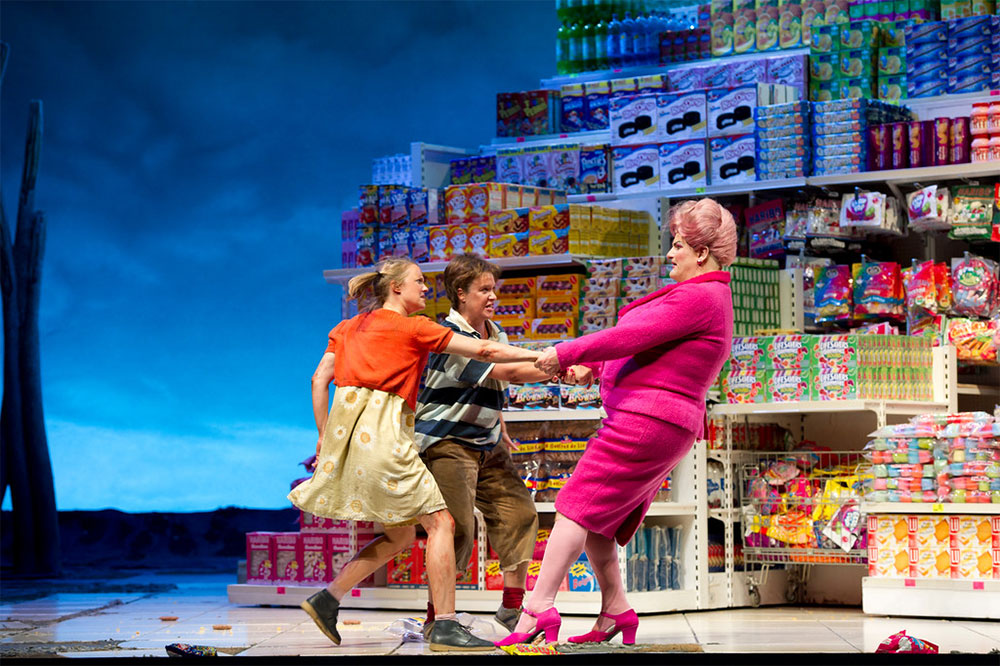
While the original Hansel hewed fairly close to the disturbing breadcrumbs and child abandonment story you heard so often when you were a kid, SO’s show comes at the material from a contemporary angle. Hansel, Gretel, and their parents live in a cardboard box below an overpass.Instead of a gingerbread house, much of the action takes place in a bright, corporate grocery store. Instead of a witch, the antagonist is a demented cashier, played by a character tenor. There’s also a mezzo-soprano in a trouser role as Hansel, demonstrating opera’s charming and practical approximation of gender fluidity. And that’s to say nothing of the eye-popping sets. This is probably the opera that I’m most excited to see. But then again…

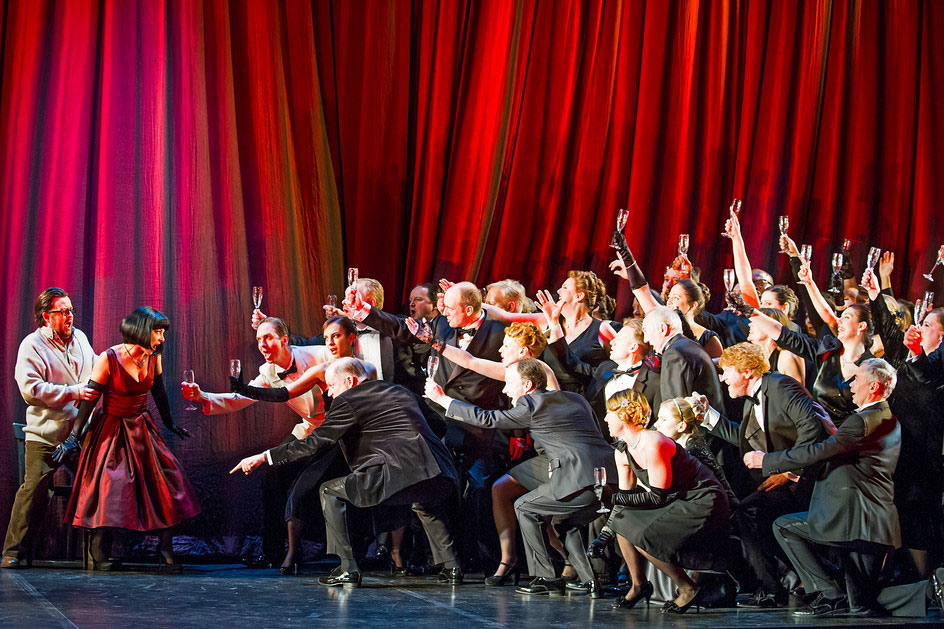
La Traviata - Seattle Opera

La Traviata

(Giuseppe Verdi. January 14–28)

This is like the Casablanca of operas.
By which I mean it’s really popular. I wish I had a better contemporary movie to compare it to, but Star Wars isn’t quite appropriate for a tragic romance. And I don’t like Titanic, so that’s off the table. Dean tells me that it’s “probably one of the top five” most-performed operas in the world, which is pretty impressive considering people have been making operas since Shakespeare was still alive. I’ve been listening to La Traviata a lot lately, and trust me: you’ve heard much of it before. It’s like Carmen and Barber of Seville: a single source for a surprisingly large amount of the world’s famous classical music.

It blew people’s minds when it premiered. And not in a good way.
You remember a little while back how we discussed masterpieces that bombed originally? La Traviata is one of the most famous examples of this. “People were not ready for it,” says Dean. Verdi presents a “fallen woman”—that’s what Traviata means—a high class prostitute, in a sympathetic manner that audiences would not have approved of in 19th century Europe, despite the fact that most of the upper class men likely had paid mistresses. “At the time there were a lot of people who were really uncomfortable with being asked to consider her as good a person as anybody else, because that was how that society was structured.” Essentially, audiences got all huffy about it because it held up a mirror. “They were expecting a medieval chivalry thing or a bible story or an old myth. And they got this contemporary thing about their own hypocritical mores.”

Many elements of La Traviata might seem oddly familiar…
I’m not going to play coy: this is almost the same plot as Pretty Woman, though my suspicion is that Verdi did it first. I haven’t seen Pretty Woman in a long time and I plan to keep it that way, but Dean assures me that there are plenty of nods within the film to its classical inspiration. Richard Gere even takes Julia Roberts to see La Traviata at one point. They’re pretty blatant about it.

But the show might be familiar to people for more reasons than popular culture. “I doubt you’d haveto look very far today to find the kind of environment where these old-fashioned double standards still play,” says Dean. “I’m kind of hoping that the production is just enough to go for our own jugulars.”

Katya Kabanova

(Leoš Janáček. February 25–11)

It’s not often you get to see an opera in Czech.
It’s exceedingly rare that you’ll see a Czech opera, period. The last time Seattle Opera did one was Dvořák’s Rusalka (aka The Little Mermaid), which was performed in 2001. As we all well know, the primary languages opera singers are trained in are French, German and Italian, so often singers have to do a little extra training to get the words right. “And even then, if you bring your Czech friends to hear it, they can be like ‘Oh, come on.’ It’s difficult to get it to sound exactly right unless it’s your mother tongue.”

Janáček is like the edgy indie band of opera.
He’s definitely not the most famous composer around, but those who actually know their opera swear by him. For example: “My boss, Aidan, thinks that Janáček’s operas are the best choices for today’s first-time opera-goers,” says Dean. And I figure Aidan Lang probably knows a thing or two about the subject.

GO SEE IT! You might not get another chance for a while.
Opera companies don’t get many opportunities to perform the lesser-known pieces that just might win your heart. And while Janáček can be challenging, he can also be very rewarding. “The first time I saw it, it kind of changed my world around a bit,” says Dean. “It’s one of those things that you have to hunt out, but the taste for it is not hard to acquire.” Agreed. I’ve listened to the snippets provided on the Opera’s Soundcloud account (HIGHLY RECOMMENDED, by the way), and I’m already hooked.

The Magic Flute - Seattle Opera

Magic Flute

(Some guy named Mozart. May 6–20)

Jonathan Dean clearly knows how to speak my language.

Here are three things that he said when talking about Seattle Opera’s take on this Mozart classic:

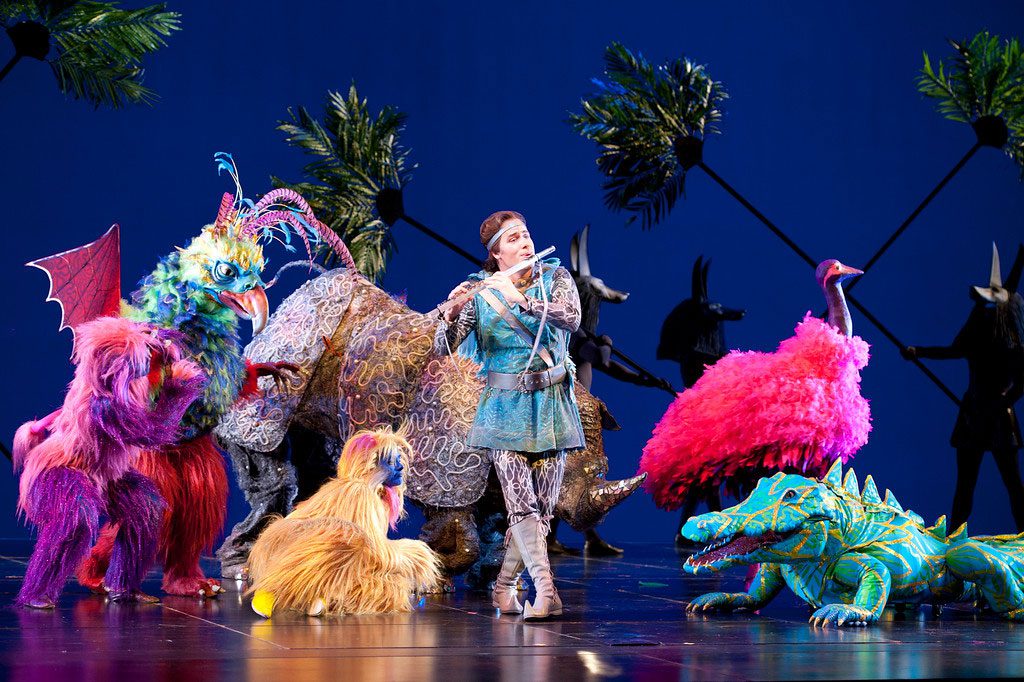
“They wanted it to be kind of like an Indiana Jones adventure.”
“It’s essentially a Miyazaki movie.”
“[Papageno] is basically Han Solo.”

And I have to wait nearly a year to see this thing? Not fair, Dean. Not fair at all.

This actually is the Star Wars of operas.
The comparison works perfectly here, and not just because Dean made that Han Solo reference. The Magic Flute was a colossal hit “from day one.” It’s a fun, flashy, easily relatable adventure with music that everyone can enjoy. It’s like a modern day box office blockbuster, but one of the good ones—The Avengers rather than Transformers 2. It’s one of the reasons that Mozart is still known as, well, Mozart today.

Here’s some more stuff that makes me really excited.
We want this to be a fun fantasy/adventure kind of story. [The designers] do this whole map thing where they project it on the stage and you see the line that traces their journey, like in Indiana Jones. They use a lot of lasers and there are all kinds of weird glowing triangles and smoke and stuff like that. We created this production of Magic Flute in 2011 and it was kind of pushing the edge of technology at the time. I wouldn’t be surprised if in the revival they use even more computers and projections.”

If that particular combination of words doesn’t get you really excited, then you and I are very different people.

‘Big Fish’ is Better as a Musical

I really, really hated the movie Big Fish. It’s not exactly accurate to describe it as a bad movie—Tim Burton is obviously a competent director and it had a decent cast and endearing production design. Then again, legitimately bad movies don’t usually elicit as strong a feeling as hatredfrom me. In fact, I often find bad movies to be quite a bit of fun (this does not apply to Divergent). No, it takes a certain degree of skill to make a movie truly worthy of contempt. I saw it at the Guild 45th in 2003, right after watching Errol Morris’s outstanding documentary The Fog of War. Apparently this was at a point in my life when I had time to watch two movies in a row in one day. That must’ve been nice.

I’ve often wondered if The Fog of War tainted my reaction to Big Fish. An account of the controversial career of former Secretary of Defense Robert McNamara, it deals with real-life death on a massive scale, from the fire bombings of Japan in WWII to the pointless carnage of Vietnam. Maybe after that bracing blast of reality, I was in no mood for “charming” cornpone storytellin’ and drippy family uplift. I don’t think I can blame my reaction on Errol Morris, though. Big Fish earned my enmity fair and square. If you haven’t seen it before, it’s about a young man coming to grips with his dying father, whom he feels like he never really knew due to the old man’s tendency to lace his life’s story with tall tales and cheesy jokes. Here were my two main complaints:

WHY WOULD A GUY HATE HIS DAD FOR TELLING STORIES? 

The central conflict is deeply bizarre to me. The son, Will Bloom (Billy Crudup), is so mad about his dad telling goofy stories. He’s presented as an inherently serious man, a just-the-facts secular realist, and he just wants to know the truth behind his dad’s literally unbelievable yarns about witches, giants and mermaids—dad’s imagination is very early elementary school. Of course, by the end, he comes to learn that the fanciful tales were, like, totally true, from a certain point of view. This felt like an uneven, and therefore not very compelling, conflict. The dad comes across as charming and fun; the son seems like a real prick being so annoyed by some colorful stories. Listening to Crudup’s complaints, I kept think-shouting at the screen: The man put a roof over your head, didn’t he? Loved you? Loved your mom? Didn’t hit you? Seems like you did pretty good overall, dad-wise, ya big ingrate!

This movie is CRAZY manipulative.

Look, nobody enjoys a good cry at a movie more than I do. But the movie has to earn that cry in order for it to really matter. There is a whole bag of tricks cynical filmmakers can employ that can easily draw tears out of my face—swelling music, death of a character, well-chosen words, etc. Hell, I once teared up watching an insurance commercial. The point is, it’s not hard to do. And it really shouldn’t be done unless you actually have a story that makes an emotional connection. If you don’t, then all you’re doing is jerking the viewer around. Big Fish was the ultimate emotional jerk around. I watched this whole movie, didn’t give a damn about the central conceit, didn’t identify with any of the characters, and by the end I was still face-leaking like I’d lost a beloved pet. It made me mad. I felt like I’d been conned.

I went to the Taproot Theater production of Big Fish this weekend understandably guarded, but I had a totally different reaction. Well, I still blasted tears at the end, but this time they were justified. It turns out I’ve got no inherent problem with stories about wacky southern storytellers who are dying and the sons that are frustrated by them. I just didn’t like Tim Burton’s take. There were a few crucial differences that turned a movie I hated into a show that I adored.

Tyler Todd Kimmel is much more likable than Billy Crudup

Nothing against Crudup, whose work I usually enjoy. His take on the Will Bloom character was just too much of a fusty prig to identify with. Kimmel and the writers did a much better job isolating the source of his frustration, which makes his arguments against his father much sturdier. Chris Ensweiler also finds some darkness in the Edward Bloom character—the underlying pride and selfishness of an otherwise delightful extrovert. Albert Finney played the elder Bloom in the film as a bit too cute and doddery to ever side against. By putting the main characters on equal footing, the central conflict was no longer boringly uneven.

It’s a musical!

Big Fish is a tall tale about tall tales. Sure, Edward Bloom’s stories aren’t meant to be taken as literal—mermaids don’t actually exist in this world—but there’s a fanciful quaintness to the arc of his life that doesn’t benefit from the realism of a dramatic film. In Big Fish he musical, the world itself isn’t remotely realistic, so the story resonates more. Everybody’s singing and dancing, there are fish flying around and guys on stilts walking up and down the aisle. It’s an extravaganza with big moments, big performances and big themes. That kind of environment is a much better fit for this weird and heartfelt story about the power of stories.

People are actually crying ten feet away from you.

This is a story about family, birth and death. There’s no way it’s not going to be a tearjerker. What bothered me about the movie was that the director didn’t trust me to find the feelings on my own, so he poured on the corn with a big old corn ladle. In the musical, however, you’re dealing with actual people that you can reach out and touch, weeping and weeping hard. (Kudos to Kimmel and Chelsea LeValley for digging pretty deep.) I don’t know if you’re the same way, but it’s pretty hard to not get moist in the face when people nearby are crying, even if those people are trained actors. Perhaps pheromones are involved. Everyone else in the Taproot last night seemed to be with me on this one, as a dewy chorus of sniffles broke out in the final moments of the show.

At least they were honest sniffles. And Taproot’s Big Fish earned every one of them.

Experiencing ‘Paint Your Wagon’ for the First Time

All of the cinematic musicals that I’ve watched for this column so far were huge hits. World-beaters featuring famous songs, iconic performances and indelible set pieces. Think of “Do Re Mi” from The Sound of Music, “Summer Days” from Grease or virtually anything that Patrick Swayze says or does in Dirty Dancing. This time, however, it’s different.

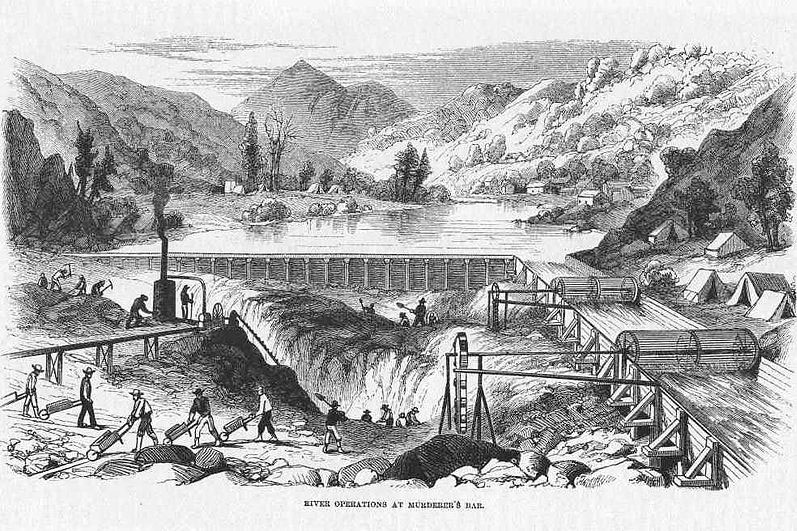
This time, in honor of the current show at 5th Avenue Theater, I watched one of the most notorious cinematic bombs of all time, a movie most widely known today from a minute-long Simpsons parody sketch. That’s a hell of a thing for a nearly three-hour movie starring two of the biggest tough-guy actors of all time that cost 20 million dollars in 1969 (roughly 56 billion in adjusted dollars). That’s a hell of a thing for a movie that’s actually pretty good.

Well, almost pretty good.

Paint Your Wagon is no masterpiece, but like fellow notorious bombs Heaven’s GateIshtar and New York, New York, it’s far more enjoyable than its reputation—and people are slowly but surely coming around to it, nearly 50 years after it detonated at the box office. Sure, Paint Your Wagon is unquestionably bizarre and ridiculous, but it’s full of jokes and ideas and it’s got a big heart. Heck, even a few of the songs are pretty good. Here’s what I learned watching a film that virtually none of you have seen before.

It definitely looks like it cost a trillion dollars.
This is one of those movies that just kept building and building in search of an answer. Much like the aforementioned Heaven’s Gate, it’s filled with wide panoramic shots packed with hundreds and hundreds of extras, horses, wagons and cabins. They built up the boomtown setting of No Name City from scratch, and when the producers felt like they were running out of steam, the answer always seemed to be “Pack more crap in the frame!” That works for me. I love big, overstuffed epics. They couldn’t use CGI to fill the frame at the time, either, so each cabin, each man, each horse, each water tower is a real thing with a substantial dollar value attached to it. Lots of dead movie jerks no doubt lost a fortune on this baby.

Lee Marvin wins the battle of singing western tough guys.
Clint Eastwood isn’t bad in the film, exactly. He’s just not suited for this kind of thing. I’ve always viewed Eastwood as fundamentally a movie star. Every squinty glance and every clenched jaw-whispered line is finely calibrated to milk just the right feeling of awe out of a viewer watching him in tight close up on the big screen. He’s celebrated for asking Sergio Leone to actually cut dialogue from his scenes when he played the Man With No Name. Eastwood, like John Wayne, had a remarkably savvy grasp of the power of his image on screen. He wasn’t, in other words, remotely theatrical. When he sings in Paint Your Wagon, it’s not exactly like he’s got a bad voice per se; it’s just that his energy is off. It’s clearly not in his wheelhouse.

Marvin, on the other hand, though famous for gunning people down on film, started out on Broadway and was completely at ease doing Eugene O’Neill plays. His portrayal of charismatic drunk Ben Rumson is broad, goofy and fun. His singing voice is arguably worse than Eastwood’s but his nearly spoken-word style of singing is rich and endearing. It also helps that he has the more entertaining role. Eastwood is playing a pretty standard issue romantic lead, while Marvin is a lovable, flailing, shifty-eyed boozehound. One of those is a hell of a lot more fun to watch than the other.

I’d basically watch anything with Lee Marvin and Clint Eastwood in it.
I love Clint Eastwood and Lee Marvin so much, I’m not sure if I can be fully objective about this movie. I just like watching those two guys walking around next to each other. Even when they’re both gleefully scheming to “steal” six women from a neighboring town, which is a pretty shitty thing to do when you think about it. On that note, I should probably address the genuine weirdness that is the temporary core of this film: the first half is largely about buying and stealing women. But, you know, in a funny way. That sounds bad, I know, but ends up being a better kind of weird than that.

It’s not quite as scummy as you might think.
At first, watching Paint Your Wagon reminded me of watching Carousel, a musical that had an oddly…understanding view of domestic abuse. “This is fully retrograde stuff,” I thought, as a scores of men ogled powerless women and eventually held an auction to purchase an unhappy wife from a polygamist Mormon trio that shows up one day in No Name Town. After Marvin purchases his new bride while blackout drunk, a priest marries them in the least romantic manner possible: “Dearly beloved, we have gathered here together to grant this man Ben Rumson exclusive title to this woman… and to all her mineral resources.” It’s satirical to a degree—in my notes, I wrote “calling this movie sexist is like calling Loony Tunes cartoonish”—but still, all the creepiness starts to get pretty creepy eventually.

Paint Your Wagon actually heads in a different direction than I was expecting. Eventually, the purchased wife, Elizabeth (played by Jean Seberg of Breathless), decides that she actually loves Eastwood. AND Marvin. She wants to be married to both of them. “You can’t have both of us!” Marvin argues. “Why not?” Seberg replies. The two friends can’t think of a single reason. “Hot damn!” shouts Eastwood, “I think it’s history-making!”

Didn’t see that one coming.

It’s a surprisingly progressive mentality for an old-fashioned Western musical. Mind you, this comes after Eastwood and Marvin’s unambiguously romantic (if not overtly sexual) relationship has been well established (Clint: “I never liked a man as much as I like you.”) Sadly, but inevitably, this festival of gleefully mixed polyamory doesn’t last forever.

It’s got that classical musical dichotomy.
A little bit past the halfway point, there’s an intermission. “Fucking INTERMISSION?” was how I put it in my notes, because I was in disbelief that a doofy, booze-soaked oater like Paint Your Wagon warranted the pretentious Ben-Hur treatment. Sadly, that preponderant musical interlude signals the point in which the movie stops being all that much fun. In the second half, puritanical Christians arrive in No Name City, and Eastwood and Seberg eventually come around to a more civilized way of living. There’s even an extended sequence where the whole sinful town literally collapses under the weight of its own lust and avarice.

It reminded me of many of the operas that I’ve seen, like Don Giovanni, where the first half is stacked with delightful sexual innuendo and partying, and in the second half the characters dutifully pay the price, as God predictably decrees.

Paint Your Wagon doesn’t entirely drink the Kool-Aid of righteousness; Marvin drifts off in the end relatively unscathed, ever the ribald drifter, not caring where he goes “as long as it’s 100 miles ahead of civilization.” The film clearly embraces hedonism and only halfheartedly comes around to the “light” in the end. But that doesn’t make the second half any less a buzzkill. When No Name Town’s citizens are no longer boozing and dancing and marrying whomever and however they please, it’s certainly intended as a metaphor for bland society taking hold of the Wild Wild West, but it’s also the death knell for what works about Paint Your Wagon. Fortunately, the film’s signature song, Marvin’s wonderful “Wan’drin’ Star” is in the second half, which helps ease the pain.

It’s too bad they don’t make disasters like this anymore.
I can understand why people thought this movie was such a turd when it came out. It’s a big, weird, sloppy mess. But it’s got an iconic Lee Marvin performance, Clint Eastwood trying his best, three or four solid ditties, and a classic epic scope PLUS it’s morally all over the map. It’s the kind of bomb that puts everything on the table and loses because it’s actually only got two pair. It’s far from boring—at least in the first half—and it’s got a wonderful sense of mischief and sleaze that you won’t find in most classic Hollywood musicals.

I can’t wait to see it on stage. I do, however, hope it’s less than three hours long. Not counting intermission.  

Going to the Opera With Grandma: ‘The Flying Dutchman’

In the nearly two years that I’ve been writing this column, I’m almost certain I’ve mentioned that my grandmother, Evelyn Troughton, is a big fan of the opera. You might even say it’s intrinsic to the column’s entire premise. But just in case I somehow forgot to mention this crucial detail, I’ll say it again: my grandma really likes opera. When a new show comes out, she might very well see it five or more times. It’s the same thing with me and Captain America movies. What I’m getting at is this: every time that I’ve taken in a show at Seattle Opera alongside my grandma, she’s already seen that production before, usually in dress rehearsal. She still loves seeing it again, of course, but she knows exactly what’s coming. She’s more interested in my reaction.

Until The Flying Dutchman. Due to circumstances never fully elucidated to me, Grams wasn’t able to see Seattle Opera’s production of Wagner’s classic maritime tragedy until we went to Wednesday’s show. She’s usually all “too cool for school” after we exit the auditorium. She’s already seen the sets and cosutumes, is familiar with the characters and the pacing, all of it. That was not the case last night. For the first time, I got to see her genuine post-show reaction, and it was something to behold. There are few things more charming than a fully energized, tiny octagenarian. I was afraid she was going to knock me across the room with her enthusasm. Okay, not really. 

Her reacton was understandable: Seattle Opera’s The Flying Dutchman is quite an experience. It’s a full two and half hours without an intermission, which can be something of a challenge for an auditorium filled with elderly folks and fat guys with nagging old football injuries (that would be me). But it’s worth it to let this bizarre story of doomed ocean romance hypnotize you with it’s ominous power. The company really outdid itself with the set: a spectacular giant box turned upward at a 15 degree angle, simulating the slant of a ship tossed by waves. The audience only sees this one set, so the lighting is crucial, and the designers and technicians nail it. Colors shift with the tone of the music and cast members make subtle changes to the surroundings while the show marches on. It’s gorgeous, dark, doom-soaked stuff that gradually builds to a powerful, nerve-jolting finale. Once again, I’m amazed at opera’s ability to tap directly into the viewer’s emotions. It washes over you like a giant, unstoppable wave, cresting in slow motion.

Grandma and I got together for burgers before the show, and then immediately after the curtain call. I’ve edited out the portions of our discussion where I try to explain to her the appeal of Facebook and Mystery Science Theater. I didn’t make any progress on either of those fronts, anyway. 

Before the show

GRANDMA: Okay, you know that there is no intermission today, so it’s two and a quarter hours straight through.

I’ve never seen an Opera without an intermission before! Does that go back all the way to when it was originally written?

That’s the way Wagner wrote it. Other companies, when they do it, they put an intermission in, but it was intended to have no intermission to break the intensity of it.

He didn’t want the audience to have a chance to catch its breath, essentially.

Evidently! [Laughs] I have not seen it. I did not see the dress rehearsals; life’s been too hectic these last two weeks. 

You haven’t seen this at all, basically?

Not this production. I’ve seen Flying Dutchman several times. This particular production, no. The first time I saw The Flying Dutchman was in Paris.

Wow. That’s not bad.

Well, I was very disappointed in it. 

I’m super excited about this show. First of all, it’s Wagner and that’s this theater’s specialty. And I’ve seen eight operas now and not one Wagner, so this is kind of special.

It is! And I don’t know a thing about it!

Well, I think it takes place on a boat…

No, it doesn’t. [Note: parts of it totally take place on a boat. So there.] There is a boat involved, because he’s a captain of a… you know basically the story, don’t you?

Umm…no.

You oughta know at least something about it! Okay, so the Flying Dutchman has been damned, so to speak, to sail the seas until he can find a woman who will give him true love. And every seven years he is able to land and find such a woman. So in this story, he’s come to port at the end of seven years and there’s a fella who has a daughter named Senta and she’s been enthralled with the story of the Flying Dutchman, so she’s in love with him to begin with. But she does have a boyfriend. His name is Erik. So that’s the basic story.

Okay, so the Flying Dutchman has been damned, so to speak, to sail the seas until he can find a woman who will give him true love. And every seven years he is able to land and find such a woman. So in this story, he’s come to port at the end of seven years and there’s a fella who has a daughter named Senta and she’s been enthralled with the story of the Flying Dutchman, so she’s in love with him to begin with. But she does have a boyfriend. His name is Erik. So that’s the basic story.

So it’s the story from Pirates of the Caribbean 2: Dead Man’s Chest.

Well, I’ve never seen that. 

I think there was something about seven years and finding a woman and a damned boat sort of thing. I suspect they got it from this. 

Well, I’m pretty sure, because Pirates of the Caribbean is newer than Wagner [Laughs].

Yeah, I think that’s right. 

So this is going to be a night of firsts for you. First opera without an intermission. First Wagner.

First opera with elements that I recognize from a Johnny Depp Disney movie…

After the Show

[Note: I missed some of her gushing statements while I was fumbling with my phone to start the recording.]

So you really liked it?

I thought it was fascinating! That set worked so beautifully! And that music! Well, of course I recognized every note, and I knew what was coming, the storm and then the peace. It’s all there in the music. Were you counting the motifs?

I think so… [Note: I was not]

The opening notes of the overture, every time you heard that, it was referring to the Dutchman, specifically. That’s called a motif, that’s a Wagner motif! It’s music associated with a character. 

A lot of film composers do that.

They learned from Wagner! [Laughs] Because they don’t have that in any other operas, but Wagner’s operas always have a motif. 

I say this every time, but these operas are all so different from each other. And once again, we’ve never seen anything like this before! Or at least, I haven’t.

I have never been so impressed with the Dutchman as I was with this one. The sets and the lighting matched every note of the music. And I can’t get over the women and how they stomped the beat so perfect, and the arm movements, and then the men banging their cups! Everything perfect, not one thing even a second off!

Did they do that in other versions of Dutchman? Is that written into the Wagner script?

I don’t know, I don’t remember any of the other versions of Dutchman anymore! This one was the best! That set with the slanted box!

The overture was really long and I felt like it helped build suspense, because after all that music in the darkness, they yank up the curtain really fast and you see that set and just gasp! 

Yes. One of the reviews that I read said that it was a box. And I think of a box as a square! That wasn’t a square, it was a rectangle! And it had character. It was all just so intense! 

Well, that’s what [my friend who accompanied us] Paige said the second it was over: “Whoa! That was so intense!”

I’ve been to other operas where there were moments that were intense. But this was intense all the way through! I’m just so impressed with this. Now I know what this woman I met in the store the other day meant when she said that she loved it. She said she’s not a Wagner fan, but she loved this. 

I can see why. I thought it was interesting that there were no applause breaks. They started it and then went to the very end without pausing for applause and I had no way to gauge how the audience was responding. But when the curtain came down, yeah, they were in to it. 

I thought that was wonderful, because sometimes people’s applause breaks into the music and it ruins the last few notes! [Laughs]

A New Throwback ‘Sherlock’ at the Rep

Do you know how hard it is to think up yet another think piece about Sherlock Holmes? He’s been hugely popular for over 125 years, now. Spanning three centuries. He holds the Guinness Record for the “Most Portrayed Literary Character in Film and TV,” blowing James Bond and Spiderman right out of the water. He’s even more popular now than he’s ever been, with the insanely popular Cumberbatch/Freeman BBC series still chugging alongside the less popular but still high profile Downey Jr./Law/Guy Ritchie film series AND an American TV show wherein Watson is his sober companion.

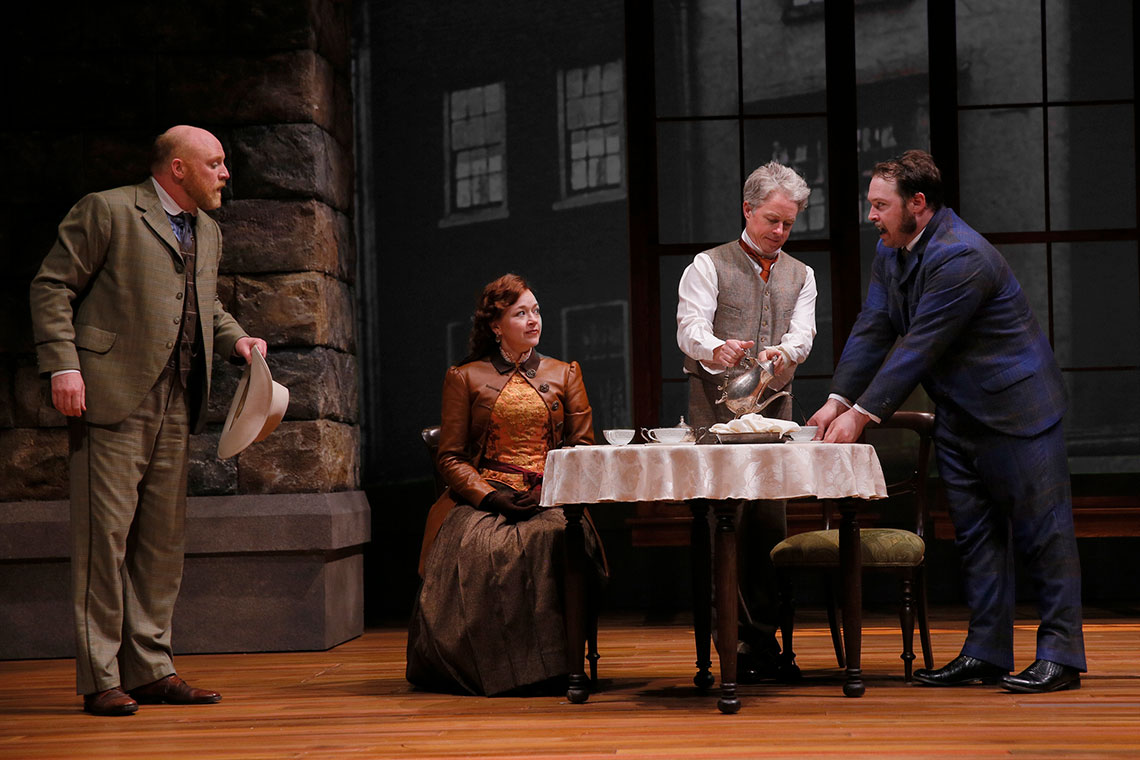
All of the angles have been covered. Best portrayals of Sherlock? Done. Best Watsons? Done. How Holmes is the first English Superhero? Done. An article about Kareem Abdul-Jabbar’s book about Sherlock’s older brother? Actually, yeah, also done. It’s like trying to come up with another ripple on Jesus Christ. But maybe blazing a new trail in this category isn’t just difficult, maybe it’s just plain unnecessary. After all, Seattle Rep’s new show Sherlock Holmes and the American Problem isn’t trying to do anything different with the material and it’s still a total blast. You’ve got a brilliant, eccentric Holmes, a brave and befuddled Watson, Mrs. Hudson cheerfully serving up scones, an intimidating and mysterious Mycroft, a familiar foe (spoiler?) and a complex, multipronged, London-wide mystery that basically makes sense by the end (sort of). You’ve got laughs, intrigue and short bursts of action. Why mess with a perfect recipe?

I wasn’t sure quite what to expect from the show. This is arty Seattle, after all, so maybe a radical reimagining of the concept? Maybe some bold new directions? An upending of the status quo? Not at all. Because this is also nerdy Seattle, filled to the gills with literary types, Sherlock purists and steampunk aficionados (or are they just called “steam punks”?). This show is for the nerds.

There is nothing wrong with that. When you’re already familiar with the kind of story that’s being told, you become free to focus on the specifics. The show’s set design is a pleasing combination of spare furnishings, projected photos of Victorian London, shifting brick columns and a stage floor that rises and opens up to create and extra dimension of depth. The action scenes are almost shockingly ambitious, and I’m not just referring to the deafening sound of the gunshots that ring out with wince-inducing regularity. At one point, there was a fistfight on top of a moving train. Really.

The real lure of this production, however, is the performances. That’s how it should be, and each actor brings their own distinctive flavor to their incredibly well known characters. Darragh Kennan offers an unusually affectionate Holmes, in contrast to some of the more recent interpretations playing up his disconnect from typical human sentiments—Cumberbatch and Hugh Laurie in particular (you know House is Holmes, right?). Kennan’s Sherlock is traditionally impolite with Mrs. Hudson, and given to ignoring people as he drifts in and out of his synesthesia-induced revelations, but he nonetheless engages with humans on a, well, human level, even going so far as to express unprompted appreciation for his compatriots on numerous occasions. Charles Leggett makes for a wonderfully baffling Mycroft, speaking with a stentorian monotone and adopting an oddly sluggish physicality that suggests an unwillingness to waste even the slightest bit of movement. He gets laughs with each languid gesture, as he makes Sherlock seem positively normal by comparison.

The real highlight was Andrew McGinn. His Dr. Watson is a jolly, unpretentious man of action, absolutely game for fighting fearsome American gangsters or simply staying put and dining on coffee and pastry. McGinn exudes effortless charm and boundless enthusiasm, making it immediately apparent why such a man would be interested in associating with Sherlock Holmes and vice-versa. His performance, in fact, really sums up the show for me. This is Sherlock-light, and I don’t mean that as a slight (or even a back-handed compliment). I was pleased that there was no somber dwelling on the loneliness inherent in being a man of Holmes’ specific abilities. No ruminations on his drug habits or how his single-mindedness drives people away.

This is the Sherlock and Watson I first became familiar with as a kid, the exuberant genius sleuth and his cheerful companion, making their way through grimy London, fighting evil and bringing order to chaos. It’s a series of quips, clues, red herrings, fights and revelations all delivered at a pleasingly crackling pace. When I finally figured out that Sherlock Holmes and the American Problem wasn’t going to be trying anything radical, that it was pure narrative comfort food, I settled in my chair and the two and a half hours flew by in what seemed like an instant. Sometimes there’s absolutely nothing wrong with getting exactly what you expected.

Going to the Opera With Grandma: ‘Mary Stuart’

You really need to get in on some of this opera action. I know it can seem imposing or stuffy to the “untrained” ear (and eye), but it opens up to you really quickly. I watched Seattle Opera’s Mary Stuart this weekend—my eighth opera since I started writing this column, ninth in my entire life—and was completely transfixed for the entire two and a half hours. And I’m among the least sophisticated people I know.  

I hesitate to use the term “acquired taste” to describe opera. That’s what we say about something that’s kind of bad the first time you try it. “Acquired taste” applies to sea urchin, Laphroig scotch and the movie Showgirls, but not opera. I saw my first opera (Carmen) when I was a teenager and I thought it was pretty cool. Didn’t really get it, but enjoyed the music and the sets. Same thing when I saw my second opera (Don Giovanni) last year. “Wow,” I thought, “that was pretty cool.”

This Saturday night, however, I was wiping tears away for pretty much the entire second act, which was not exactly short. More often than not, opera is a profound experience for me these days. Granted, it’s always going to depend on the specific show, and luckily Mary Stuart is a doozy. The overview on the Seattle Opera website nails it with one all caps quasi-sentence: “HISTORIC CONFRONTATION WITH SEARING EMOTIONS.”

The first act is a political history melodrama, detailing the behind-the-scenes machinations as Queen Elizabeth confronts her imprisoned cousin Mary Stuart (“Queen of Scots” Mary, not “Bloody” Mary, FYI) and decides her fate. It’s complex, tense and often quite funny. The second half, however, is pure tragedy. It’s a doomed woman grappling with her impending death, absolutely bracing in its sadness. Throughout the show, Gaetano Donizetti’s gorgeous, accessible music keeps the viewer emotionally involved, to an almost unbearable degree. Seriously, during the final half hour I was completely surrounded by snifflers.

But enough of my asinine, “I’ve only seen nine operas” blathering. You didn’t come here to get my fool take on the matter. Fortunately, I attended the show with Seattle’s own Opera Superfan, the one whom the prophets called “Evelyn Troughton,” who has seen just over six million operas AND just so happens to be my very grandmother. I caught up with her between acts and after the show to get the real scoop on Mary Stuart. 

Intermission

GRANDMA: What did you think?

I think this is great.

Really? I don’t have a lot of experience with this opera. I’d seen it one time before, four years ago, and it was the same opera, same production, same sets and all and I didn’t remember one thing. But that’s not unusual because it takes me more than one viewing to remember a lot of things, sets and the like. The costumes are new. They were done for this opera special. Did you get something to eat? 

Not yet, but I’ll live.

It’s kind of minimalistic…

Yeah, definitely. There’s a lot of shadows. Lots of people in front of blackness.

And color!

Lot of color and a lot of starkenss.

Contrast! But… the music. It’s bel canto.

Oh, Bill Canto? What’s his deal?

Bel canto is “beautiful music.”

Oh, bel canto. That’s not the name of the composer!

[Laughs] No, the composer is Donizetti. And he wrote bel canto music.

So just so we’re clear, it’s Donizetti, not “Bill Canto.”

Bel canto. This is one of the more emotional operas that I’ve seen so far. This is way different from any opera that you’ve seen, isn’t it?

You can’t close your eyes because people are saying a lot of things and you really do need to know all of it. 

Talk, talk, talk. Because there’s so many emotions. 

And that moment when Mary and Queen Elizabeth first meet up is really intense, when everyone shifts around on stage. They built it up for an hour, and then it happens and it totally lives up to expectations.

The director did a wonderful thing there, didn’t he? So this is totally different than anything else you’ve seen.

This one is really in my wheelhouse, because I love stuff about history and politics—those are the the kind of movies I really enjoy. It reminds me of House of Cards.

(…)

Which is a TV show about politics. 

I’ll tell you a little thing that’s fantastic. The woman who’s singing in the role of Mary tonight is from the second cast. The other [performer] is sick, so she’s singing them both! She’s gonna sing both nights in a row!

And this seems like a challenging role.

Oh, it is!

The conclusion to the first half was really raw and intense, with Mary and Elizabeth calling each other horrible names.

Yes! When this opera was first done, when Mary called Elizabeth a “bastard,” that was considered reeeeeally bad.

Well, she said “bastard,” but “whore,” also. She’s just letting Elizabeth have it!

Yes! Do you think she knew she was doomed anyway, so she was just trying to get it over with?

Definitely.

“She’s never going to let me go anyways, so I’m just going to say what I think.” And Mary was not the kind of person to play on someone’s sympathy.

Apparently not!

After the Show

So, I see you have a Kleenex there.

[Laughs] Yeah! Now, in the beginning it feels minimalistic, but in the end, I think it’s not.

All of the components of the set come down from the ceiling, which I think is important.

Why do you think that?

I could be wrong, but personally I think it’s to emphasize the idea of this giant unstoppable thing bearing down on a person. It’s clearly a deliberate choice.

That’s an interesting thought. I hadn’t thought about it that way. Everything coming down from up above, it was really meaningful.

I was surprised—and you already knew this—I thought from the first act that this was like a back-stabbing, palace intrigue sort of thing, but then the second act is just pure tragedy. Mary coping with her impending death.

But of course we know the history of the thing, we know it couldn’t have been any other sort of thing. They didn’t give a great deal of the history, though. They talk about Mary’s husband and Babington, the two big sins she wanted to atone for, but all these things really happened a long time ago. It wasn’t just yesterday, it was in the past. She had a son who ruled in Scotland for a few years after she died, and then he died. People weren’t healthy in those times.

No, you could just die any second. Especially if you were royalty.

[Laughs] That’s true! If you get on somebody’s bad side…

The part where she was on her knees wearing the red robe and the cross was behind them and the whole chorus was singing, that might have been my favorite thing that I’ve seen at the opera so far. Hard to imagine anything being better than that. It was nuts.

I had no idea how you were going to take this one! After the last one with all of the moving sets, I was wondering “how is this going to work out for Travis?” I’m glad it worked out! [Laughs]

It was a powerful, moving experience. And that might have been the most excited I’ve seen an audience here before.

Well, there were definitely plenty of those people who stand up too soon at the end because they’re excited and then I have to stand up just to see the rest of the performers take their bows.

Great satire never dies: On ‘How to Succeed’

A month ago, I watched a comedy special on VHS from the mid-1980s called Comedy Goes to Prison, starring Richard Belzer, Paul Rodriguez and several other guys wearing bad pants that I’d never heard of. The reasons for why I ended up watching such a thing are complex and boring, so I’ll just get to the point: it was absolutely excruciating. Seemingly all of the jokes were racist, sexist, abusive and otherwise retrograde to our fancy modern ways of thinking. More importantly, they were just plain unfunny. Punching down is a nearly dead art these days, and thank God for that. 

Ever-shifting cultural norms can make it tricky to produce comedy that endures through the ages, but not impossible. There’s one surefire way to escape the dustbin of cultural irrelevance: satire. Check that—great satire. Great satire is extremely difficult to pull off. I can only name a few examples of it off the top of my head: Duck SoupDr. StrangeloveThe Simpsons… oh, and also How To Succeed in Business Without Really Trying. [See? I got us there eventually!] The key to creating truly great satire is to depict the world exactly as it is: utterly insane. If you have a gleefully cynical perspective on the way the world is in the present, I assure you this attitude will still be valid 50 years later.

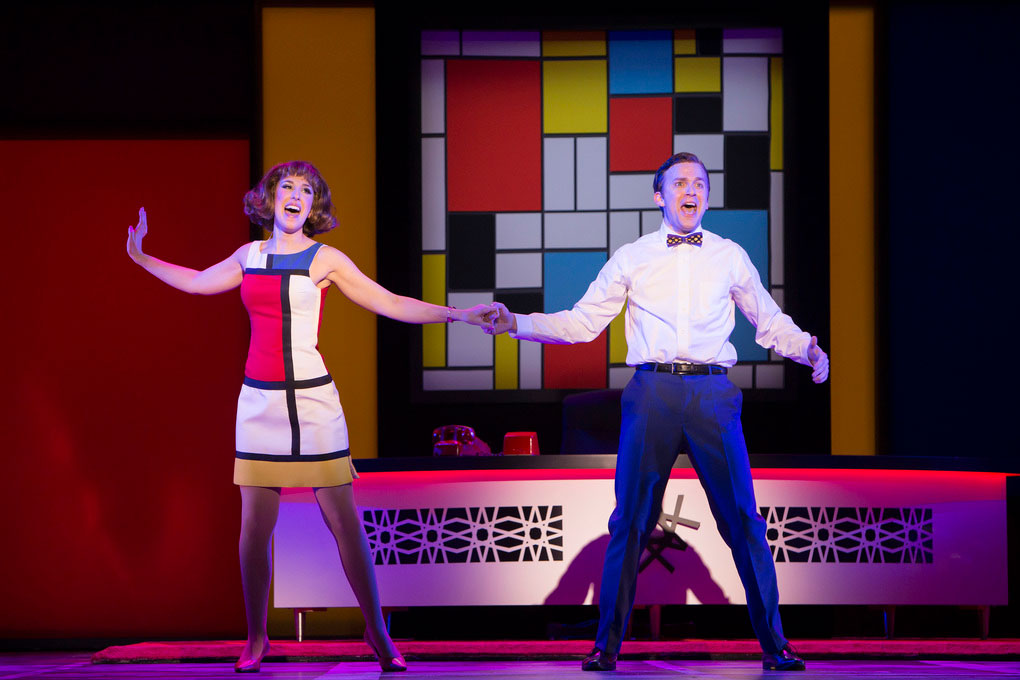
In the case of How To Succeed in Business Without Really Trying (or HTSIBWRT as we shall henceforth call it—currently running through February 21st at the 5th Avenue Theater), the comedy still works amazingly well 55 years after the show premiered in 1961. And HTSIBWRT is jam-packed with potentially offensive hot button issues. Okay, mostly sexism. It portrays a corporate America in the early 1960s that is equal parts sleazy and repressed. Women only want to find a husband. Men only want to climb the ladder and sexually harass women. The show is fully aware of the absurdity of all of these absolutes, and it depicts a nearly tribal world of ridiculous, oblivious strivers.

If you ever have any doubt about where the creators of HTSIBWRT were coming from, look no further than the main character, J. Pierrepont Finch (or “Ponty”), a man that we can easily recognize today as a “sociopath,” who is nonetheless enthusiastically portrayed as a plucky hero. The audience is, in no uncertain terms, encouraged to root for this devious, insincere maniac as he cheats and manipulates his way up the corporate ladder. There is no comeuppance for this smiling monster (spoiler alert?), because that’s not how it works in real life. His love interest is Rosemary Pilkington, who is so open-eyed about the miserable marriage that lies in her future that her signature song is called “Happy To Keep His Dinner Warm.” Here’s a sample lyric: “Oh, to be loved by a man I respect; To bask in the glow of his perfectly understandable neglect.” Wow. This was written only a year after the fictitious world of Mad Men began, and it has every bit of the bite.

I don’t want you to get the wrong idea. There may be dark themes bubbling beneath the surface, but this show is fun and bright, popping with color and infectious songs. HTSIBWRT is the best show I have seen so far at the 5th Avenue Theater. Much of that has to do with the rock-solid cast and lavish production design. It’s a complex, fast-paced show with lots and lots of moving parts, yet all of the performers look like they’re having a great time, and the ever-shifting set played its part without a hitch (well, nearly). But credit must be given to the original creators of the show, Frank Loesser and Shepherd Mead, who wrote the original book. It’s impressive that a show that was created to address issues very specific to its own time can still seem vital and relatable over half a century later.

This is why I think the “free speech” comedians are looking at the issue from the wrong perspective. Of course they are free to tell jokes about whatever they like, but even putting aside the fact that they are offending people in the moment, they are also dooming their jokes to failure in the future. And this clearly doesn’t have to be the case. HTSIBWRT isn’t punching down. It’s punching in every possible direction, depicting a world governed by greed and madness, where nobody is pure of heart, and the guy who schemes and lies the most wins everything. It’s still funny to this day, and the show was written when Kennedy was president.

Last month, I saw Marriage of Figaro at the Seattle Opera, and it absolutely killed. Young people in the rows behind me were laughing hysterically, even letting slip the occasional “OH NO!” or “WHAT?!” Marriage of Figaro was written over 300 years ago, decades before America even had a president. Comedy doesn’t have to age poorly. If you put a little thought into it, it can be eternal.

Going to the Opera With Grandma: ‘Marriage of Figaro’

Full disclosure: I didn’t go into Seattle Opera’s production of Marriage of Figaro completely ignorant. I know, I know—that goes against the entire principle of this column, and my entire persona as a writer (such as it is). Fact is, I had been hired to write an article for the program discussing the cinematic aspects of director Aidan Lang’s ambitious interpretation of the Mozart classic. And I couldn’t very well write about it without seeing it first. My hands were tied!

Yes, I went into this show cursed with the taint of familiarity. Then again, that’s why I was so excited to finally see it live. I’d watched some stodgy old, poorly lit DVDs of other productions. Better than that, I got to watch a video of the New Zealand production from 2010 in which Lang first employed his elaborate moving set. The video wasn’t of the highest quality, but it made it pretty apparent that this was going to be an opera unlike any I’ve seen before. The set is like a giant automated puzzle box, shifting around, creating a hypnotic, malleable tableau. 

For reasons that are both complicated and boring, I wasn’t able to attend this opera as I usually do, sitting next to one Evelyn Troughton—Seattle’s most beloved opera fanatic and grandmother of me (and several others). But I assure you that we were both in that auditorium that night, separated by a mass of cultured humanity though we were. We got together the next day over burgers at Ballard Brothers, while the Seahawks/Panthers playoff game played on a flatscreen overhead. I tried my best to ignore the televised debacle, but it wasn’t easy.  

GRANDMA: Now then, you told me—“Ha ha ha” you texted me, “I know more about this opera than you do!”

Yeah. That might be an exaggeration, but I got to go into this opera actually knowing things about it for a change.

So why don’t YOU tell me about it and I’ll interview you!

Well, it’s a big, long, crazy, hilarious opera.

Agreed.

And Aidan did all kinds of cool set stuff that he brought over from New Zealand to help focus the viewer’s attention, because the plot’s really confusing and I think it helps a lot.

I think it’s true. And I will confess that before this performance I had seen a dress rehearsal. So it was not new to me but it was good to see it a second time and even a third time to get it to stick. It’s great! It’s colorful…to a degree. It’s not elaborately colorful or elaborate sets.

The set design is elaborate, but the sets that you actually see are just one color with a piece of furniture or two. It was minimalist at rest, but then the set would shift before your very eyes.

Right! So it wasn’t that minimalist in the end.

This might have been the most I’ve heard an audience laugh at the opera before.

Well, has there ever been one so funny?

Well, Ariadne auf Naxos was pretty funny, but it wasn’t a straight comedy all the way through.

Oftentimes in operas the audience looks at the supertitles and laughs because there’s a joke, but in this one they’d laugh sometimes not at what was said but what they did, don’t you think?

Yeah, lots of great physical comedy. The scene, the classic comedy set piece from the third act where everyone’s related—

Oh yes, “Su madre, su madre, su madre” over and over and over! The same words over and over and the cadence and the way they were singing it! Everyone was laughing!

People behind me were going “WHAT” and busting up, like it was a regular TV comedy or something. Really engaged, it was pretty amazing.

They were paying attention it would seem. I’d forgotten about all that, where it turns out they’re his parents. It’s hysterical!

My friend pointed out how amazing it is that we often find the same things funny now that we did three hundred years ago.

That was a good point to make. That’s one of the points that Jonathan made in his article in the program about why comedy taught him everything he knows. That’s not the case in some operas, when the humor is about some event that’s happening in a specific time.

Yeah, you have to know the specific political and historical stuff to get it. But I think that this one is in some ways a satire of things that were happening at that place and time, but it’s mostly just a sex comedy, which works any time.

Uh huh. Exactly. That never goes out of style! [Laughs] Now here’s the question. When we first started doing this, you said you didn’t want to know anything about the operas beforehand. You didn’t want me to tell you anything. You wanted it all to unfold before your eyes. How do you feel about that now? Does it work better for you to know about it?

Umm…yeah. I still like the idea of going to the opera without knowing anything about it, but in this case I knew the story backwards and forwards. I knew who the characters were and what they were all about, so I could just focus on the actors’ interpretations of the characters.

And really listen to the music.

Yeah. I’d seen three different versions of this. Three different Cherubinos. So when he showed up I was like “Ooh, it’s Cherubino! Let’s see what this lady does with it!” [Note: Cherubino is a “trouser role,” a generally youthful male character portrayed by a woman]. And I really liked her in this show.

The audience did too.

She was hilarious, clearly having a great time. So I’m not saying that’s how I’ll do it in the future, but it absolutely helps to know about the opera beforehand.

It does! [Laughs] I got a lot of phone calls working down there in the office. People asked me, “Is this going to be a traditional performance?” And when people say “traditional,” what they usually mean is historical costumes as opposed to contemporary fashion. And I said “I’ll find out for you,” so I walked back to ask Mary—who is Aidan’s, what do they call them now, they used to call them secretaries but now it’s “executive assistant” or something. And [Aidan] happened to be coming out and he said, “It’s traditional.” However, another phone call I got said, “But why are they advertising on the web and everywhere else…” So I looked at the ads and everything, and if you look closely you can see that some of the costumes are contemporary!

Cherubino’s wearing sneakers!

Yes, I noticed that!

[At this moment, the crowd in the restaurant goes crazy, whooping and cheering.]

Seahawks must’ve done something right.

Yeah, they scored a touchdown.

Oh. Well, they just did what they’re supposed to do, so why does everyone get so excited about it?

‘The Book of Mormon’ Made Me Like Musicals

In July of 2014, I had been somewhat excited to see The Book of Mormon. My parents scored tickets, so I didn’t have to pay—big plus. Also, I like going to live shows in a general sort of way, mainly for the conversational ammunition. 

ME: “I went to this or that show last night.”
SOMEONE ELSE: “Oh, really? How was it?”
ME: “Well let me tell you—for the next several moments, I won’t be desperately grasping for something to say!”

That kind of thing.

I certainly expected it to be good. It was hyped to the moon. It won so many Tonys that I’m pretty sure they ran out of statuettes. Jon Stewart had said it was “so good it makes me fucking angry” and the New York Times called it “something like a miracle.” Actual respected critics were claiming that it was the funniest musical ever. So, yeah, I would say that I was moderately excited—roughly a 7.2 on the excitement scale.

I wasn’t emotionally prepared to watch the greatest live show I have ever seen. That’s the sort of thing you need to steel yourself for. I quickly became overwhelmed. The show began with Trey Parker’s pre-recorded voiceover about the history of Mormonism. It was amusing, but not unexpected. Then the curtain opened, and the show proper opened with the musical number “Hello!” About 45 seconds in, the hairs stood up on the back of my neck. I had fully expected Book of Mormon to be funny. I thought South Park was funny, I thought Team America: World Police was (occasionally) funny. What I had not anticipated was that the show would be beautiful.

Let me be absolutely clear: not everyone will find Book of Mormon to be “beautiful.” Even people who laugh their asses off through the entire show might look at me cockeyed for using that particular word to describe this kind of entertainment. You see, Book of Mormon is unbelievably offensive. It’s so offensive that I couldn’t explain to my grandmother in any sort of detail what was so offensive about it. I didn’t want to be responsible for putting that kind of imagery in her head. The show gleefully crosses all of the major lines: race, religion, rape, AIDS, genocide, Star Wars—then it creates entirely new lines and dutifully proceeds to gleefully cross those.

I’m no great fan of provocation. I lost my taste for shock comedy about ten years ago and haven’t looked back since. I’m old and tired and I’ve had my fill of being provoked. What Book of Mormon accomplishes, to my mind, is something more like catharsis. It’s a relentless barrage of horrifying language, hysterical jokes and gorgeous, impeccably crafted music. My brain had a hard time processing songs like “Hasa Diga Eebowai,” which is a fun and catchy parody of The Lion King’s “Hakuna Matada.” Also: the name of the song loosely translates to “Fuck you, God.” It’s a jaunty little ditty about the unimaginable horrors that the show’s Ugandan characters endure on a daily basis.

Book of Mormon is the musical theatre equivalent of a tight rope act at 1000 feet, without a net. There are a million ways it could end in disaster, but Parker and Matt Stone somehow pull it off. One of the major reasons it somehow delights more people than it repels is the fact that Book of Mormon has a huge heart. It never doubts the sincerity of its young missionaries even as it mocks them as repressed, naïve and delusional squares. Each and every Mormon, hilarious as the show clearly finds them, is undeniably operating with the purest of intentions. The persistent fusion of withering cynicism and deep-rooted humanity is bracing and strangely moving.

There is something undeniably powerful about this show. Consider this: Book of Mormon is an absolutely merciless takedown of the Church of Latter Day Saints. A sizable percentage of the jokes are about how ridiculous and implausible the mythology of the Mormon Church is. It’s unquestionable that Stone and Parker find this religion to be founded on lies and delusions. And yet when I saw it last year at the Paramount, the Church of LDS was actually advertising in the programs. It was a full-page promotion that said “You’ve seen Book of Mormon, now are you ready for the real thing?” The Mormon Church has, for the most part, had a somewhat amused and often welcoming reaction to the phenomenon. It’s the Teflon musical.

When a piece of art really resonates with me, I get a weird tingly feeling that shoots from my lower back, up my neck and over the top of my scalp. It’s actually a bit unpleasant if it happens a lot—not necessarily painful, but involuntary and spooky. I get it when I watch Terrence Malick films or when I listen to Enter the 36 Chambers. During the final musical number of the first half of Book of Mormon—a hilarious song called “Man Up” which made me cry for reasons I do not understand—the tingling was running up and down like I’d been hooked up to a car battery. It was actually scary. Long after the curtain call, I couldn’t stop thinking about the show. I blathered about it to anyone who was interested, and several people who clearly were not.

Before I saw Book of Mormon I wasn’t really a fan of musicals; nowadays I can’t get enough of them. It was  the Rosetta Stone of musicals for me. I see all the singing and dancing that I once viewed as weird and unnatural and I think “Oh, I get it now!” Nowadays, I count The Sound of Music among my favorite movies. I’m getting heavy into the cinema of Vincent Minelli. I currently own the original cast recording of the musical in question and I am in the market for more. The Book of Mormon flipped a switch somewhere inside me. It was an oddly profound experience to come out of a show that features the line “I have maggots in my scrotum” no fewer than four times.


The Book of Mormon runs through January 10 at The Paramount. Check out our intervew with AJ Holmes (Elder Cunningham).