
Five Friday Questions with Erin Bednarz

Erin Bednarz is a multi-disciplinary theatre artist from Minnesota who’s been in Seattle for eight years and worked with over 19 local theatre companies. She’s a founding member of Umbrella Project, a company member of Live Girls! Theater and a producer, actor, dramaturg, director, former front-woman of riot-pop band Hearts Are Thugs, and most recently a sound designer.

Currently, she’s working as resident sound apprentice for Intiman’s Stick Fly and next week she’ll be doing sound design for Strawberry Theatre Workshop’s 9 Circles. In July she’ll serve as assistant director for Things You Can Do with LiveGirls! Theatre at ACTLab, and in August she’ll be in Girl, a devised ensemble adventure at Annex Theatre. Bednarz has a busy summer ahead. She joined me for this week’s installment of Five Friday Questions.

What’s the best performance you’ve seen lately?

In March I attended Citizen University, a conference to encompass the work of community building and teach leadership in civic life. The closing panel discussion was between the executive director of Teach for America in St. Louis, the executive director of the Detroit Department of Health, the associate director of the School of Social Transformation at Arizona State, among others. Seattle’s Eric Liu moderated the panel speaking on “What Do We Do Next?” as a country and, more importantly, as a room full of citizens. Listening to each of them speak about the current state—or dismay—of their place within our country was the most theatrical performance I’ve seen all year.

What’s the best meal in Seattle?

When I first moved to Seattle I spent a lot of time working in restaurants. The chef who raised me up and completely changed my knowledge of food is Chef Charles Walpole. His restaurant, Blind Pig Bistro on Eastlake, is everything. The menu changes every day based on how the chefs are feeling and you always have the option to order the entire menu. THE ENTIRE MENU. You guys. Plus the servers know what they are doing and the wine list is extremely well put together. Also, you won’t break your bank. This place changes lives.

What music gets you pumped up? What do you listen to when you’re sad?

I am what you would call a Spotify-aholic. Self proclaimed “Queen of the Playlist,” I am all up on creating different lists for different moods. Currently, I’ve got “Vroom Vroom” by Ishawna on loop when I’m getting ready to go out (if you’re looking for a companion to Rihanna’s “Work”). Another killer lady-anthem of the trip-pop persuasion is “Gold” by Kiiara. Try and listen to it less than three times in a row. I dare you.

That being said, give me a Sunday morning in my pajamas sipping french press coffee in my studio and spinning my vinyl of Steve Miller Band’s Greatest Hits and I’m the happiest girl on Capitol Hill.

One album I just can’t stop listening to, sad or otherwise, is Psychic Reader by Bad Bad Hats. For all of you who’ve listened to the soundtrack to 10 Things I Hate About You more times than you’d care to admit, this Minneapolis band is giving all of the Letters to Cleo vibes you’ve been longing for.

If we’re putting it all out there then I’m going to be honest. Whenever I’m down in the dumps, feeling the pressure of the day-to-day just a little too much, I go back to the tunes that soothe my junior high self. That’s right, the Jason Mraz comes out. It’s just me & Mraz, singing at the top of our lungs, working it all out together.

What’s the most crucial element of any production?

Communication. I am of the tribe that theatre is storytelling, and in order to tell the best tale we have to make sure the lines of communication are open. If we’re not all working toward the same version of the same goal it’s going to be apparent in the outcome. As we become comfortable speaking our minds and have true mutual respect for one another, we have the opportunity to make magic. That, and I’m always striving for good vibes. To be frank, most of us are not financially supported enough by this industry to be having a bad time making art. Make it a party or don’t make it at all!

What’s the most useful thing anyone’s ever taught you about working in theatre?

Don’t waste any time feeling like you don’t belong, or that you don’t have a voice. There are certain things about you that make you you, and that’s where your voice lives. Speak up! Also, do what you can to make theatre with the artists you’re equally the closest with and the most challenged by. You’ll be better for it. And never, ever, stop listening.
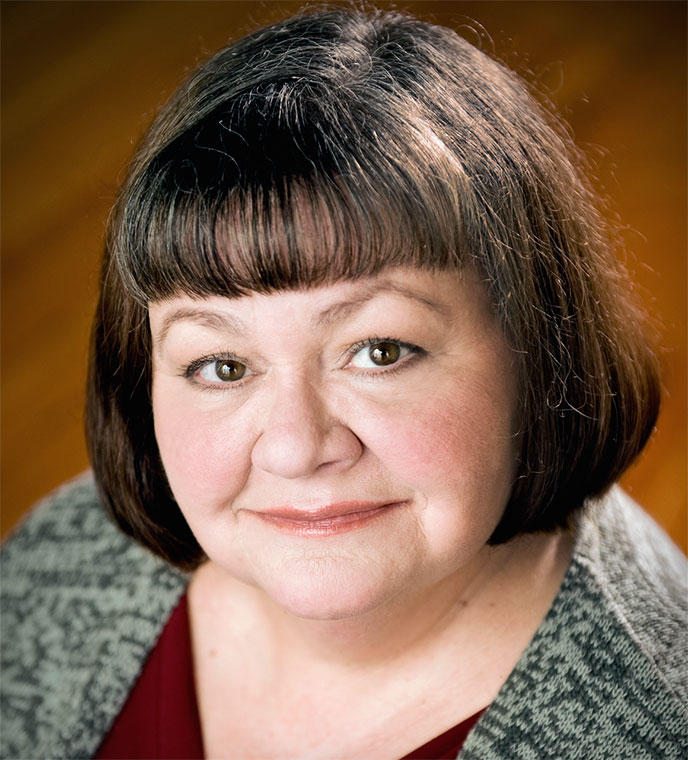
Five Friday Questions with Laura Kenny

Laura Kenny has been acting in Seattle for over 30 years, working at just about every theatre in town. She’s also performed at the Old Globe Theater, Shakespeare Theater Company in DC, McCarter Theater, and Shakespeare Santa Cruz. On film and TV she’s been seen in Harry and the Hendersons, 10 Things I Hate About You, Northern Exposure and many others. She’s a proud Equity member and VP of Actors for the local SAG-AFTRA union.

Kenny’s currently playing the title role in Taproot Theatre’s The Realization of Emily Linder, running through June 11. Kenny joined me for this week’s installment of Five Friday Questions.

What’s the best performance you’ve seen lately?

Come From Away at the Seattle Rep was a wonderful show that really moved me. I loved the simplicity of the set and the musicians on stage. The music along with a well-written book really told a compelling story. You cared about the variety of characters so much. In all it was a great night of live theatre.

What’s the best meal in Seattle?

The best meal in Seattle is one that is eaten with friends. I live alone and eating with friends and enjoying others company always makes the food taste better. I don’t usually eat at the trendy restaurants so I will just add, my favorite takeout is chicken phở from Than Brothers or Mexi-fries from Taco Time.

What music gets you pumped up? What do you listen to when you’re sad?

I will always be a Beatles fan. I have been in love with Paul McCartney since I was twelve. Their catalogue satisfies both the pumped-up and the sad. Led Zeppelin is my favorite driving music.

What’s the most crucial element of any production?

Theatre is always a collaboration, so every element ultimately becomes crucial at some point in the process. You are there to tell a story and all the elements of the show must support and defend that fully for a great show to happen.

What’s the most useful thing anyone’s ever taught you about working in theatre?

I took a class from Eve Roberts and she said we should audition for everything. Taking her advice, I went to an audition for understudies for Angry Housewives. I had never sung before and learned “The Lady is a Tramp” with the help of friends and went to the audition. The rest is history. I was hired and had two weeks to learn the show and then I was on stage doing it. I was the understudy for two years and got my Equity card in the show and did it as the Equity regular for two more years. I have done several musicals since then, all thanks to that advice from Eve.

Five Friday Questions with Corey D. McDaniel

Corey D. McDaniel is the founder and producing artistic director of Theatre22 as well as a freelance director, actor and teaching artist. Originally from Texas, his career began as a dancer with the Lone Star Ballet. His most recent directing credits include Naomi Iizuka’s groundbreaking Good Kids and Bonnie and Clyde at Cornish, The Nerd at Mt. Baker Theatre, Wizzer Pizzer: Getting Over the Rainbow and The Hours of Life at Theatre22 and The Wild Party for Sound Theatre Company, which received a Gregory Award and a Gypsy Rose Lee Award.

McDaniel has also worked as a touring dancer, an on-set acting coach for teens and young adults in Hollywood, and he’s aided in the creation of professional actor training programs. He’s also worked with several local companies, from education director for GreenStage to interim artistic director at SecondStory Rep. He’s a co-founder of the TPS Gregory Awards and served on the selection committee for the 14/48 Projects. McDaniel wears many hats.

This summer he’ll direct Julius Caesar at the Island Shakespeare Festival and in the fall he directs Theatre22’s production of The Pride. McDaniel joined me for this week’s installment of Five Friday Questions.

What’s the best performance you’ve seen lately?

This is a tough question because I watch a lot of movies and catch a shit-ton of theatre. I have many actors whom I follow because their work is always so wonderful to watch so I’ve seen many excellent performances in recent weeks. If I had to narrow this down to one specific performance and name it the best, I would call out Emily Chisholm’s portrayal of Vivie Warren in Seattle Shakespeare’s Mrs. Warren’s Profession. Though the script itself was not one I was particularly interested in, I’m interested in EVERYTHING that Emily does. She has to be one of the most versatile and specific actors I’ve ever seen and I watch her with awe and admiration every time I see her on stage. She is a study in the craft of acting. If you haven’t noticed, I have a huge director crush on her. In Mrs. Warren’s Profession, she was counter-balanced so beautifully by two other actors I consider to be the very best our region has to offer: Bobbi Kotula and Trevor Young Marston. I would pay any price asked to see any one of these three power-house performers on stage.

What’s the best meal in Seattle?

I love food. Like, I REALLY love food. And one of my all time favorite things about Seattle is the incredible world of food and mom & pop restaurants. No matter how often I eat out, and I eat out a lot, I’ll never be able to get through them all. So again, I have a lot of favorites. With that, I’m gonna be a little cheesy here and say the best meal in Seattle is (almost) anything my husband cooks. My husband is Brazilian and thus food and cooking is a way of expressing love, appreciation, support. It’s a way of celebrating family and by god, my man can cook! His Brazilian dishes are just ridiculous!

What music gets you pumped up? What do you listen to when you’re sad?

The one thing on my task list for the last decade which I never seem to have time to do is update my music files. I’m still quite upset that we moved away from CDs and the ability to actually shop for new music at Tower Records or the like. So, my music collection has a little bit to be desired. But my music is like my family and best friends: no matter how much we may get tired of each other, we can still be counted on no matter what to be there when needed and offer just the right words to get me through. When I’m sad I pull out my ’80s and ’90s you-broke-my-heart-you-son-of-a-bitch songs from Tori Amos, Sarah McLachlan, Dido and the Indigo Girls.

What gets me up? Bring in the new millennium remixed versions of the same, and throw in some DJ Tiesto, Rob Dugan, Paul Okenfold and I’m good to go. Basically, anything that hits 185 BPM and up does it for me and I likely have a copy of it somewhere.

What’s the most crucial element of any production?

How I answer this questions depends on what hat I am wearing. If I’m speaking from the point of view of a producer then I would say the most crucial element is the director. A director does so much more than just direct. The director is the key element and person that finds the right designers and actors for the script and for each other. They set the tone, expectations and standards for collaboration: communication, scheduling, steps to achieve vision, etc. They are (hopefully) the entity that inspires everyone.

This inspiration alone can make or break a production. They connect everyone on board with the higher purpose of the production knowing why the story should be told and how it should be told. The director holds the not only the direction the team takes in their hands but also holds the spirit of highly creative individuals in their hands. The right director can guide individuals and teams to create the next Hamilton. I think the mistake a lot of directors make is that they feel they have to come up with all of the ideas and all of the designs themselves and their team executes these elements. This is not correct. The best directors I know are visionaries who guide while allowing their people to do what they do best.

As a director, I would say that vision is the single most crucial element. For me, it starts with an emotional picture. As I develop my vision of a production, I talk to my designers and actors about how certain elements of the script make me feel—or how I want them to make me feel. From this emotional point, colors and sounds start to form in my head—and my heart. As I continue to allow these to grow I share my ideas with my designers first and from them, solid, tangible items for the production begin to appear as possibilities. The same thing happens with the characters and actors. I have a strong idea and desire for who a character is and then I try to find the actor who can pull that off honestly and wholly’and be great to collaborate with.

Once the role is cast I allow the actor’s qualities and sensibilities to bleed into my vision of the character. It’s more complex than this—or maybe simpler?’but from this the show presents itself to me long, long before I go into rehearsals. I know where I am going with the production. I know what I want the living room to look like, or what I want elements of it to be present and I let the designer build upon that vision bringing their own vision to merge with mine until we have built a room that feels like it felt months ago in my emotional vision. I know what emotions a scene needs to stir in my audience. I know the depths of the relationships between characters and have a strong sense of who each character is at their core. Directors should come in with a vision. Period. And then we start rehearsals and we learn and we grow and the vision is the foundation we build upon and guide others to build upon while allowing it to be fluid to adapt to new discoveries and ideas.

What’s the most useful thing anyone’s ever taught you about working in theatre?

No matter who the founder is, or who the artistic director is, or who is running a theatre, theatre is a community resource and belongs to the community that it serves. Those of us running theatres or creating it are simply stewards of this resource. We are servants to the organization that belongs to the people who support it’actors, designers, patrons, donors, etc. We are here for THEM. I think there are folks who would not agree with me. But I see a lot of theatre companies pop up with the concept they are going to do the work THEY want to do the way THEY want to do it. And then they wonder why there are no butts in seats. And then they disappear.

Five Friday Questions with Catherine Blake Smith

Catherine Blake Smith is a director, producer and dramaturg. She’s the member liaison for Theatre Puget Sound and an artistic associate at Annex Theatre where she runs Spin the Bottle, a wildly eclectic late-night cabaret on the first Friday of every month. She’s currently directing Eat Cake at Annex, which closes next Wednesday. Smith joined me for this week’s installment of Five Friday Questions.

What’s the best performance you’ve seen lately?

Hands down, Can’t Talk Right Now by Scotto Moore, directed by Katie McKellar at Theatre22. It had a phenomenal script, storyline, cast, direction—all of it. The emotions and stakes were there, the staging was engaging in such a small space, and Scotto has a way with words that keeps you rapt until the very end. I didn’t want it to end, but when it did, I felt satisfied and energized—definitely a lovely way to feel after a night at the theatre.

What’s the best meal in Seattle?

For me, it’s always been Café Presse’s demi-poulet froid mayonnaise. It’s a staple on the menu, which means even as they change by the seasons, you can guarantee it will be there. Plus, it’s enough for two or to take home leftovers.

What music gets you pumped up? What do you listen to when you’re sad?

Weirdly enough, the same music will either inspire and energize me or also be the perfect thing to listen to when I’m sad. A typical playlist will include a dash of my hometown friends Someone Still Loves You Boris Yeltsin and Ryan Spilken with lonely lyricists like Elliott Smith, Kings of Convenience, or Emily Haines & The Soft Skeleton, Air, Sufjan Stevens, and of Montreal, and then bands that remind me of the Midwest like The Long Winters, Metric, St. Vincent or Nada Surf.

What’s the most crucial element of any production?

Collaboration, manifested through familiarity and excellent communication. When designers have worked with a director before, or the actors know the playwright’s writing style, you can tell. It’s nice to not be able to assign a specific element to a single person on the production team. We can elevate each other by bouncing ideas off each other, leaving open space for potential new ideas that would have never come about if it weren’t these people in this room at this time.

What’s the most useful thing anyone’s ever taught you about working in theatre?

Don’t date in the department. But seriously, it’s about remaining open to everyone’s ideas in the room but knowing when to draw the line (especially as a director and producer). I worked with several different faculty members at my university as assistant director, dramaturg and stage manager, and observed how each faculty director had a totally different aesthetic yet each one found a way to listen to actors, incorporate designer’s ideas into their vision, and also remain clear about their initial intent. The final result was always a beautiful collaboration of well-respected young artists as well the manifestation of the director’s specific style.

Five Friday Questions with Ali el-Gasseir

Ali el-Gasseir is an actor, director and co-artistic director of Washington Ensemble Theatre. He’s performed for companies like Berkeley Repertory Theatre, ACT, Seattle Shakes, Shakespeare Santa Cruz, and Theatre Rhinoceros. He’s directed throughout California and Seattle. This weekend he’ll be remounting The Return of the Urban Tanuki Samurai, an all-ages “live action cartoon” he created with Jonah Von Spreecken. The show runs through May 15 at 12th Avenue Arts. El-Gasseir joined me for this week’s installment of Five Friday Questions.

What’s the best performance you’ve seen lately?

Oh gosh! This is very hard. What’s lately? The thing is individual performances rarely stick with me. I am more excited by stories than performances. Honestly the most exciting performances I have seen in the last year have all been by Cherdonna Shinatra. I believe she is a brilliant clown who is doing something incredibly unique.

If you asked me to name performances that I am obsessed with and that I constantly keep re-examining then John C. Reilly in Check it Out! with Dr. Steve Brule, Amy Sedaris in Strangers with Candy and Seth Morris in Affirmation Nation with Bob Ducca. I like laughter.

What’s the best meal in Seattle?

Right now I am all about Chan in Pike Place Market! Unbelievably delicious bulgogi sliders and fantastic short ribs. A wise old woman once told me that if short ribs are on the menu, then you order the short ribs. Actually, to be honest, there never was any wise old woman… I just really love short ribs.

Oh! And in general I am always down for a cheeseburger so Li’l Woody’s is always high on my list. But, hey, according to my bank statements the place I eat most often is Momiji. Consistently my favorite sushi in Seattle.

What music gets you pumped up? What do you listen to when you’re sad?

Oh I am all about high energy jams!
Zebra Katz, “Tear the House Up”
George Michael, “Too Funky”
Deeee-Lite, “Bittersweet Loving”

And I like supporting my fave local bands like Bigfoot Wallace and his Wicked Sons. I love their dirty swamp rock stylings!

I am not really a “oh I am sad I should put on sad music” type of person, so I don’t listen to music expressly when I’m feeling down in the dumps. I do love some real melancholic, spacey mood groves:

And in terms of a song that makes me always feel the heartbreak blues, Stevie Wonder’s “All in Love is Fair.” Dang, that song is just brutally lovely.

What’s the most crucial element of any production?

When you say “production” I assume you mean not only narrative theatre but the whole performance. So my answer, then, is vision.

I can’t say that story is the most important thing. Nor is acting, singing, or dancing talent for that matter. All those things help but I have loved performances that have little to no story. I have seen amazing student performances that have blown my mind and moved me deeply. So I think the unifying element that makes a production great is that everyone working on the production works under the same clear vision for what it is that they are trying to communicate to the audience. If a production does not have a clear, cohesive vision I don’t think it can ever be successful except by accident.

What’s the most useful thing anyone’s ever taught you about working in theatre?

“Value the whole.” To this end, a couple different professors and old collaborators have taught me to ask what I believe are the right questions when producing:

A. What is the takeaway that you want the audience to experience?

B. Is that thing you are arguing about actually worth fighting for?

C. How does that fit within the context of the whole?

If you can answer these with compassion and a sense of purpose then I believe you can have fruitful and positive experience working in theatre.

And then the biggest piece of advice that I always try to remember is from an old band mate and I think it is entirely applicable to theatre makers: “Listen harder.”

Five Friday Questions with Amontaine Aurore

Amontaine Aurore is a writer, actress and performance artist. She’s written and performed numerous solo plays, including Waiting for Billie Holiday and My Name is Trazar. She brought her solo performance show, Queen Rita’s Blues Alley, to New York’s E59E Theater and the Edinburgh Fringe Festival. Her solo play, Free Desiree, has been performed in various venues throughout Seattle and was named a Fringe Best Bet at the New York Fringe Festival. Last year Aurore played dual roles in Avatar: Fanon and Decca, a video installation piece written and directed by C. Davida Ingram as part of the Genius exhibit at the Frye Art Museum.

Next up, she’ll be in Annex Theater’s upcoming production of Eat Cake (along with last week’s 5 Fri Q-er, Kamaria Hallums-Harris), opening April 26. This fall she’ll perform her show Love Letters from Beyond the Veil at New York’s United Solo Theater Festival. Aurore joined me for this week’s installment of Five Friday Questions.

What’s the best performance you’ve seen lately?

Youth Speaks Grand Slam is a yearly slam poetry contest that chooses five finalists to attend the national poetry slam in D.C. I was extremely heartened to see young people so politically and socially engaged; expressing themselves on everything from the politics of hair to Seattle gentrification to problematic issues with straight allies. There’s a tendency for the mainstream media to cast all youth in a negative context. It is so good to get a glimpse of the other side with youth that are remarkably informed, articulate and outspoken.

I also was really moved and inspired by Roger Guenveur Smith’s solo show, Rodney King, at Langston Hughes. He is so unique in how he approaches his solo work. His physicality is distinctive, and the cadence of his writing and delivery is very much like listening to a jazz performance. He is one of the main reasons I decided to develop myself as a solo performance artist.

What’s the best meal in Seattle?

I’m a vegetarian leaning heavily towards vegan, so I struggle sometimes to find restaurants that cater to my needs. I do love Café Flora’s mashed potato tacos, which I’ll only allow myself to eat occasionally. Thrive carries some gourmet raw food dishes, which I appreciate. Particularly good are their nori rolls, and their raw chocolate smoothies are divine.

What music gets you pumped up? What do you listen to when you’re sad?

When I need something extra to get me going I listen to Jill Scott’s Beautifully Human. It’s soulful, sexy, and the truth.

When I’m feeling particularly sad, angry or distressed, which I have been recently about the state of the world, I pull out something like Gil Scott Heron’s Winter in America or Marvin Gaye’s What’s Going On. These are big, compassionate works that soothe my soul, and it’s incredible how the sentiments expressed in music created in the ’70s is strikingly relevant for these times.

What’s the most crucial element of any production, and why?

The spirit of collaboration. Theater is made up of so many players bringing their own expertise to bear. When everyone believes strongly in the project, feels empowered in a free exchange of ideas, and can work together harmoniously for the sake of everyone and everything concerned, real magic can happen.

What’s the most useful thing anyone’s ever taught you about working in theater?

To not chase fame, fortune and acclaim. If it happens that’s great, and if it doesn’t, that’s fine too. Rather give credence to the work that inspires and speaks to your mind and heart, and remember that the actual creative process and the work itself is what will grow your soul.

Five Friday Questions with Kamaria Hallums-Harris

Kamaria Hallums-Harris is an actor and recent Cornish grad from Greer, South Carolina. Most recently she’s performed in Neverwhere at Cornish Playhouse, Milk Like Sugar at Theatre Battery, A Christmas Carol at ACT and 99 Ways to Fuck a Swan at Washington Ensemble Theatre. Next up, she’ll be in the world premiere of Eat Cake at Annex Theatre, a new play about “the Queer wedding of the century” by Seattle playwright Seth Tankus, running April 26 through May 11. Hallums-Harris joined me for this week’s installment of Five Friday Questions.

What’s the best performance you’ve seen lately?

Dead Pool, obviously! So amazing and I laughed so hard I tooted, which is quite the feat! Oh! I also saw Dear White People, a multifaceted show at Theatre Off Jackson. It was incredible. There was burlesque, a live band, spoken word, poetry and dance to name a few things. I was moved to tears. I was laughing my behind off.

I don’t go out to see as many shows as I’d like but to see so many people of color in one space just speaking their minds was something we need more of all over the world. I cried because as a woman of color I felt so blessed just to be in the same space with each and every performer.

What’s the best meal in Seattle?

Best meal for me is the Garlic Mania Noodle from In the Bowl on Capitol Hill. I’ve been going there since I moved here six years ago and I’m still hooked.

What music gets you pumped up? What do you listen to when you’re sad?

I’m gonna keep it real and let you know that I get pumped from listening to Trap music. I’m from the South and spent a large part of my life in Atlanta, which is where Trap music is born and raised, so I will probably always listen to it. I look forward to being an 80-year-old grandma rapping to Migos.

Minus the Bear is like my all-time favorite band and one of the main reasons I moved to Seattle so they get me pretty jazzed too.

When I’m sad or trying to find peace with it all I like to listen to modern jazz mostly. Christian Scott, Robert Glasper, Eric Harland, Thundercat, Haitus Kaiyote and Kendrick Lamar. I also have my indie pop playlist on Spotify which has bands like Half Moon Run, Grizzly Bear, Snowden, and American Football on there.

What’s the most crucial element of any production?

Hmm, I have to say cohesiveness. Is that cliche? I feel like you want the show in every way, from the technical aspects to the programs and posters that get people in the seats in the first place, to reflect one story that you are trying to tell that night. I do, however, think that most important question of any production before it even begins is, “Why this play now?” That is something that has always stuck with me. If you can give an honest and thorough answer to this then you will have cohesiveness.

What’s the most useful thing anyone’s ever taught you about working in theatre?

GIVE!!! GIVE GIVEEEE!!!!!! It’s not about you—it’s about your fellow actors on stage. It is not about you but it is about the story you are telling, the words on the page that you just happen to be a vessel for. Give to your audience. Share with them. It is as if you are hosting a lovely dinner for your friends at your house but, like, you live in the boonies and people are a little afraid that this party will turn out to be a bad horror film or something. They may feel uncomfortable at first but they trust you and know you will not lead them astray. It’s not always about you, yeah?

Five Friday Questions with Tori Thompson

Tori Thompson is a stage manager and member of New Century Theatre Company. Most recently she worked on Crimes of the Heart with Village Theatre, A Christmas Carol with ACT Theatre, and Festen with NCTC. She’s also worked in various stage management positions with Book-It, 5th Avenue, On the Boards, and Washington Ensemble Theatre. In May she’ll be stage managing Romeo & Juliet directed by Vanessa Miller for Seattle Shakes. Thompson joined me for this week’s installment of Five Friday Questions.

What’s the best performance you’ve seen lately?

I am sad to say that I haven’t caught many of the shows in town recently, partly due to just finishing up working along performance run. I am planning to see a few shows this next week, which I am looking forward to!

I saw Spotlight a few months ago, and it has really stuck with me. I walked into the theater not knowing anything about the film and walked out feeling deeply affected. I had this visceral, gut reaction, which is somewhat rare for me. There wasn’t some stand out performance for me, it was more that the story felt so interesting and important and I felt that the production and the performances all seemed to serve the story.

What’s the best meal in Seattle?

I love trying new restaurants and am always on the lookout for the elusive “best” meal in Seattle. Whether or not it is the best meal in the entire city, I don’t know, but one of my favorite places to go is Citizen in Lower Queen Anne. It is in my neighborhood, I love the ambience, the servers are nice, and they have these delicious breakfast tacos. If my partner and I have a morning off together, we love spending it there.

What music gets you pumped up? What do you listen to when you’re sad?

I don’t listen to a ton of music so my music knowledge and tastes are somewhat limited. I have, however, gotten hooked on the Hamilton soundtrack. I love hearing the story and the characters develop, and the music is just so good! I’ve been listening to it for the past few months and it still gets me pumped up.

When I’m sad, one of my favorites bands to listen to is Bon Iver. So lovely.

What’s the most crucial element of any production?

I am going to cheat a little and say two things: story and collaboration. It starts with finding a story you feel is worth telling. And then having group of people come at that story bringing different ideas, talents and worldviews and working together to create one focused vision, that’s where great productions are born.

What’s the most useful thing anyone’s ever taught you about working in theatre?

A friend of mine gave me this advice in regards to personal relationships and I think it is really useful to theatre too: assume good intent. Theatre can be challenging. You have a group of passionate, often strong-willed individuals who are learning to work together. Stressors and emotions are high and sometimes conflicts arise. I think that if I can try to assume the best of people and see their good intentions, the process is so much easier. It’s more enjoyable and I can be more effective and helpful. I think that usually everyone involved in a production is ultimately fighting for the same thing: to make the best art we can, to tell this story the best way possible, even when it feels conflicting. Keeping that in mind is key for me.

Five Friday Questions with Andrea Bush

Andrea Bush is a Gregory Award-winning scenic designer who’s worked with Village Theater, New Century, Book-It, Seattle Shakes, Seattle Public Theater, Azeotrope and many more. She’s got an MFA from UW where she now works in the Scene Shop. She was formerly an ensemble member and resident designer with Washington Ensemble Theatre. She’s currently designing Intiman’s Stick Fly, opening May 24 at the Langston Hughes Performing Art Institute. Bush joined me for this week’s installment of Five Friday Questions.

What’s the best performance you’ve seen lately?

Taylor Mac — Songs of the American Right at On the Boards. I had been seeing a lot of dark shows around town, and this show was a joy to see. I mean it was oddball and uncomfortable in the best way possible. The performance simultaneously embraced and dismissed being odd and uncomfortable, and became so inclusive that it was cathartic. I left with a smile and felt motivated to jump into my own weird ventures.

What’s the best meal in Seattle?

Right now, RockCreek Seafood and Spirits for oysters and a gin and tonic. (They happen to have a great brunch too.) However, I’m excited for it to be spring’with spring comes the street fairs, and street fairs mean corndogs, roasted corn and elephant ears. I love love LOVE junky street food, that’s what I’m craving.

What music gets you pumped up? What do you listen to when you’re sad?

I live with a three-year-old, so I get a healthy dose of Caspar Babypants and Schoolhouse Rock. When it’s my choice, Alabama Shakes is dominating my playlist, her voice is Etta James, Janis Joplin, and old blues like Howlin’ Wolf. (Three-year-olds will dance to it too.)

When I’m sad or off my groove I always come back to Tom Waits. “Big in Japan” gets me into the thick of it. The whole Mule Variations album is amazing and has been my gotta-get-out-of-my-own-head-and-wipe-the-slate-clean music choice.

What’s the most crucial element of any production?

Stay engaged. Some shows are harder then others. Sometimes communication breaks down and everyone gets a bit lost, sometimes a LOT lost. If you keep the conversation alive then most times it all gets worked out, and remembering that a conversation is not just being heard, it is also listening. Stay engaged, and not just in your discipline. Talk to everyone including your director, fellow designers, actors, stage management, EVERYONE.

What’s the most useful thing anyone’s ever taught you about working in theatre?

I’d have to say: value your art. It sounds obvious, but art and labor are things that, if you’re not careful, can be appropriated. When you start out you say yes to everything that comes along, and you should! Do as much as you can. But protect yourself. People will ask for more then you can give. It is as important to say no as it is to say yes, and if you say yes, make sure it is on your terms.

An Autism-friendly ‘Tempest’ at Seattle Shakes

Q&A with artistic director George Mount on the company’s new, inclusive undertaking.

Next month, Seattle Shakes presents an autism-friendly performance of The Tempest. It’s part of a movement by theatre houses nationwide to recognize neurodiversity and accommodate an underserved audience. Generally, such presentations include gentle modifications like brighter lighting, lower sound levels and more room for movement by audience members. One such Broadway showing of Aladdin, organized by the Autism Theatre Initiative, sold out the 1500-seat New Amsterdam Theatre in five hours. Locally, Seattle Children’s Theatre has led the pack in offering “sensory-friendly” versions of their shows—also called “relaxed performances”—and Taproot Theatre presented an all-ages, sensory-friendly showing of last winter’s A Charlie Brown Christmas.

Seattle Shakes now embarks on its first autism-friendly performance. I talked to artistic director George Mount about the April 17 show.

What will be different about this performance?

The things we’ll do to accommodate create a sensory environment that’s a little more predictable but hopefully still engaging. The lights in the audience will be up. The play begins with a rather rambunctious storm that we’ll tone down. We’ll also set up our lobby areas for patrons who need a break. They can go out and sit and relax in a quiet area or engage in some other craft activities to redirect their stimulus and energy.

There’ll be a free-flowing openness between the front of house, the lobby and the auditorium; it’s not gonna be like a normal show where the lights go out and the doors close so we can keep everyone in their seats until intermission. There’ll be a lot of coming and going.

A lot of times with patrons with autism and their loved ones there’s a fear of having a reaction or an episode; they won’t go to a general public performance for fear of sticking out or disrupting or becoming a nuisance and being embarrassed. In a case where the bulk of the audience is people from the [autism] community and those members are aware of that fact, there’s a sense of shared experience, camaraderie and acceptance of what’s going on.

How’d this come about?

I had programmed our run of The Tempest, which is our six-person small cast touring group that primarily goes around the state of Washington to middle and high schools as part of an effort to get performances of Shakespeare out to the rest of the state where the cultural access is a bit limited. These shows are already geared toward first-time theatre-goers. They’re also geared to perform in all kinds of situations and conditions from a gymnasium to a cafeteria to a state-of-the-art theatre.

A chance meeting with a friend of mine, Mark Waldstein, an actor/director/educator in town, led to talking about what he’s been up to. He’s been working at Bellevue College teaching theatre technique to autism students and using theatre and acting as a tool for education and therapy and social integration.

We got to talking about various shows and a light just went off. This Tempest is a perfect fit—an easy adaptation for us and a great way to increase accessibility. For us, it’s mission driven. We believe in making these great classic plays as accessible as possible to a contemporary audience. Here’s an audience that’s been overlooked.

This is your first one?

Yes, our first foray. Hopefully we get it right but we’re prepared for some learning.

What kind of challenges does this present to the actors, adapting an existing production like that?

Honestly, it’s not going to be much more of a challenge than any of the shows they already do. They’re geared to be adaptable, to roll with the punches, performing for an audience of 60 to an audience of 500, from huge, rowdy, rambunctious high school students to very polite, small, parochial school groups.

At this stage of the game they’ll have been performing since early March, a month and a half, doing the show out on the road across the state, driving for hours, spending the night in hotels, doing the show, driving for hours again. They’re some of the most adaptable and versatile actors we employ’at least they learn to be.

It’s simply just a matter of remembering what the slight modifications are and being ready’they’re as much in on the circumstances of the performance as the audience is. They know that something that would be disruptive in another, “straight,” performance will not deter or distract them—it’s not something that’s directed at them. If an audience member has to get up and leave, there’s no judgment.

Might there be some interesting things to be gleaned from performance in front of a different audience than you’re used to?

I absolutely think so. Speaking for myself as a performer, the opportunity to learn from an audience is there as much as the opportunity for the audience to learn from the actors. And these are great young actors with a lot of ambition and drive. These touring shows, we tend to hire early-career actors, so they’re already hungry to learn and experience and grow and add to their knowledge base as a performer and a member of the human populace.

For some insight into autism and theatre from the other side of the stage, check out this essay: “Insights from an Autistic Actor.”