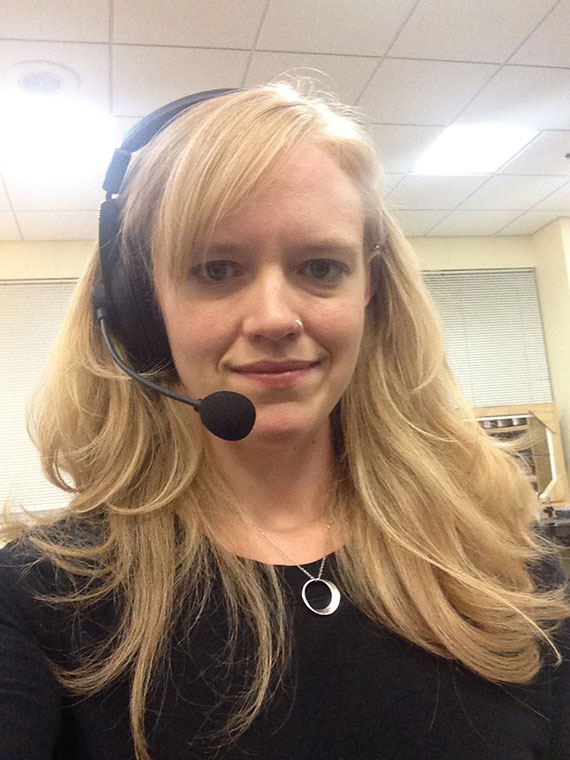
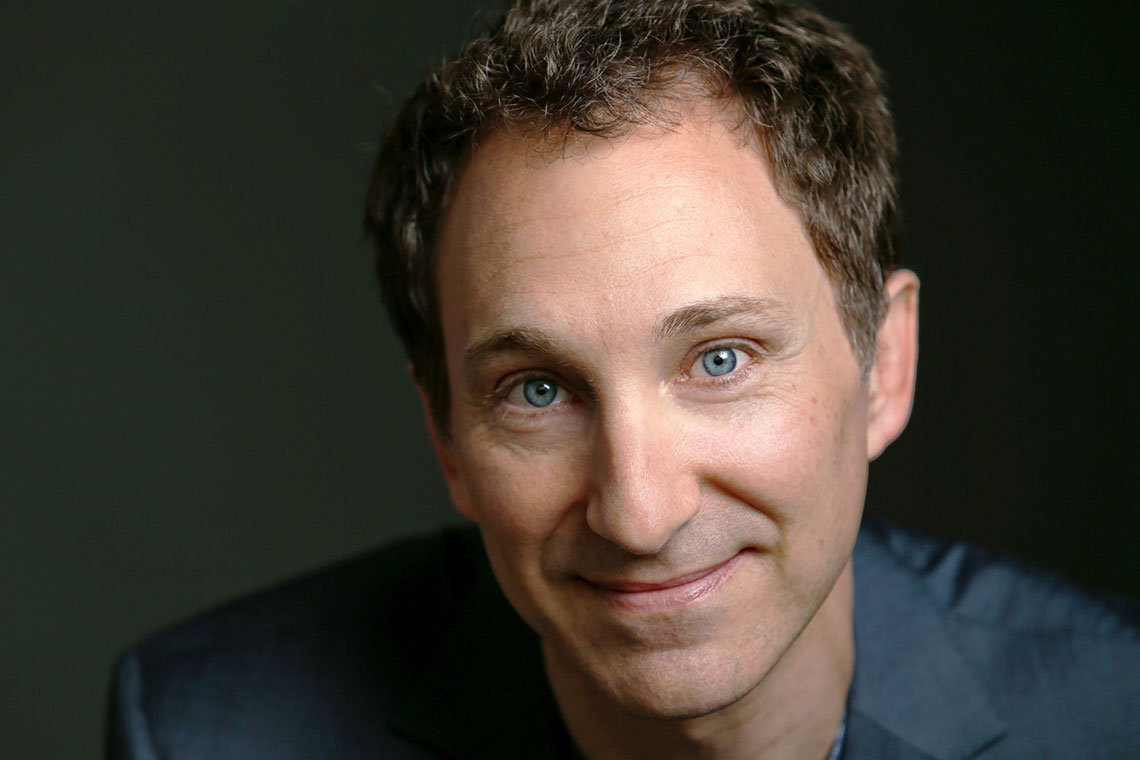
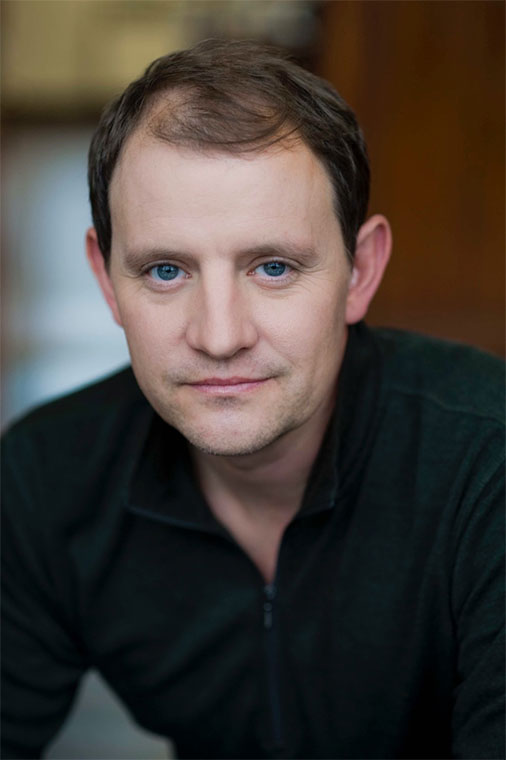
Miranda Pratt is an Equity stage manager who moved to Seattle in 2008. Since then she’s stage managed for Village Theatre, Book-It, Seattle Rep, and 14/48 among others, and served as production manager for Seattle Shakes and Theatre Schmeater.
Currently Pratt is stage managing and running the sound board for Wooden O’s outdoor production of Hamlet, which closes August 7. (Check out our 5 Friday Questions with the show’s Hamlet, Conner Neddersen.) Next up, she’ll be stage managing The Winter’s Tale for Seattle Shakes, opening September 9, and then she’ll be work as assistant stage manager at the Village Theatre for Singin’ In The Rain. Pratt joined me for this week’s installment of Five Friday Questions.
What’s the best performance you’ve seen lately?
I went to New York in May and got to see Tony Award winner Cynthia Erivo play Celie in The Color Purple on Broadway and she was absolutely, breathtakingly astonishing. I actually only saw her in Act One—she got ill and her understudy went on for act two (her understudy was also great)—but one act was enough to see how talented she is!
What’s the best meal in Seattle?
I will eat anything Kelli Waugh cooks up at Solo Bar. Her food is really creative and always amazing.
What music gets you pumped up? What do you listen to when you’re sad?
I listen primarily to musical soundtrack and pop music. Right now, if I’m trying to get pumped for something I listen to the Hamilton soundtrack or any random pop station on Pandora.
When I’m sad I like to listen to music I can sing along with, which probably means listening to all of my musicals on random and skipping the songs that are out of my range.
What’s the most crucial element of any production?
The people in the room are always the most important, from the director and designers to the cast to the backstage crew; the people who put the show together are so critical. When you get a group of people who can collaborate and build off one another it is a truly magical experience.
What’s the most useful thing anyone’s ever taught you about working in theatre?
Go with the flow and be flexible. We do live theatre and anything can happen. Especially as a stage manager, you need to be able to adapt to any situation and roll with it, whether it’s a crazy audience or an unexpected understudy. I learned this lesson stage managing for 14/48; everything happens so fast, you don’t have time to think about what’s coming next, you just have to do what’s in front of you!
Chris Ensweiler is an Equity actor who’s been in Seattle since 2009. He’s performed with ACT, Seattle Rep, Intiman, Seattle Shakes, Book-It, Endangered Species Theatre Project and 14/48 and many others. He’s currently playing Edward Bloom in Big Fish at Taproot Theatre. (Check out our rave about the show and our 5 Fri Q with castmate Sarah Russell.)
Next up, Ensweiler will be appearing in the Intiman’s production of Wedding Band, opening September 6. In January he returns to Village Theatre to play one of the clowns in The 39 Steps. He joined me for this week’s installment of Five Friday Questions.
What’s the best performance you’ve seen lately?
Mads Mikkelsen in the Hannibal TV series: charming, sexy, dangerous and yet very subtle. I am looking forward to watching his recent comic film Men & Chicken (in his native Danish).
What’s the best meal in Seattle?
Seattle now has such a plethora of amazing restaurants but on an actor’s salary I’m afraid I can’t tell you the best. I can tell you that my favorite go-to place is Bizzarro Italian Café: fantastic food, unique and entertaining atmosphere with a very fun and friendly staff.
What music gets you pumped up? What do you listen to when you’re sad?
I’m currently listening to Pitbull and Hadag Nahash (Israeli hip hop/funk band) when I work out; pretty much any music from the 1970s will put me in a good mood.
For quieter times I listen to Blake Shelton or John Mayer.
What’s the most crucial element of any production?
Supportive and collaborative co-workers. Everyone involved in creating a production—administrative staff, marketing, director, designers, scenic and costume staffs, stage management, backstage crew, band and the ensemble—needs to be, as I like to say, “in it to win it.”
I’ve had the pleasure of working at many theaters in Seattle and other cities and have found that if everyone involved works together and supports each other, a great and meaningful experience will be created for the audience. I believe Big Fish at Taproot accomplishes this goal (as well as being a wonderful journey for me).
What’s the most useful thing anyone’s ever taught you about working in theatre?
“Live where your heart is happy.” This advice was given to me by Rocco Dal Vera, a Professor of Drama at the University of Cincinnati’s College-Conservatory of Music. I had just received my B.F.A. in acting from Wright State University (Dayton, OH) and was talking to Rocco about committing to a life in theatre and my brief stints living in New York, Los Angeles and Chicago. He told me that, if I heeded this advice, then everything else would fall into place. I am pleased to report that Rocco was right!
Sarah Russell is an actor, singer and Washington native who’s been performing in Seattle for the past six years. She’s worked at numerous theatres including 5th Avenue (Grease, Hairspray in Concert!, RENT), Village Theatre (My Heart is the Drum), Seattle Shakes’s Wooden O (Julius Caesar), StoryBook Theater (Little Red Riding Hood) and many others. She’s currently playing the role of the Witch in Taproot Theatre’s production of Big Fish, running through August 13. Russell joined me for this week’s installment of Five Friday Questions.
What’s the best performance you’ve seen lately?
I’ve recently been watching the show So You Think You Can Dance: Next Generation and on this week’s episode there is a contemporary dancer named Jordan who is quite phenomenal. She did a piece with the returning all star Sasha about having someone to lean on when you feel alone or sad or scared it really made me reflect on how grateful I am for the people in my life. It’s a beautiful piece and a show that everyone should watch. All the kids on it are amazing.
What’s the best meal in Seattle?
Breakfast is my favorite meal of the day, and eggs benedict is my favorite breakfast food. The best eggs Benedict I have had so far is at Bing’s on Madison. The poached egg was perfect, the hollandaise sauce was to die for. Truly my favorite. They also have bottomless mimosas so that is also a plus.
What music gets you pumped up? What do you listen to when you’re sad?
I listen to all different kinds of music but there are few songs that really get me pumped up. The first is from a little musical no one has really heard of called Hamilton. I love the song “Non Stop” because I love the beats in the song and I can groove to it but it also has great belt-along moments and rap-along moments. My other favorite is anything Queen Bey, my favorites right now being “Hold Up” and “End of Time.” And who doesn’t love “Formation”?
When I’m sad I love to listen to music that I can sing along to and harmonize with, and sing out my emotions. Tori Kelly is one of my favorite artists so listening to her music always makes me feel better. One of my favorite songs is “First Heartbreak.” I also love listening to the group Joseph. They sing amazing harmonies. I love “Eyes to the Sky.” Definitely a song that says “things happen but just look to the sky.”
Ahhh, I almost forgot: ANYTHING India.Arie especially the song “I Am Light.” Sooooooo beautiful.
What’s the most crucial element of any production?
The bond between a cast and crew and trusting your fellow actor onstage. You can tell when people don’t trust each other onstage or are holding back. The more you fully trust your cast and know that every person onstage has your back and you have theirs, you cant go wrong.
What’s the most useful thing anyone’s ever taught you about working in theatre?
Always come prepared. Don’t be afraid to make big choices and never stop exploring your character. There are always new things you can find—new angles to a character, new emotions in a scene or in a moment—so never hold back, really bring your all and trust yourself.
Mary Hubert is a freelance director and producer. Most recently she collaborated with The Horse in Motion and the UW on And Hilarity Ensues! and directed Lazarus and His Girlfriend at the Seattle Fringe. She’s the development director of The Seagull Project, finance director of The Horse in Motion and marketing director of Annex Theatre. She’s also worked with The Satori Group, Washington Ensemble Theatre, Seattle Public Theatre, the Young Playwrights’ Festival and On the Boards.
Next month Hubert will direct Girl at Annex, a “devised ensemble adventure.” In September she’ll direct W O L F, a short piece written by Andrew Shanks premiering at Pocket Theater. Hubert joined me for this week’s installment of Five Friday Questions.
What’s the best performance you’ve seen lately?
Honestly, I feel a little bad straying from the theatre path, but to combat a murderous hangover last weekend I watched all of the Lars Von Trier Depression Trilogy. Every part about the performances in those pieces was the best part, but in particular, Charlotte Gainsbourg slays. Go Lars.
What’s the best meal in Seattle?
Rancho Bravo, rice and bean bowl, carnitas and veggies, add guac, 32-ounce horchata. Can cure most things, including the common cold.
What music gets you pumped up? What do you listen to when you’re sad?
Really any obscure electronica will get me going, specifically uptempo glitch hop *dusts off shoulders pretentiously*.
But I’m actually more of a podcast/audiobook gal than a music maven. Currently I’m burning my way through this young adult series called The Heroes of Olympus that I started reading for my Kidstage gig and then couldn’t seem to stop. It’s kind of like Harry Potter, but with more badass female characters and Greek gods.
What’s the most crucial element of any production?
Establishing a common vocabulary. Every production is going to have different collaborators, a unique aesthetic, changing goals. Each team needs to figure out how to talk to each other, or meeting these needs is impossible.
Also, snacks and beer. Snacks and beer. Snacks and beer.
What’s the most useful thing anyone’s ever taught you about working in theatre?
As a director, your job is to create an atmosphere in which something might happen, not to create the thing itself. Though you should make sure there is always an idea in the space you’re in, you don’t need to be the only voice in the room.
Or, in shorthand: shut up and listen to your quietest actors. They usually have the best things to say.
Bradford Farwell is an actor and member of New Century Theatre Company with whom he most recently performed in acclaimed productions of My Name is Asher Lev and Festen. He’s also worked for Seattle Rep, Intiman, Seattle Shakes, Strawberry Theatre Workshop and many others.
This month he’ll be in Daisy at ACT, running July 8 through August 7. Later this year he’ll be in Charles III, which will run at ACT in San Francisco, The Shakespeare Theatre in Washington D.C. and here at Seattle Rep. Farwell joined me for this week’s installment of Five Friday Questions.
What’s the best performance you’ve seen lately?
Seattle is at the top of its game right now when it comes to theatre performance. Conner Neddersen’s performance in 9 Circles at Strawshop was impressive, and I have to say Kirsten Potter’s performance in A View from the Bridge at Seattle Rep was stunning. She is the definition of a leading lady, but she took on her supporting role with a passion that made the story sing. Outside of theatre, Kendrick Lamar’s performance at the Grammys this year is a must see. Game-changing art.
What’s the best meal in Seattle?
The best meal I’ve had is at Le Pichet. Go on a Sunday morning and have a glass of wine with your eggs and coffee (then a nap around 11).
What music gets you pumped up? What do you listen to when you’re sad?
With the invention of Apple Music I have started to revisit my youth. I was a huge Rush fan when I was in my teens—you know, 10 years ago—and I was recently air drumming to “The Temples of Syrinx” and pulled a muscle in my back. (No, seriously, I did.)
As for when I’m sad, anything by Joni Mitchell.
And Tweedy’s album Sukierae has a track, “Nobody Dies Anymore,” that cuts me to the bone.
What’s the most crucial element of any production?
There is so much that goes into a piece of theatre. It’s a hard thing to accomplish in this country right now. It seems that anyone who needs to be nurtured past the age of three is viewed as weak but to do my job well, nurture is a requirement. We’ve lifted the individual to such a height that sometimes we forget the best of us lies in the people across, beside and in front.
I performed two shows with my theatre company this year and in both instances the crucial element was stage management. In Festen, Tori Thompson was the only reason we didn’t go completely off the rails. She was a rock of competence and grace, and in Asher Lev we had the talents of David Hartig, who kept us all in his loving hands.
Right now I am rehearsing Daisy at ACT, and our stage manager JR Weldon is simply one of the best in the business. There is a wonderful old saying: A smart parachuter always smiles at his packer. Really, if you don’t, you could die a horrible death.
What’s the most useful thing anyone’s ever taught you about working in theatre?
I wouldn’t say it was useful—and probably a bit ironic considering I sitting here at one o’clock in the morning talking about myself—but it’s a phrase I heard very early in my career: “The greatest thing an actor can be is anonymous.” As an actor I have the enviable position of being the face of our particular art, but if I am recognized as anything other than the characters I portray I take away from the story.
Actors are simply interpreters, and when we become more it detracts from the overall collective vision. That being said, can someone please give me a talk show? I have two kids and I could use the cash.
The playwright talks about ‘Daisy,’ his new play at ACT.
The perennial question of theatre programming is best summed up in four words: “Why this play now?” This question is especially pertinent when presenting works that portray actual historical events that happened within living memory; the skillful playwright must find a way to give an old story new relevance. She must delve into the thoughts and actions of our forebears but remain mindful of the audience’s current reality, bridging the gap between the two while avoiding didacticism, misappropriation and sentimentality. It’s a tall order.
Next month ACT Theatre will premiere a new play, Daisy, about the making of the most notorious campaign commercial ever made, the “Daisy” spot from Lyndon Johnson’s successful 1964 presidential run. Watch it and you’ll see that our present apocalyptic rhetoric has nothing on this ad; it’s a strangely reassuring reminder that candidates have always shouted, “Vote for me or we’ll all die!”
Daisy comes on the heels of a wildly successful play about the same president, All the Way, and the conclusion of an acclaimed TV series about the same era, Mad Men. It’s also premiering at the height—depth?—of the American presidential election season, always a time of momentous portent and increased attention to posterity.
I talked to Daisy’s playwright, Sean Devine, about this uncanny convergence of history, zeitgeist and theatre.
Did this play arise with expectations of the current election season or did it develop on a different path?
Completely on a different path—I wish I had that much foresight! I first discovered this story and wanted to tell it as far back as 2003. I started writing it in earnest three years or so ago. Even then I didn’t have an inclination of how connected it’d be to this election cycle.
As the play was getting further along and as I was developing a partnership with John Langs and ACT, we knew that we wanted to program it during this election cycle because we thought that would help advance its relevance. But none of us could have predicted just how directly connected it is, thematically and content-wise, to what’s going on today. It’s pure luck that it’s this relevant.
LBJ keeps coming up in the culture and Mad Men got us all thinking about the roots of manipulation in the media. Were you informed by any of that? Did All the Way inform your writing?
I had already developed my story before Mad Men came along, but it informed in the sense that it gave me a little more dramatic insight into the era. It certainly excited me because it showed that people were finding this world and this era interesting. Their storyline started around 1962 or ’63, and you could tell they were advancing toward Kennedy’s assassination and talking about Johnson and his election. I was petrified that they were going to devote an entire episode to the creation of the “Daisy” ad. I breathed a sigh of relief when they didn’t even talk about it.
You mentioned All the Way—I definitely was aware of that play but I purposefully held off on reading it or seeing it until I had my story told because I didn’t want to parallel it too much.
The question you were kind of asking beforehand—“Isn’t it interesting that these things are all coming back into the cultural consciousness?”—I think that’s part and parcel of why I’m telling this story, and perhaps why [All the Way playwright] Robert Schenkkan and the Mad Men people are telling their stories. I know that I don’t want to tell a story from a previous generation strictly to be a museum piece. The kind of plays I’ve written so far, I deliberately focus on relatively recent history as a commentary on contemporary life. I’m a firm believer that history is cyclical and that we have to look to our past for insight into our present.
When you see things you’re working on bubble up in the zeitgeist is that validating? Do you think, “I’m really onto something here,” or is it, “Dammit, they’ve stepped on my premise?”
It is both. Without trying to sound like a forecaster, it is reassuring to feel that this thing that I’ve been insanely curious about for a long time, there’s a reason for it. Writers always want to feel that they have a finger on the pulse. And when you’re writing something that’s set 50 years ago, you’re taking a big risk in being portrayed as so far off the pulse. So when it does come full circle there’s a certain amount of vindication there.
The other half of that question is, Does part of me feel like they’re stepping on my toes? It’s not so much that. In the three or four times we’ve had public readings of it recently, as people watch this story I can see on their faces that they’re finding it shockingly interesting just how close the two stories are, my story and [the current election]. But the downside of that—if it’s even a down side—is that they end up thinking the play is intentionally serving just as allegory for what’s happening now. The current reality is so strong that my small concern is that they’re not gonna take away the lessons of the past as much as to focus on the contemporary parallels. It’s a phenomenon I’m observing that’s beyond my control at this point
That’s not such a bad problem to have.
Exactly.
Doesn’t it seem strange that the current Democratic candidate campaigned for Goldwater in ’64?
It does seem strange—it’s quite an interesting factoid. The other question is: Doesn’t it seem interesting that the presumptive Republican nominee was a frequent donor of the Democratic nominee?
Does the fact that Trump donated to Hillary and Hillary campaigned for Goldwater suggest that we are “doomed to repeat”?
It’s funny that so many people are drawing parallels between Goldwater and Trump. While Goldwater was certainly an extremist in his day he was a true conservative, an old-fashioned, dyed-in-the-roots Republican. Whereas Trump is all over the map and he’s saying things that are just downright ugly. Not that I want to pump up Goldwater, but there was an article that came out today in which Goldwater’s widow and son were saying that it’s distasteful to see their father compared to Trump.
What are the odds that all this would converge before the world premiere of your play?
Our production is going to take place during July when the two national conventions are happening! We even have a scene that is set during the Republican convention. The serendipity is gonna be a little bit bizarre.
Mary VanArsdel is a Seattle native who’s been working out of New York City since 2008. Early in her career she played the role of the cornflake-hurling lead singer Jetta in the original 1983 production of Pioneer Square Theatre’s Angry Housewives, the longest-running musical in Seattle history. She also originated the role of Nancy Reagan in The Group Theatre’s 1986 production of Gary Trudeau’s Rap Master Ronnie.
VanArsdel left to work in Los Angeles, where she won an LA Drama Critics’ Circle Award and appeared in numerous films and TV shows, including Melrose Place, Gilmore Girls and Boardwalk Empire. After moving to New York, she originated the role of The Bird Woman in the first national tour of Mary Poppins.
VanArsdel returns to her hometown to play Miss Shingle in 5th Avenue’s upcoming A Gentleman’s Guide to Love and Murder, running from July 12 through 31. She joined me for this week’s installment of Five Friday Questions.
What’s the best performance you’ve seen lately?
I see a lot of theatre in New York City, and there were some terrific performances there this year. But the performance that keeps sticking in my mind above all others was in 2011: Mark Rylance as Johnny in the play Jerusalem. It was a difficult play and one I’m not sure I was fond of. But Rylance’s fearless, tortured, multi-layered performance was a knock-out.
A very close second would be a performance I only saw on YouTube: Imelda Staunton as Mama Rose performing “Rose’s Turn” in the recent London West End Production of Gypsy. Reportedly, that production will be coming to Broadway. Equally stunning.
What’s the best meal in Seattle?
Why, fresh caught Dungeness crab, of course! Perhaps accompanied by a side of Copper River salmon.
What music gets you pumped up? What do you listen to when you’re sad?
Anything I can dance to. “Uptown Funk” is my current favorite.
What’s the most crucial element of any production?
The lighting—we have to be seen! Seriously, though, it would have to be the script. It all starts with the quality of the writing.
What’s the most useful thing anyone’s ever taught you about working in theatre?
Theatre, as opposed to TV or film, requires an actor to repeat his or her performance night after night, sometimes for weeks or, as is the case with our show, months or years at a time. I did a scene study class once with Jeff Perry, one of the founders of the esteemed Steppenwolf Theatre, and one of the current stars of the TV series Scandal. His mantra for our work was “Do it this time.” It’s so important not to become a performing “machine” but to stay open to subtle changes. This mantra helps me stay present and focused on whatever may occur from night to night.
Sydney Tucker is a Seattle actor, burlesque performer and 2012 Cornish grad. She’s worked with Annex Theatre and 14/48 Projects and last summer she played Montana Wildhack in Book-It’s stellar Slaughterhouse-Five.
Tucker produces theatrical burlesque cabaret shows all over town and in September she’ll perform at Bumbershoot with her troupe, A Little Burlesque. Next month she’ll be acting, singing, dancing and hula hooping in Mark Siano and Opal Peachey’s new cabaret musical, Twister Beach at Cafe Nordo. Tucker joined me for this week’s installment of Five Friday Questions.
What’s the best performance you’ve seen lately?
On The Boards is my favorite venue in town. Every time I see something there I am completely surprised by it. I find that so refreshing. They just had a group from New York, 600 Highwaymen, put up Employee of the Year, which featured this amazing ensemble of five young girls aged 11-13. Whoa whoa whoa my mind, my heart, my soul, everything exploded.
What’s the best meal in Seattle?
If I’m going out to eat—it’s usually brunch—I will always go to Oddfellows Cafe. Other fabulous brunch places are Cafe Presse and The Wandering Goose. I also really love Red Star in Fremont for great tacos and margaritas!
What music gets you pumped up? What do you listen to when you’re sad?
To get pumped, I am most certainly listening to Beyonce. My favorites are some older classics like “Love on Top” and “Countdown.”
I’m in love with Sia, especially “Cheap Thrills.” I’ll also be jamming to MØ, Chvrches, and Disclosure, just to name a few more.
When I’m feeling sad, I’ll listen to Bon Iver or Sufjan Stevens. There may have been times when I’ve laid on the floor and cried will playing songs from Sufjan’s Come On Feel the Illinoise. Not that I cry on the floor often, just, you know, when it’s necessary.
What’s the most crucial element of any production?
Teamwork. Theater is a team effort and it requires everyone to show up, be present, and do the work. If one personal falls, we all fall. If one person succeeds, we all succeed.
What’s the most useful thing anyone’s ever taught you about working in theatre?
I always quote this and I’m sure she’s sick of it by now but my mentor and dear friend taught me, “Yes and Yes and I Don’t Know and Yes.” It reminds me to be open and explore the unknown. It reminds me to be curious and playful. It’s not called a “play” for nothing!
Conner Neddersen is an actor, Cornish grad and company member with New Century Theater Company. Most recently you might’ve seen him in Strawberry Theatre Workshop’s 9 Circles and playing the title role in NCTC’s My Name is Asher Lev. Last fall he played the chronically depressed Uncle Poul in NCTC’s excellent Festen, where he injected comic relief into one of the most emotionally intense shows of last year. He’s also performed at ACT (A Christmas Carol), Taproot (The Explorers Club) and Seattle Shakes (Henry IV Part One, Two Gentlemen of Verona, Twelfth Night).
Next month, Neddersen will tackle the role of Hamlet in Seattle Shakes’s Wooden O production, running July 7 through August 7. He joined me for this week’s installment of Five Friday Questions.
What’s the best performance you’ve seen lately?
I’m a massive soccer fan, and as a kid playing indoor soccer I remember seeing video snippets of the Brazilian Ronaldinho. The sheer joy on his face and the beauty of the Brazilian Joga Bonito style that he was playing was utterly inspiring—the joy and the soft focus, always smiling. I will watch it as sort of a reminder that creativity and expression are most free to roam when you’re having a good time.
What’s the best meal in Seattle?
I’ve given this question a lot of thought. I love breakfast. I am constantly searching for the best Eggs Benedict in town, and after ten years of living in Seattle I still haven’t found a better Benedict then Glo’s on Capitol Hill. So good! I used to go there every weekend with friends even when we all knew we couldn’t possibly afford it. I can eat a breakfast there and be good all day. Although for lunch Tacos Chukis on Broadway, just a small hole-in-the-wall place on top of a smoke shop, is the first place I tried pineapple in tacos. I never looked back. I don’t think there’s a day that goes by where I don’t consider picking up a taco from that place.
What music gets you pumped up? What do you listen to when you’re sad?
Tupac’s “Me Against the World” really hits the spot when I’m getting amped up to do something, make something. I have Tupac’s second-to-last verse memorized, and I’ll say it to myself when I’m warming up, or when I’m walking somewhere, or in the shower. It’s got this driving force to it. I love lyrics and the poetry of the song.
As for when I’m feeling down? Gotta be “Hey Jude,” but this one in particular, and I know y’all post videos of what I’m talking about, so it’s gotta be this one haha. It’s a specific performance of “Hey Jude” where the Beatles are messing around for a spell, playing their instruments and whatnot, then the host stops them, saying something along the lines of “magnificent, magnificent, never heard a better orchestra, etc.” Then they play the song and most of it is shot as a semi close up of Paul at his piano. He just jumps right into the song, and it’s like he’s talking right at you. Makes me feel good again. I’ve always wanted advice from a Beatle, and if that’s the closest I’m going to get, that’s okay with me.
What’s the most crucial element of any production?
Technically: cohesion. But I think more importantly, respect and gratitude and or love—don’t fake it—between you and your fellow artists in the production, especially in theater.
While we were running My Name is Asher Lev at NCTC one of the most common responses we got was, “You guys really were a family up there.” Well, it’s because we were a family offstage as well; fighting, joking, caring for one another. How you treat someone offstage WILL inform what goes on onstage. I think it’s pretty unavoidable.
What’s the most useful thing anyone’s ever taught you about working in theatre?
It was more of a reality check than a lesson someone taught me. We were doing Twelfth Night, my first main stage show at Seattle Shakespeare. I was playing Feste, who plays the guitar. I never played in front of anyone who I wasn’t close to, only friends who would put up with listening to me butcher various ’90s alternative rock songs. It was the night after opening, and I found out that Eddie Vedder was in the audience. Mike Dooly saw how nervous I was, turned to me and said, “There is only one Conner Neddersen, man. Show them what that name means.”
At first I laughed it off—it was an off-the-cuff statement—but I never stopped thinking about it. When acting onstage, honor who you are, have fun with who you are, respect who you are, and then share it. You are the only one who carries your own name; it’s worth something.
Bobbi Kotula is an actor and singer from Bethlehem, Pennsylvania. She won a Footlight Award for her 2013 performance in the Intiman’s Stu for Silverton, and she’s worked at theatres all over the region, from Seattle Rep to 5th Avenue Theatre to numerous musical productions at Village Theatre. Most recently, she played Mrs. Warren in Seattle Shakespeare’s Mrs. Warren’s Profession, about which recent 5 Fri Q-er Corey McDaniel said “I would pay any price asked to see any one of these three powerhouse performers on stage.” Kotula joined me for this week’s installment of Five Friday Questions.
What’s the best performance you’ve seen lately?
Best is difficult to answer because the Puget Sound talent pool is deeply gifted and inventive. I suppose the performance I should gauge as “best” is one that moves my spirit. With that in mind, Billy Elliot comes to the top of my list. The story of a 12-year-old boy finding his own way through his rough world was a soul-lightening experience.
What’s the best meal in Seattle?
If it has to be in Seattle—I live in Issaquah and find so many excellent restaurants here: Fins, Montalcino, Noodle Boat—then I would have to say one of Tom Douglas’s restaurants, either Dahlia Lounge (coconut cream pie!) or Palace Kitchen are incredibly delicious.
What music gets you pumped up? What do you listen to when you’re sad?
Pumped up:
U2 (“Still Haven’t Found What I’m Looking For”)
Handel (Water Music)
Beethoven (Symphony #5 in C Minor, “Ode to Joy”)
J.S. Bach (“Jesu Joy of Man’s Desiring,” Brandenburg Concertos—I have a thing about trumpets)
Big band music (“Sing, Sing, Sing,” “String of Pearls,” “In the Mood,” ANYTHING TONY BENNETT!!)
Pharrell Williams (“Happy”)
Sarah Bareilles (“Brave”)
When I’m sad: meditation music on Pandora. Quiet acoustic hymns and reflective sweet melodies.
What’s the most crucial element of any production?
The most crucial element of any production for me is the authentic connection between the actors. It’s crucial to tell a story on stage with truth, humor, compassion and love. If there is no honest connection between the human beings on stage then I don’t want to sit and watch it. I cannot abide liars or selfish, unrealized performances.
What’s the most useful thing anyone’s ever taught you about working in theatre?
Show up early and be ready to work at your call time.