Five Friday Questions with Richard Gray

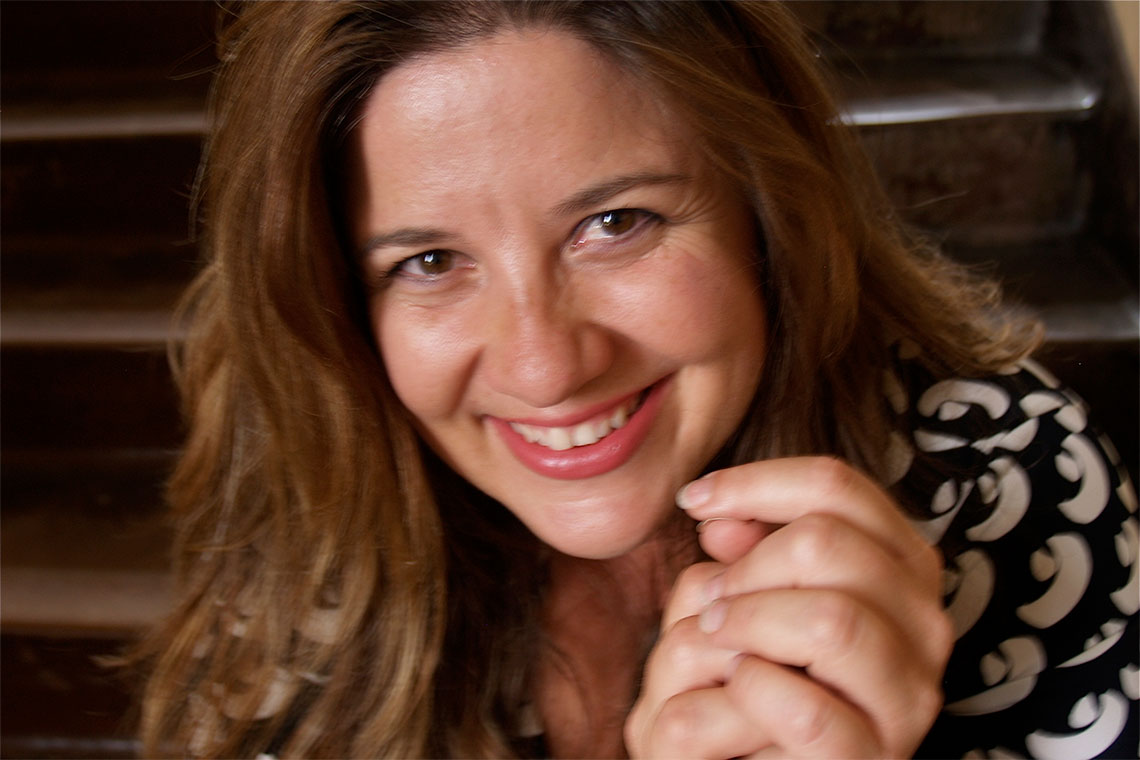
Richard Gray is an actor and award-winning composer/lyricist. His musical collaborations include The Fourth Estate with Andrew Russell, Love is Love with Martin Charnin, and The Flea and the Professor with Jordan Harrison, among many others.

Onstage, he’s performed in 23 productions at the 5th Avenue Theatre including The Music Man, Spamalot, Carousel and A Room with a View. Currently he’s in the 5th’s excellent Assassins as Charles Guiteau, killer of President James Garfield. He plays the polymath huckster with a twinkly-eyed, demented brio. Gray joined me for this week’s installment of Five Friday Questions.

What’s the best performance you’ve seen lately?

I am usually a fan of a “go big or go home” performance. That said, the most impactful portrayal I have seen recently was Cynthia Erivo in The Color Purple. She started off so still and internal. I was so impressed by her patience, holding back until the moment she released and tore down the house.

What’s the best meal in Seattle?

This question could get me in trouble, as I am lucky enough to be friends with a great many of the city’s top chefs. I will always take guests to Poppy on Capitol Hill for one of Jerry Traunfeld’s amazing thali-inspired platters. But for a truly special treat I head up to Lummi Island for a Blaine Wetzel prix fixe at The Willows Inn.

What music gets you pumped up? What do you listen to when you’re sad?

Honestly, I don’t listen to music that much. As a composer, I tend to go to work when I have music playing—analyzing structure and evaluating lyrics. Also, I like driving in a quiet car so I can compose in my head. But when I need to get pumped up? Old school: ’70s/’80s pop like Michael Jackson’s “Beat It” or Elton John’s “Bennie and The Jets.”

When I’m sad? Rickie Lee Jones’s Girl at Her Volcano, especially her version of “Rainbow Sleeves.”

What’s the most crucial element of any production?

Don’t BORE me. You can do anything else—entertain me, piss me off, make me laugh, move me to tears, make me think, turn me on, impress me with skill or romance me with the power of language. Just don’t bore me. I have only so many hours on this planet and I hate wasting two hours on something pedestrian.

What’s the most useful thing anyone’s ever taught you about working in theatre?

Never be the problem in the room. Work your ass off all the time because this is a career choice that survives predominantly on reputation. Do your homework and bring your A-game to every rehearsal. As a director, be overly prepared and utterly flexible. As a theatre composer, be ready to defend every note and lyric on the page and be open to input and change. As an actor, come to every rehearsal with a myriad of ideas and an open spirit of collaboration. If people describe you as not only “talented” but also “reliable,” you will succeed.

Five Friday Questions with Kelly Kitchens

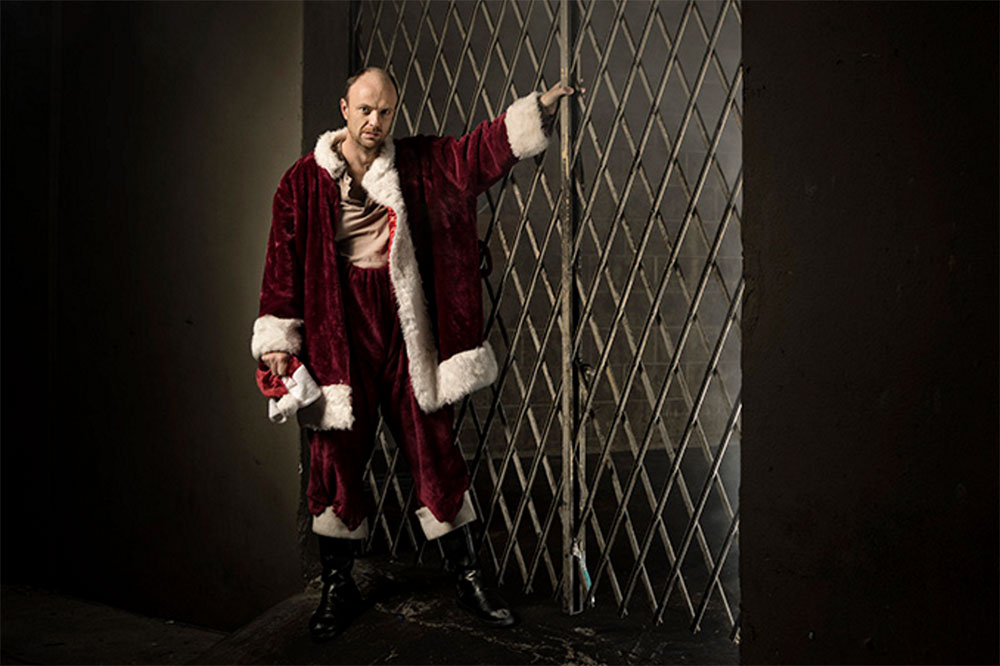
Kelly Kitchens is a director, actor, teaching artist and associate artistic director of Seattle Public Theater. Lately she’s won an armload of awards: the 2014 Gregory Award for Outstanding Director, 2015 Seattle Weekly Readers Poll for Best Director, 2015 Gypsy Rose Lee Award for Best Direction of a Play. Most recently she was included in Seattle magazine’s inaugural list of “Top 20 Most Talented People in Seattle.”

In the past year she’s directed shows at MAP Theatre (The Art of Bad Men), Seattle Public Theatre (Slowgirl and Christmastown) and Washington Ensemble Theatre (Tall Girls). She’s also acted and directed in numerous productions for Seattle Shakes, as well as stage directing the Seattle Opera’s touring production of Our Earth and adapting and directing Book-It’s 2013 She’s Come Undone.

Kitchens stays busy. Next up, she’ll be directing The Other Place at Seattle Public Theater, opening next Friday, March 25th. In the fall, she’ll be directing projects for both Seattle Public Theater and Seattle Shakespeare Company. She joined me for this week’s installment of Five Friday Questions.

What’s the best performance you’ve seen lately?

I’m going to be really honest with you here: the 2007 Fiesta Bowl (Oklahoma vs. Boise State) is one my favorite performances and best college football games of all time. I own the DVD and watch it regularly, so I’m counting it as lately. Sometimes I invite friends over and we remount it. It’s like Romeo and Juliet—you know how it ends, but it’s no less incredible watching the story unfold over (and over and over) again. A late game comeback, overtime, a QB named Zabransky from an unranked team who emerged from nowhere to pull off a series of stunning trick plays, shots of the marching bands suffering panic and disbelief (a tuba fell over and a flute player cried) and when Coach Chris Petersen calls “Statue Left” and the underdogs finally win, the star running back proposes to his cheerleader girlfriend on national television. Spoiler alert: she said yes. Okay, now I want to watch it again. You’re welcome to join me—just throw on your college sweatshirt and be prepared to root against the Sooners.

What’s the best meal in Seattle?

Does a martini count? With chips and guacamole? No? Then grilling steaks with my daddy when my family comes to town. Which is about the only time you’ll find me cooking, as my last name is one of life’s little ironies.

What music gets you pumped up? What do you listen to when you’re sad?

When I was a little girl, I would often get off the bus and hear music thumping through the windows and I knew my mother was inside dancing like crazy by herself on the living room floor. To this day, when I hear Roy Orbison’s “Only The Lonely,” I can’t help but smile and gleefully cut a rug.

When I’m sad and a good cry is in order, John Prine and Bonnie Raitt’s live duet of “Angel From Montgomery” and Patty Griffith’s “Poor Man’s House” never fail to deliver.

What’s the most crucial element of any production?

Collaboration around a great script. Whether making theater or attending theater, there is nothing like an ensemble passionately, skillfully, creatively telling a story together that they believe needs to be told. In that moment, magic happens. That kind of storytelling opens minds and hearts; worlds expand.

What’s the most useful thing anyone’s ever taught you about working in theatre?

Not just in theater but across my life, the people I respect and hope to emulate have always practiced preparation, courage, and kindness. Also, “Clear eyes, full heart, can’t lose” isn’t a bad motto.

Lesser-known ‘Assassins’: Samuel Byck

With Assassins, the 5thh Avenue Theatre and ACT present a musical of unquestionable contemporary relevance. As the current election cycle dredges up the darkest impulses of the American psyche, from known white supremacists phonebanking for the Republican frontrunner to violent clashes at campaign rallies, the rage of the national id is given front page, top-of-the-hour treatment in the media.

Assassins brilliantly explores the anger of the downtrodden, the disenfranchised and the mentally ill who have been driven to murder the president. The musical humanizes its subjects, sure, but at the same time it confronts us with their implacable fury, a souped-up version of the chaotic anger with which we’re currently being forced to come to terms in the broader electorate.

For all the musical’s talk of immortality, some of its would-be killers almost managed to slip back into obscurity. We know the marquee names: John Hinckley, John Wilkes Booth, Lee Harvey Oswald. But a number of the other characters were unknown to me, which I’m embarrassed to admit as someone who minored in history as an undergraduate. In this series, I’ll take a look at some of the lesser-known assassins.

Samuel Byck as played by Matt Wolfe alternates between impotence and menace. Wolfe deftly captures those moments in which self-pity boils over into murderous wrath. Perhaps more than any of the other characters, Byck most closely resembles the profile of a Trump voter: a poor white man, barely employable, who’s sick of losing and ready to start winning. But his grandiose dreams are built on the flimsiest of schemes, and he commits suicide in the cockpit of a commercial airliner that he’s attempting to hijack and fly into the White House. 

Byck left behind audiotapes in which he discusses his plans. The YouTube poster below describes the recording as “a useful historical resource, and character resource for those who play him in Assassins.” It’s interesting to consider that the Sondheim musical perhaps extended Byck’s notoriety further than his botched 1974 assassination plot.

Other historical notes:

  • Nixon wasn’t even at the White House that day.
  • 27 years later, Secretary of State Condoleeza Rice would claim: “I don’t think  that anybody could have predicted… that they would try to use an airplane as a missile.”
  • A movie based on his story, The Assassination of Richard Nixon, starred Sean Penn as Byck with supporting roles by Naomi Watts and Don Cheadle and cinematography by the incomparable Emmanuel Lubezki:

Five Friday Questions with Alex Matthews

Alex Matthews is an actor and founding member of Encore fave The Satori Group. He also recently became a member of the Seagull Project where he was seen last year in their 2015 production of The Three Sisters at ACT.

Currently, he’s performing in his first play at the Seattle Rep, Luna Gale, which runs through March 27. After that, he’ll be in the Rep’s world premiere of Sherlock Holmes and the American Problem, opening April 22—and written by recent 5 Fri Q-er R. Hamilton Wright. Matthews joined me for this week’s edition of Five Friday Questions.

What’s the best performance you’ve seen lately?

The real answer is probably watching Holly Holm fight Miesha Tate last week at UFC 196. I did a lot of organized combat as a kid and people don’t understand how smart those fighters have to be. It’s all about going in with meticulous preparation and then confronting surprises in the ring and having to problem-solve on your feet. It was such a brilliant fight.

Also, I have to say JULIA by Christiane Jatahy at On the Boards because it was a two-hander with actors who spoke Portuguese all while telling a gritty emotional drama that unfolded onstage as well as on screen as they were being filmed at close range by a cameraman. The acting was astonishing. Most people think that acting for a camera is different than acting for a live audience and that’s probably true, but these people did both simultaneously and made it look seamless… unbelievable.

AND, OH MAN! Also, there’s a performance series called Birthday Girl at Common AREA Maintenance in Belltown. It’s a group of eclectic performances meets gift exchange. The performers are so talented and pumped to be there. It’s always immediate and surprising. If you want a slap-in-the-face wakeup to save you from Netflix (the khaki pants of entertainment) then you gotta check this out.

What’s the best meal in Seattle?

It’s not in Seattle per se, but it’s nearby in Arlington. Every summer, star chef Tamara Murphy puts on an outdoor festival called Burning Beast. She brings together some of the best chefs in Seattle and gives them one whole, locally raised animal that they are then challenged to cook in a fire pit in the middle of the field. A lot of our food is too fussy, be it foodie food or specialty diet food or processed whatever food. There’s something so satisfying about humans gathered around meat and fire.

What music gets you pumped up? What do you listen to when you’re sad?

This is the question I started fearing the minute you told me I was going to do this. Because my embarrassing confession is that I’m just not that up on the music scene these days. It’s just not a major part of my life.

I will say this though: almost every morning I wake up with some song stuck in my head, weirdly. Then I grab my phone and make my girlfriend listen to it. It’s my own weird version of like waking up and telling someone about my dreams. But usually they are just pop songs from the 90s. Yesterday it was a song by the band Savage Garden that I’m certain no one in the world has listened to since 1997, so I don’t know where it came from.

Also, I guess when I’m sad I tend to listen to REALLY sappy, overwrought female singer-songwriters. You can probably guess what English sappy vocalist who just came out with a new album I’ve been listening to lately, but I don’t want to admit to it because it would destroy my reputation in the hip fringe performing arts world.

What’s the most crucial element of any production?

Story.

There are so many elements that need to be almost perfect to make a production work well, but everything starts with story. It’s the DNA around which every other choice is made from the writer finishing the script to the director, designers and actors. Starting with a good story allows you to move forward and try to make other good elements, but without it, you’re gonna have serious trouble.

What’s the most useful thing anyone’s ever taught you about working in theatre?

Be prepared and try not to waste time. So much of collaborating on plays is about managing fear. Fear causes us to spend unnecessary time and energy on things that don’t lead to quality results. With so little time, even under the best of circumstances it takes a minor miracle to ever create something excellent, but you’ll give yourself the best chance if you’re prepared, focused, and hungry to work.

JJ Watt said, “Success isn’t owned; it’s leased and rent is due every day.” I certainly haven’t ever achieved his level of success, but I think the more experience I get as an actor, the more I understand what he’s trying to say.

Five Friday Questions with Hannah Mootz

Hannah Mootz is an actor and Cornish grad who’s performed at Seattle Shakes, Washington Ensemble Theatre, Seattle Public Theatre and many others. City Arts described her work in 2013’s Bo-Nita, a one-woman show at the Seattle Rep in which she played seven different characters, as a “powerhouse performance.” You might’ve seen her most recently in The Children’s Hour at the Intiman.

Mootz is a member of the Seagull Project, with whom she’ll appear in next year’s The Cherry Orchard. She’ll also be in New Century Theatre Company’s The Big Meal this fall. Currently she’s rehearsing for Luna Gale, running March 4 through 27 at the Rep. Mootz joined me for this week’s installment of Five Friday Questions.

What’s the best performance you’ve seen lately?

Constellations at Seattle Repertory Theatre. The honesty and vulnerability was palpable. The story hit me hard. And as far as the actual actors’ performances, the strong technique and visceral truth on stage is something I aspire to. Also, I recently re-watched The Best of Chris Farley on SNL. His comedic-genius soul is so heartwarming.

What’s the best meal in Seattle?

Well—unfortunately I’m unable to eat out ANYWHERE! Due to an auto-immune disease, I’m on an almost farcically limited diet. I haven’t dined out in over two years. But I will give a shout out to the café I work at, because I know firsthand that Nollie’s Café in South Lake Union uses only fresh ingredients, house roast their meats daily, and home make all their baked goods and treats. I live vicariously through my customers who come in for great food that I truly stand behind. I, myself also make a damn good almond butter that I could probably sell at restaurants.

What music gets you pumped up? What do you listen to when you’re sad?

My favorite artists to listen to when I’m getting ready or am going for a run: Wale, J Cole, Purity Ring, Jhene Aiko, A$AP Rocky, Alt-J, and Ben Howard.

The artists I listen to when I need to emote by myself, and they help sing me through it: James Vincent McMorrow, Matt Corby, Keaton Henson, Bon Iver, Daughter, and more Ben Howard.

I also cannot deny my love for R&B. Anything from the ’90s to the present. It’s just sexy! Mariah Carey, Whitney Houston, Beyoncé, Aaliyah, Trey Songz, Ne-Yo, Tank, Anthony Hamilton, etc. I just can’t get enough.

What’s the most crucial element of any production?

Hands down the story. Is this a story I want to tell? Is this a story I want to see?

Also, I love productions with characters who ask the audience to question their judgments as well as their allowance for empathy.

What’s the most useful thing anyone’s ever taught you about working in theatre?

This career is a roller coaster, so learn to embrace every aspect of it. The highs, the lows, and the steady goings. Everything’s a gift, you just got to find it.

Five Friday Questions with R. Hamilton Wright

R. Hamilton Wright is a Seattle actor and playwright who’s been in more than 130 productions over 35 years of working in theatre. Most recently, he appeared in Seattle Shakes’s Mother Courage and Her Children, Seattle Rep’s Who’s Afraid of Virginia Woolf and ACT’s Vanya, Sonia, Masha and Spike.

His play, Sherlock Holmes and the American Problem, will receive its world premiere at the Rep in April, directed by Allison Narver. He’ll also serve as a member of ACT’s Core Company, acting as an ambassador and regular contributor to productions throughout the coming year. (See our 5 Fri Q with fellow Core Company member Jasmine Jean Sim.)

Wright—his friends call him Bob—lives in a little brick house in North Seattle with his wife, the playwright and master baker Katie Forgette. He joined me for this week’s edition of Five Friday Questions.

What’s the best performance you’ve seen lately?

Well, whenever my dear wife, confronted by four day’s growth of beard on my sorry face, says “I love you.” It is beautifully delivered and there are endless little variations in how she delivers this simple phrase. It is magic.

I always buy it.

What’s the best meal in Seattle?

In the winter, when the water gets cold, I love the oysters at The Walrus and the Carpenter. They are delicious—if you like oysters—and they make it possible for us to order the maple bread pudding for dessert, which is magnificent.

And we live not far from Holman Road and we both grew up in Seattle so whether we need it or not we eat at Dick’s once a month. When I was ten or eleven I could get a hamburger, cheeseburger, fries and a shake for about a dollar. I get the same meal today.

What music gets you pumped up? What do you listen to when you’re sad?

I don’t listen to music to get excited. I don’t listen to music if I’m doing anything else. I really don’t listen to much music, actually, which sounds like I’m admitting to being an alien but it is true. I listen to The Beatles when I am in the car. Sometimes Django Reinhardt.

What’s the most crucial element of any production?

A good play. Good actors. The text is important but the really crucial thing is the cast. Talent is critical but everyone has to want to work really hard and there has to be a surplus of joy at the end for it to be a really significant experience.

What’s the most useful thing anyone’s ever taught you about working in theatre?

Woody Allen has said that 80% of success is showing up. I learned a long time ago from older and wiser and far more talented men and women that you need to arrive at rehearsal on time and ready to work. Ready to talk, but more importantly, ready to listen.

Five Friday Questions with Sarah Rudinoff

Sarah Rudinoff is an actor, writer and singer who’s been performing in Seattle for two decades. She’s worked everywhere from the Rep to Re-Bar, from mainstage musicals to solo shows to Wes Hurley films to RuPaul’s Drag Race viewing parties with BenDeLaCreme. Her multimedia performance with Steven Miller in last year’s City Arts Genre Bender was a hilarious highlight of the evening.

Rudinoff is a versatile and compelling artist who communicates the joy of performance in whatever medium she chooses. Currently she’s playing Smitty in 5th Avenue’s How To Succeed in Business Without Really Trying and next month she’ll present a new solo work, NowNowNow, in collaboration with David Bennett at On The Boards. She joined me for this week’s installment of Five Friday Questions.

What’s the best performance you’ve seen lately?

Mary Ewald’s Hamlet at New City keeps me wondering how she turned each corner of the text and made it clear, urgent and new. Loved that performance (and can’t wait for her Prospero/Caliban!)

Also Beyoncé and Jay Z at Safeco Field was over a year ago but I still think about it. I felt like I was watching Tina Turner in her prime—it was astounding how they could make a stadium show feel like an intimate party. Bey’s vocals live were killing me too.

What’s the best meal in Seattle?

As a local Hawaii gal, I never go wrong with Marination Ma Kai. Sitting outside in the summer with a cocktail—the Little Kayak with coconut rum and dark ginger beer—and a fish taco (or the sexy tofu) and looking at the Sound and the city. West Seattle 4-ever!

What music gets you pumped up? What do you listen to when you’re sad?

Hole’s Live Through This album or any Prince record depending on what kind of pumped up I am looking for.

When I am sad in a homesick way I go to Olomana’s Ku’u Home O Kahalu’u, when I want to cry angry tears, I go to Nick Cave’s song “People Ain’t No Good,” and for more tender sadness I go to Joni Mitchell’s Ladies of the Canyon record.

What’s the most crucial element of any production?

The ideas in the show and the form of the storytelling. If a show doesn’t have anything new to say or a way to reach in and illuminate something for an audience then it I think it falls flat. Also, I always try and remember that the theatre is not a TED talk—we are not there to teach and inspire, although those are wonderful things. I think at its best the theatre is a banquet of ideas, shared live in as many forms as we can create.

What’s the most useful thing anyone’s ever taught you about working in theatre?

Theatre is an endurance test and part of that means figuring our how to stay focused and healthy enough to enjoy the ride, or to quote Elaine Stritch about working in the theatre: “It’s like the prostitute said, it’s not the work, it’s the stairs.”

Breaking the Fifth Wall: Dying While Performing

On the literal embodiment of the old trope, “He died doing what he loved.”

A week and a half ago I was shocked to read the story of an Italian actor who accidentally hung himself during an immersive performance in Pisa. After reciting a monologue from Frank Wedekind’s Spring Awakening in front of just one audience member, Raphael Schumacher placed his head in a noose and an apparent malfunction rendered him asphyxiated. A second spectator arrived, noticed that something had gone wrong and rushed to help Schumacher, but it was too late. Doctors later declared him brain dead.

Sheer horror sent me scrambling to debunk the story. It seemed too awful to be true, but several reputable news sources confirmed it. The worst possible thing had occurred.

One likes to think of the performance space as an inviolable microcosm, a zone where the most terrible things that can happen are a flubbed line, a missed sound cue, a critically panned production. Death—the actual kind, not the theatrical facsimile—doesn’t enter into the equation. But here the “fifth wall” had been breached.

I couldn’t stop thinking about Schumacher: his last conscious moments, the shock of the onlookers, the heartbreak of his loved ones. Driven by morbid curiosity, I jumped on Google and started looking for other instances of mid-performance fatality.

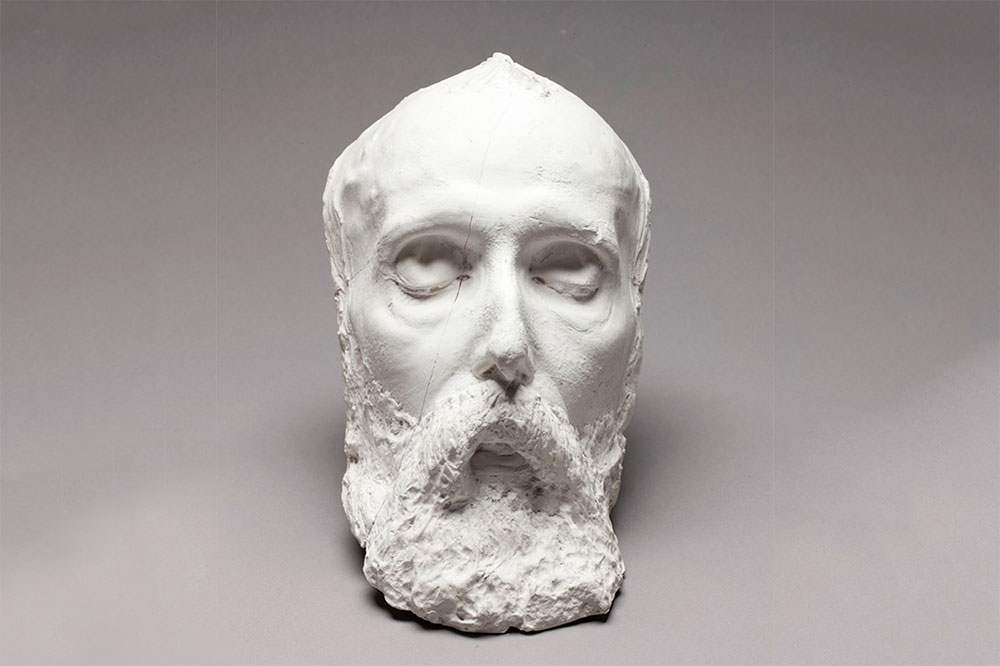
Death onstage bears its own strange poetry; the literal embodiment of the old trope, “He died doing what he loved.” The circumstances of each stage death—and there are many— stand out variously as ironic, or eerily appropriate, or even slapstick; consider the great Molière’s death in 1673 by violent coughing fit while playing the lead in his own play, Le Malade imaginaire (The Hypochondriac). In 1888 the British bass-baritone Frederick Federici [pictured right] succumbed to a heart attack after singing the last note of the opera Faust in the role of the demon Mephistopheles as he was descending through a trap door to the Underworld.

The comedian Redd Foxx, known for faking heart attacks as Fred Sanford on Sanford and Son, died of an actual heart attack in 1991 during the filming of his new sitcom, and the cast assumed he was clowning on his signature role. In 1986, an actor named Edith Webster died at the close of her death scene in the play The Drunkard after singing the song “Please Don’t Talk About Me When I’m Gone” and slumping to the floor, dead, as indicated in the script.

In a cemetery on Capitol Hill lies the final resting place of Brandon Lee, who became one of the most notorious modern on-set fatalities when a gun malfunctioned during the filming of the movie The Crow.

My macabre search turned up another Seattle connection to death-in-performance I hadn’t known about. In 1985, the Japanese butoh troupe Sankai Juku came to town for the first stop on their tour, in which they opened their residency with a unique public performance. The piece, entitled “Jomon Sho” (“Homage to Prehistory”), consisted of dancers suspended from ropes mounted to the top of the Mutual Life Building in Pioneer Square. Over the course of a half hour they were to gradually unfurl themselves while being lowered to the earth. One of the ropes broke, sending Yoshiyuku Takada plummeting to the sidewalk below. He was pronounced dead at Harborview Medical Center later that afternoon.

Video footage still exists of that horrific event, recorded from Japanese news footage, but I wouldn’t recommend watching it. The camera cheapens and flattens the existential shock of that tragedy, somehow robs it of its solemnity. It’s disturbing to consider that now, in the age of the ever-present smartphone, the possibility of a public death not recorded on digital device becomes ever more remote. Some things you just don’t need to see.

Sankai Juku cancelled the rest of that tour, but they chose Seattle as the first US stop on their tour the following year. Decades later, they’re still at it; they performed here last October.

It’s difficult to imagine what it would take to return to the stage after witnessing the death of a colleague and nearly impossible to reckon what’s going on in the minds of Raphael Schumacher’s fellow company members right now. Perhaps they’re feeling the frivolity of theatre in the face of mortality, the taunting absurdity of dying over made-up diversions. But viewed another way, is there any greater symbol of the victory of art over death than the willingness to continue creating when confronted with such loss? As we mourn the departure of artists great and unknown, the show must go on.

Five Friday Questions with Sarah Rose Davis

Sarah Rose Davis is an actor, singer and Seattle native who began her career in the Village Theatre’s KIDSTAGE program. In 2014, Davis successfully tackled Barbra Streisand’s signature role as Fanny Brice in Village’s Funny Girl, for which the Seattle Times called her “highly appealing.”

You may have seen Davis recently at the 5th Avenue Theatre as Maggie in A Chorus Line, Frenchy in Grease and at least 15 other shows there. She’s currently playing the role of Rosemary Pilkington in their production of How To Succeed in Business Without Really Trying.

In the midst of this successful run—the show closes February 21—Davis joined me for this week’s installment of Five Friday Questions.

What’s the best performance you’ve seen lately?

Come From Away at Seattle Rep. It was beyond brilliant. It was captivating, intense, humorous, and had me completely enthralled. It’s totally my kind of theatrical experience, both as an audience member and a performer myself. It’s ensemble-driven—the whole cast was involved and onstage working together almost the entire show. The music was new and exhilarating with incredible rhythmic movement. The story, about a small town in Canada whose population doubled overnight when 38 planes were re-routed there on September 11th, was intense yet surprisingly relatable.

It was a show about human experience, about amazing strangers who were forced to work through an incredibly difficult time together. I could go on and on about this show! I love seeing new and inspiring theater in Seattle especially when I have so many friends involved in the process!

The best movie I’ve seen recently was a Disney Pixar animated short called Lava. Oh man, watch it. Disney tears.

What’s the best meal in Seattle?

I have to admit I’m not much of a foodie—not that I don’t LOVE food, I do, really. I’m just not good at finding all the cool places in Seattle to eat. I am, however, a huge breakfast person and a huge proponent of second breakfast as well. Sometimes one breakfast simply is not enough. My two favorite breakfast spots are The 5 Point Cafe and Brave Horse Tavern.

I could eat breakfast all day long. My boyfriend often makes me amazing breakfast as well. He can throw anything into an egg scramble and it is delicious.

What music gets you pumped up? What do you listen to when you’re sad?

I love to listen to music I can sing along to. This usually means a female singer or high tenor—I’ve found that if I cannot comfortably sing along and belt out the songs, I won’t really get that into it. I love listening to an album until I know absolutely every single word. Before my shows right now I’ve been listening to Demi Lovato. She’s incredible and her range is outrageous.

I’ve also just barely started to scratch the surface on Lin-Manuel Miranda’s new show Hamilton and I know how obsessed I’m going to be with it shortly.

When I need some completely calming music when I’m feeling a little down, I listen to Carole King’s Tapestry (brilliant) which I belt out with joy, or Colbie Caillat’s album Breakthrough.

What’s the most crucial element of any production?

There are a million crucial elements that contribute to a successful production: story, casting, direction, production design, acting, etc., which is why I would say that communication is the most important element for a production to work. Let’s assume that the story is already worth telling, which is why someone has decided to theatricalize it. For the production to be a success, everyone involved in the process needs to be on board in telling the SAME story, whether that be through the lights, costumes, sets, or character relationships.

Whenever I am in a really successful production—and of course we could have a really long conversation about the definition of a successful production—I always attribute that success to awesome communication from everyone involved, both on the creative team and as part of the cast. For How To Succeed, I felt that our director, Bill Berry, was really great at making sure everyone was telling the same story and we were all living in the same world from set design to costume design and musical direction. Same world, same story. To me that is the key.

What’s the most useful thing anyone’s ever taught you about working in theatre?

Be yourself and keep learning. Keep learning about the arts and about yourself. Theater is an incredibly strange world in which you have to know so much about yourself that you can then completely lose yourself within a character. I don’t mean hide yourself behind a character, because you need the personal connection in order to fully transform into this person, but if you don’t understand who you are as a human, artist, friend, lover, daughter, etc., it’s impossible to approach a character with any sort of authenticity.

It’s really easy, especially in a musical theatre BFA program, to lose yourself in a million suggestions, but ultimately YOU have to decide which pieces of advice to follow. I have tattoos and currently have blue hair—never thought I could do that in theater with auditions as frequent as they are but then I decided: Why not?

I’ve also been told to never stop learning about your craft. I continue to study my voice and I push myself to take more dance classes and improve my skills. I’m sure I could articulate this clearer, but as I understand it now, this is the best way I know how to share the advice I’ve been given. I am still learning.

Five Friday Questions with Jasmine Jean Sim

Jasmine Jean Sim is an actor and Cornish alum from California. Most recently she’s been in Dirty with Washington Ensemble Theatre, John Baxter is a Switch Hitter and The Children’s Hour at Intiman, and A Christmas Carol at ACT. Last month she was named to ACT’s first Core Company, a yearlong endeavor in which she’ll serve as a regular performer and creative ambassador for the house.

Next up, Jasmine will play Doralee Rhodes in 9 to 5 at Seattle Musical Theatre, running February 19 through March 13. Then she’ll play Nina in Stupid F#@*ing Bird at ACT, April 8 through May 8. Sim joined me for this week’s installment of Five Friday Questions.

What’s the best performance you’ve seen lately?

I was lucky enough to be able to go to New York right after New Year’s and caught The Color Purple on Broadway. A friend I had met working at the Intiman last summer—who was, of course, brilliant—was starring in it, and I couldn’t miss his performance. I wasn’t completely familiar with the story, but my mom has always been such a fan that she and my dad came as well.

The whole show was stunning. The revamped set was breathtaking; we marveled at the gorgeous wooden set and simplistic chairs draped around like art. The direction was simple and helped to highlight the relationships, story and actors more than the normal flashy Broadway set.

I was utterly astounded by how strong all the female characters were and how empowered they made me feel. Their voices were uplifting, especially Cynthia Enrivo who played Celie. What a powerhouse! She had such a command of her voice, truly using the music like Shakespearian language. We were all moved.

What’s the best meal in Seattle?

I’m sort of a simple eater. I love places like Denny’s and Olive Garden, and once I’ve been somewhere and found that one dish I like, I will order it every time. But specifically in Seattle, there’s a lovely breakfast place near the Northgate Mall called Patty’s Eggnest. I used to live in Greenlake and that was the go-to place. I still go there for breakfast anytime I want to eat out. Huge portions and lots of protein really feels like the best start to the day!

What music gets you pumped up? What do you listen to when you’re sad?

I’m quite eclectic when it comes to music! If I wanna feel like I’m ready to take on the world, I’ll throw on something like Missy Elliot or Kid Cudi.

But my favorite styles of music are songs from the 1940s–70s (such a general time period, I know!) Songs that always brighten up my day and make me feel like everything’s alright are “Love Grows Where My Rosemary Goes” by Edison Lighthouse or “Good Morning Life” by Dean Martin.

Conversely, when I’m sad, I like to get real dramatic and wallow in it like the actress I am. I love to listen to Sammy Davis Jr. (“Here’s That Rainy Day”) or Billy Joel (“She’s Always a Woman”).

What’s the most crucial element of any production?

Passion. I feel that any theater I find uplifting or inspiring or fun comes from a depth of passion for what you’re doing, whether it be passion to make someone laugh, passion to tell a certain story, or the passion to promote change in your audience. Passion is what drives me beyond anything, even outside of art. Passion is what pushes someone outside of their comfort zone to break through to something new. Passion is what creates change in the world with new stories, new opinions, and new cultures coming to light more and more.

What’s the most useful thing anyone’s ever taught you about working in theatre?

I feel like I’m constantly changing that answer. At each new point in my life, something new is the most important thing to strive for. At the moment, I’m trying to focus on gratitude. I’ve gotten so many opportunities within this last year since graduating college that I constantly have to remind myself of all I’ve been able to do. I also like to believe that when you work for gratitude, it works its way into all aspects of your life and attracts the right people. Being positive attracts positivity!