Where There’s a Will, There’s a Way

For playwright Danielle Mohlman, pay-what-you will performances are a great way to convince new-to-theatre friends to take a chance on something new.

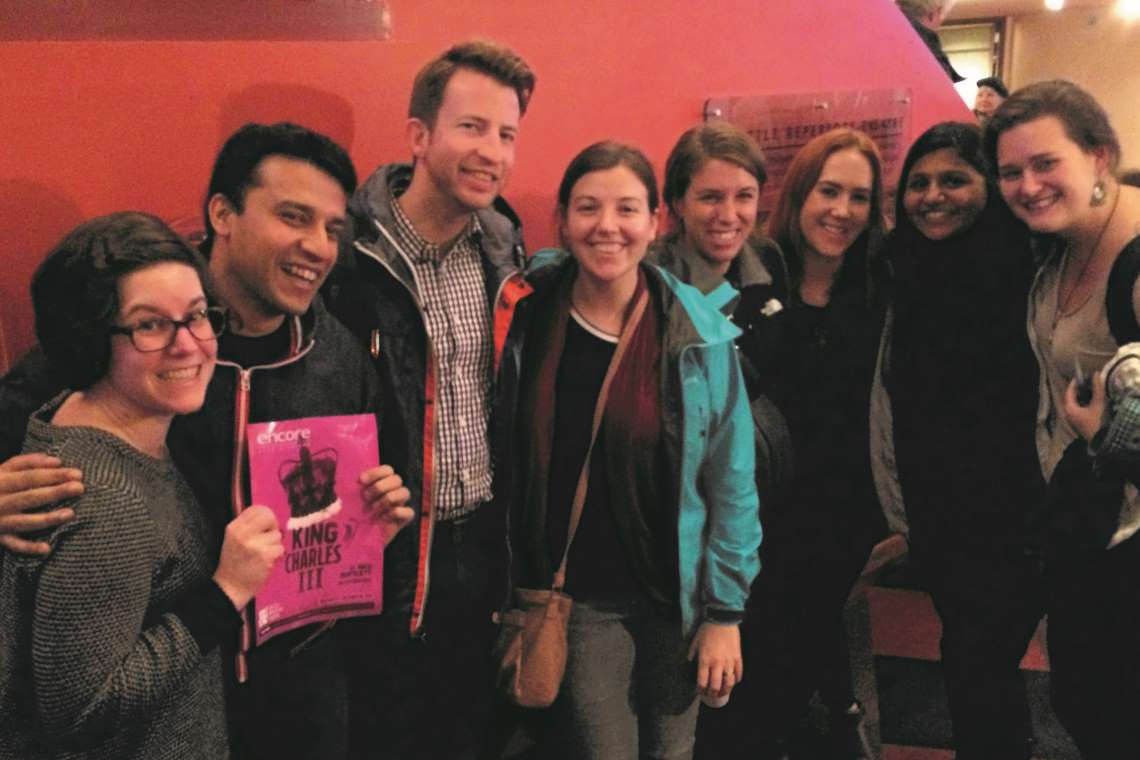
One by one, my friends hugged me as I handed them their tickets. “I’m so excited,” they exclaimed, a group of giddy Millennials huddled in Seattle Repertory Theatre’s lobby. It was November 2016, and we were seeing King Charles III. 

During the performance, our group was responsive and engaged. We leaned forward, afraid to miss a single word, and as soon as the lights came up for intermission, we burst into conversation: the play reminded someone of the regime in Thailand, someone had a question about the ghost, someone else wondered about accents, and we were all thinking about our own country’s political climate. We chattered through every minute of intermission, and fell silently rapt again at the start of the second act.

For the 20- and 30-somethings I brought to the theatre—a group of tech product managers, marketing professionals, auditors, and MBA students—this performance was an exciting treat. You would never guess that a year ago, many of them were completely unaware of Seattle Repertory Theatre, or theatre in Seattle at all. 

My partner and I moved to Seattle in 2015 because he was starting the MBA program at the University of Washington’s Foster School of Business. Most of the people I met that first year were affiliated with his program in one way or another, and, as a playwright surrounded by MBA students, I felt like the artistic misfit. When it came to seeing theatre, my new friends had no idea where to start. 

I decided to enlist myself as theatrical chaperone, inviting folks to see shows with the promise I’d be there to guide them through the way to see a play. I knew ticket prices would be a barrier—why pay for something unknown and outside your home when Netflix is familiar and as good as free?—so pay-what-you-can performances would be the way to go. 

After marking pay-what-you-can performances in my calendar, I emailed every person who ever said, “You write plays? So how does that work?” and invited them to join me for upcoming performances at Seattle Rep. Two joined me for Come from Away, then three joined me for Luna Gale. Enthusiasm about my theatre chaperoning spread and before I knew it, I was taking seven people to see King Charles III, complete with dinner before and fervent bus ride discussion on the way home. 

Each of the people I have brought to the theatre has a different experience. Over the past two years, I’ve learned a lot about how to make new theatre-goers feel comfortable enough to be adventurous.

…I’ve thought a lot about preview performances and how little care we theatre artists put into educating audience members about this essential part of the process, a part of the process in which we need audiences to take part.

Before moving to Seattle for his MBA, Deepanjan Dey was a theatre actor in India, so I was surprised to learn that Seattle theatre felt inaccessible to him before he started seeing plays with our group.

“I think this speaks to a more generic problem I’ve observed in the United States about younger audiences staying away from the theatre,” he explained. “With so many instant and newer forms of entertainment available, theatre is perceived as more niche and ‘reserved for the artsy types.’ It’s different in India. There, young professionals enjoy going to the theatre and popular television and movie actors regularly perform onstage.”

One of our most memorable times at the theatre was seeing a preview performance of Luna Gale together. “There we were—enjoying quite a riveting show—when a set piece jammed as it came on stage. Having been an actor living in the perennial fear that something will go wrong technically, I was absolutely horrified at this situation,” Deepanjan explained. 

It turns out that preview performances are a far less common practice in India than they are here. I remember Deepanjan on my right, worrying on behalf of the cast and crew fixing the technical issue, while our friend Jennifer, bewildered on my left, marveled at the sheer number of people that sprang into action from off-stage to remedy the situation. Both were surprised to learn that bumps in the road are a common and important part of previews.

When you boot up Netflix, you’re expecting a polished product. If you didn’t know any better, why would you expect anything less from your theatre? In the months since that Luna Gale preview, I’ve thought a lot about preview performances and how little care we theatre artists put into educating audience members about this essential part of the process, a part of the process in which we need audiences to take part. How else can we let untrained audiences in on the process of making a play?

I befriended Melissa Herrett when she first moved to Seattle in 2016, and I quickly recruited her to join my quickly-growing circle of play-seeing friends. On one of our first excursions, we took a chance on a pay-what-you-can performance of The Royale at ACT.

“It was so nice to pay a small amount to see a play I wasn’t familiar with, and I ended up really enjoying it,” Melissa said, reflecting on that first outing. “And it was great seeing it with you since we were able to talk about it after the fact. It was nice to have someone there to debrief with, especially someone knowledgeable about plays and theatre.”

I wasn’t an expert on The Royale. Though Marco Ramirez’s play about early 20th century boxing has enjoyed productions all around the country, everything I knew about the show came from ACT’s marketing materials. But simply by having more familiarity with theater-going generally I was able to offer Melissa a space to reflect on the play and digest what we saw together. “It was my first real experience seeing a play that hadn’t gotten a ton of hype or marketing,” said Melissa, “and it ended up being a fun and informative afternoon.”

“I’m probably more likely to go to the theatre when it’s cold,” my friend Greg Socha, a 30-year-old marketing manager, told me. “There’s too much going on in Seattle in the summer and I like the outdoors too much. But once the sun starts going down earlier and it’s raining, spending time inside getting some culture gets more appealing.”

Greg has fond childhood memories of his parents taking him and his brother to see local theatre in Connecticut, but here in Seattle, he’s the latest recruit to new-to-theatre-going group. This September’s Public Works performance of The Odyssey at Seattle Rep was the first time he joined us, but he hasn’t been available to go to another performance with us since. I asked why he doesn’t see theatre on his own. “I would feel super self-conscious seeing a play by myself,” he said. “Most people are there with somebody, and it’s not like you can third wheel a conversation with some strangers.”

Of course, for many people, seeing a play with a group of friends is more appealing than going alone. Talking with Greg made me wonder if there are opportunities for theatres to help create those groups, or to encourage groups of friends to buy tickets together. For new theatre-goers especially, seeing a play alone may be uncomfortable simply because they don’t want to go alone. 

A generation ago, these same young professionals might be well on their way to becoming arts board members and donors. Today, I’m hard pressed to find performing arts organizations that are targeting millennials, grooming them for their board.

Over the last two years, I’ve taken folks to see shows at ACT, Forward Flux, the Pacific Northwest Ballet, Seattle Rep, the Seattle Fringe Festival, and INTIMAN. We’ve expanded our artistic diet, too, taking in the Burke Museum, the Henry Art Gallery, and the Seattle Art Museum. I’m on a quest to introduce everyone to their favorite art form— it’s The Dating Game featuring every arts organization in Seattle. And I’m rooting for everyone to be a winner.   

A generation ago, these same young professionals might be well on their way to becoming arts board members and donors. Today, I’m hard pressed to find performing arts organizations that are targeting millennials, grooming them for their board. Pacific Northwest Ballet is the only organization in town that has a dedicated track toward Board of Trustees membership. Young Patrons Circle has its own Board of Directors, giving ballet fans an introduction to non-profit boards. 

My group of theatre-goers is just starting to learn about sponsoring artists, non-profit boards, and donations to organizations. But no one is reaching out to these young professionals—many of them recent MBA graduates with lucrative post-grad school jobs—to involve them in the vitality of theatre.  They’re learning about it by flipping through the programs they’re handed as they enter the theatre.

My chaperonage isn’t single-handedly changing the demographics of Seattle audiences, but it’s a step towards a younger, more engaged audience. Halfway through my third season organizing these outings, I wonder what audiences would look like if other regular audience members took it upon themselves to invite their theatre-estranged friends to the great performances Seattle offers. Theatre marketing and engagement departments have pursued all kinds of programs and initiatives to attract new audiences, especially younger new audiences, with varying degrees of success. Increasingly, I’m thinking that those of us who already love the theatre have a role to play in bringing new faces to the audience, too.


Looking to start a theatre-going group of your own? Here are my tips for a smooth transition into group theatre outings. 

1. Choose a pay-what-you-can performance to ease your group into the theatre-going habit. Seattle Repertory Theatre typically schedules one pay-what-you-can performance ($1 minimum) before the show’s official opening. ACT has pay-what-you-can ($5 minimum)
every Sunday. 

2. Start small. Invite two or three friends to go with you on the first outing. As you become more comfortable with organizing group outings, add more friends to your circle. Think of this as a theatrical book club. You don’t want to start too big. There’s always room to grow.

3. Plan for lunch or dinner before the show. Theatre can be a scary new experience for some people. Let your friends ease into the experience over a meal. 

4. Be both a friend and an expert. Do some research on the play before you go. You don’t want to feel like you’re suddenly a professor of theatre, but folks will want to know what they’re getting themselves into. Learn the running time and a little about the play and the playwright. If you’re attending a preview performance, educate your friends on what that means. 

5. Lather, rinse, repeat. You’re not going to love every play you see together. That’s okay! But keep coming back and encourage your friends to do the same. Before you know it, you’ll have a group of friends to process theatre with and isn’t that what we’re all looking for?


Danielle Mohlman is a Seattle-based playwright and arts journalist. She’s a frequent contributor to Encore, where she’s written about everything from the intersection of sports and theatre to the landscape of sensory-friendly performances. Danielle’s work can also be found in American Theatre, The Dramatist and on the Quirk Books blog.

Do the Classics Have to Be a Drag?

A woman cannot be herself in modern society,” Henrik Ibsen once said. A Doll’s House, a play he wrote in 1878, explored that thought, arousing great controversy. The protagonist, Nora, wants to discover herself and so—spoiler alert—she leaves her husband and children to do so, very much against the social norms of the day. It was scandalous when the play made it to the stage.

Today, entering stage right, is Cherdonna Shinatra eager to play in Ibsen’s house to see what to make of it. Can a drag queen have much to say about a fusty old play written a century and a half ago? Is it a controversy to take a classic and rework it for our modern sensibilities? How far can you revise a classic and still have it maintain it’s power? Or is it powerful because it can be reworked time and again? 

One of the actor’s in Cherdonna’s Doll’s House, now being staged by the Washington Ensemble Theatre at 12th Avenue Arts, is a pre-teen boy. He gets to say “fuck” on stage, much to his delight. Controversial? Shocking for an Ibsen play? In this day and age? And, particularly in Seattle, haven for boundary pushers, creative seekers, imagination fiends, and people who pride themselves on being themselves? Is there a better place to showcase these questions than on stage with a drag queen eager to say something more about a play long since written? The show, being touted as a “sort of world premiere” tries to answers these questions.

Adapted by Ali Mohamed el-Gasseir and Cherdonna (Jody Kuehner), the original work was one Ibsen based on real-life events. Nora was based on his good friend, Laura Kieler. Much of what happens on stage between Nora and her husband, Torvald, happened to Laura and her husband, Victor. Victor found out about Laura’s secret financial dealings and so divorced her and had her committed to an asylum (she would later come back to him). 

What would Ibsen make of this new production? One in which the script has been truncated, chopped up, rewritten and redone? The show is directed by Ali Mohamed el-Gasseir. Having loved the Ibsen piece for years he began talking about it with Kuehner. Could they take a feminist classic and showcase it through a modern feminist lens? What would that do? Make people laugh, for one. 

Reviews are in. It’s “laugh-out-loud.” A drag queen in A Doll’s House is funny stuff. But what else could it do? Entertain people. Maybe even make them think. “What’s the purpose of the classics?” asks Samie Spring Detzer, the Artistic Director at Washington Ensemble Theatre, who also has a role in the play as Mrs. Linde. “We have to test them. We have to see if they’re still valid.” 

Test, this show does. Actors play the roles in Ibsen’s work but when Cherdonna starts playing in the doll house, as it were, the actors also being playing themselves as they play the characters. Samie Spring Detzer admits of the Ibsen’s original play, “It doesn’t mean a lot to me today.” Feminist play or not, she continues, “if you don’t recognize yourself in the work, it loses its power.”

The creative team, then, decided to try and give it a different kind of power—take a modern day feminist and get their take on what feminism was (though that was yet a term in Ibsen’s day). “It is a collaborative process,” Detzer notes. The director and Cherdonna worked arduously reworking the text to meet the demands of the questions they hoped to answer. They also wanted to make the audience laugh. Dance sequences and cookie breaks help. “It’s the collaborative process,” Detzer notes, “that’s valued beyond most anything else.”

A Doll’s House has taken quite a journey, then, from those initial performances in the late 19th century that scandalized the world to today, where a drag queen boundlessly delights about how marvelous Nora is and, by doing so, how marvelous classics may still be.

Meet the cast of Seattle Opera’s Katya Kabanova

Seattle Opera is mounting the Czech opera, Katya Kabanova. Small-town girl Katya finds true love with a man, even though she’s in a marriage. When her affair is revealed, the aftermath is explosive.

Let’s meet the cast of the production, shall we? 

Depending on the night of the performance, Katya will be played by Melody Moore or Corinne Winters.

Here is Melody Moore performing in La boheme:

Here is Corinne Winters performing in La traviata:

The role of Boris will be played by Joseph Dennis or Scott Quinn, both in their Seattle Opera debuts.

Here is Joseph Dennis performing in Jenufa:

Here is Scott Quinn performing in La boheme:

The role of Kabanicha will be played by Victoria Livengood. Here she is performing in The Medium:

Watch Seattle Symphony’s ‘Music Beyond Borders‘ Concert

Last night, the Seattle Symphony presented “Music Beyond Borders: Voices from the Seven.” It was a free concert celebrating the countries affected by Donald Trump’s executive order banning travel to several Muslim-majority nations. The program drew upon traditional and contemporary music from Iran, Iraq, Libya, Somalia, Sudan, Syria and Yemen.

You can watch the concert in its entirety below.

Reading Beyond SCT’s ‘The Snowy Day’

Opening this weekend at Seattle Children’s Theatre is The Snowy Day and Other Stories by Ezra Jack Keats.

The Snowy Day

Keats receieved the 1963 Caldecott Medal for his illustrations in the book. It’s about a boy named Peter exploring his neighborhood after a snow. Keats was inspired to write about Peter when he came upon photos in Life magazine featuring a young boy. Wanting to have more minority children as central characters in his stories, Peter was born on the page. The book was welcomed by educators and critics and embraced by the public for its racial representation in literature and the simple grace of the writing and illustration. 

Inspiration for The Snowy Day

These days, there’s an ever growing movement to show more diversity in children’s stories due to the fact that a vast majority of them still have white protagonists. The movement’s unofficial home is We Need Diverse Books

Let’s look at a few more books that highlight race and ethnicity.

Thunderboy Jr.
Thunder Boy Jr. by Sherman Alexie

Seattle’s own Sherman Alexie, a National Book Award-winner, wrote Thunder Boy Junior because he couldn’t find picture books about Native children set in the present. It celebrates the bond between a father and son.

This Is the Rope
This is a Rope: A Story from the Great Migration by Jacqueline Woodson

National Book Award-winner Jacqueline Woodson’s story talks about the connections that bind African-Americans through the generations.

Pancho Rabbit and the Coyote
Pancho Rabbit and the Coyote by Duncan Tonatiuh

It is the story of a migrant rabbit family. Tonatiuh, a Mexican-American, won the Pura Belpre Award for it—a recognition presented to Latinx writers and illustrators whose work best portrays the Latino cultural experience in a work of literature for children or youth.

A Piece of Home
A Piece of Home by Jeri Watts

The story of a Korean boy who moves to West Virginia, it’s about finding connections in an unfamiliar world. 

Snow in Jerusalem
Snow in Jerusalem by Deborah da Costa

The story about a child from the Jewish Quarter and a child from the Muslim Quarter learn to share.

Want more titles? Try lists from The Guardian, Scholastic, and We Are Teachers

Meet the cast: Seattle Opera’s ‘La traviata’

Verdi’s passionate portrait of a worldy courtesan forced by bourgeois society to give up the man of her dreams enthralls with a wide range of moods packed into a tautly-constructed story. Let’s meet the cast of the Seattle Opera’s production, shall we?

Depending on the performance, the role of Violetta will be played by Corinne Winters or Angel Blue.

Here is Angel Blue singing Strauss:

The role of Alfredo will be played by Joshua Dennis or Zach Borichevsky (both in their Seattle Opera debuts).

Here is Joshua Dennis singing in Romeo and Juliet:

Here is Zach Borichevsky singing from The Scarlet Letter:

The role of Germont will be played by Weston Hurt or Stephen Powell.

Here is Weston Hurt in Nabucco:

Here is Stephen Powell singing from Brigadoon:

La traviata runs at McCaw Hall January 14–28. 

Woody Guthrie Coming to Seattle Rep’s Stage

The legendary Woody Guthrie (1912–1967) was a folk singing hero who defined an American era of social consciousness and political expression. The Seattle Rep is presenting Woody Sez, with David Lutken in the title role, highlighting Guthrie’s life and legacy as the “Dust Bowl Troubador.”

With many of his songs archived at the Library of Congress, there are many musicians who have been influenced by his work, including Bob Dylan, Johnny Cash, Bruce Springsteen, Pete Seeger, Jeff Tweedy and Billy Bragg, amongst many others.

Here are some clips of and/or about Guthrie, including, arguably, his most famous song:

Here’s Pete Seeger introducing him:

Here’s audio of him playing with the famed blues musician Lead Belly:

Here’s Bob Dylan paying tribute:

And here’s Bruce Springsteen:

Finally, a BBC documentary about Guthrie:

Peter Pan: The Boy Who Never Grew Up

Peter Pan refuses to grow up. He was at ArtsWest recently in Peter and the Starcatcher; Berkeley Repertory Theatre, in the San Francisco Bay Area, recently did a production of For Peter Pan On Her 70th Birthday; at the Paramount Theatre, they will be presenting the theatrical event, Finding Neverland, telling the story behind the story of Peter Pan.

Created originally in the form of a 1904 play and, later, in a 1911 novel, let’s take a look at Peter Pan through the ages, shall we?

Here is a silent movie from 1924 starring Betty Bronson and Ernest Torrence. J.M. Barrie, Pan’s creator, wrote a screenplay for the movie, but Paramount used the original stage script instead.

There’s also the famous 1953 Disney version. It was entered into the Cannes Film Festival. 

The Steven Spielberg-directed Hook was the 4th highest-grossing movie of 1991. 

Return to Never Land was an authorized sequel to the original Disney movie. 

A Damion Dietz movie transported the story to 21st-century Los Angeles.

The 2015 movie Pan, starring Hugh Jackman, did not do well at the box office.

Peter Pan was also turned into a musical stage adaptation in 1954. It was directed by the legendary Jerome Robbins. 

Here’s Mary Martin performing as Peter Pan in 1960. 

And were you aware there is an opera?

Meet the Hedwigs

Hedwig and the Angry Inch is currently showing at the Paramount Theatre. It’s a rock musical about a fictional rock ’n’ roll band fronted by a genderqueer East German singer, Hedwig Robinson. Opening Off-Broadway in 1998 it hit the Broadway stage in 2014. It was nominated for eight Tony Awards, winning four, including Best Revival of a Musical.

Euan Morton is playing Hedwig in Seattle. Let’s take a look back at some of the past Broadway stars who have taken on the role.

Neil Patrick Harris won a Tony for his portrayal:

He was followed by Andrew Rannells: 

Michael C. Hall also played Hedwig:

So did Taye Diggs:

Darren Criss performed in the national tour:

As did the aforementioned Euan Morton:

Treasures Told at Book-It with Dialect Coach Alyssa Keene

What does a pirate sound like? The company of Book-It’s production of Treasure Island is endeavoring to find out, hard at work on perfecting their dialects. 

“We want to present sounds to the audience that sound right—authentic, genuine,” says the production’s dialect coach, Alyssa Keene. Keen has been a dialect coach at Seattle Shakespeare Company, ACT Theatre, and Taproot Theatre. As a dialect coach, she works closely with actors throughout the rehearsal process to get their voices just right for the part.

Crafting and practicing dialects is a lot of work for both the actors and the dialect coach, but it’s an essential part of performing a character. “You study. You read. You learn,” explains Geoffery Simmons, who plays Long John Silver in Treasure Island, “When you discover the voice of a character, it opens up a whole new world.” 

“Each accent tells a different story,” says Gin Hammond, an actor in Treasure Island who also happens to be a dialect coach in her own right. “Each sound out of someone’s mouth can teach us something about that person.” What is it like to have a voice coach when you are a voice coach yourself? “It’s a luxury,” Hammond says. “As an actor, I can just do the business of acting, knowing there’s someone there to help. It’s a safety net.”

Keene, who has worked as a professional actor, voice talent, and dialect coach since 2000, says her process starts with a careful reading of the script and research. She discovers the origins of the characters and the setting of the play, noting the time period. “A Londoner today doesn’t sound like a Londoner 100 years ago,” she says, by way of example.

Next, she listens to a wide variety of source material: online sources like YouTube videos and the Speech Accent Archive, documentaries, first-person sources, and more. Though mimicry is part of the research process, it’s just one small part of how Keene prepares to work on a production. She listens carefully for the cadence and melody of a particular accent. Is the accent in a major or minor key? For emphasis, do speakers change their pitch, their volume, or both? How do speakers move their mouths? What do their vowels sound like? The more questions about an accent Keene can answer, the better prepared she is for rehearsal.

For Hammond, who plays two roles in Book-It’s production, dialect work starts wtih the physical. Hammond considers the mouth’s posture for a given dialect, and how it is different from her natural speech. She notes where the sound resonates and how much air is used to make different sounds. With Keene’s help, she determines the physical motions of her characters’ speech as a way to get them to sound just right.

There’s also the matter of the International Phonetic Alphabet, or the IPA, an alphabetic system of phonetic notation, derived by the International Phonetic Association as a standardized representation of sounds of any spoken language. It’s a huge help to linguists, anthropologists, and—in the theatre—dialect coaches.

For particularly tricky words, dialect coaches can turn to “accent tag” videos on YouTube. This is a popular type of YouTube video in which people worldwide record themselves pronouncing a certain set of words (“aunt,” “roof,” “New Orleans,” “mayonaisse,” “pajamas,” etc.) and answer questions (“What do you call gym shoes?” “What do you call your grandparents?”) giving viewers access to a particular accent.

Simmons, in the iconic role of Long John Silver, has perhaps the biggest challenge in the play: he wants to honor the character’s history and legacy, while bringing something of himself to the character. Simmons has been on several Seattle stages, including Seattle Children’s Theatre and Intiman Theatre.

For Treasure Island, he has been practicing his Jamaican accent. “If you look back at that time, the high seas were a melting pot of all sorts of people and cultures,” Simmons says. “It was a time of exploration and colonization. There were sugar plantations. The spice trade. The slave trade was happening.“ And Long John Silver, Simmons hypothesizes, probably spoke in several different vernaculars himself. “He had to play different characters for different people at a dark time. It’s exciting to play someone and get into their subconscious and psyche.”

Long John Silver isn’t the only character in Treasure Island with dialect challenges. When the company gathers at rehearsal and starts warming up, there’s a mix of many different ways to talk like a pirate, which is exactly what Keene wants.

“What is the tapestry of sounds that we can use?” Keene asks. By weaving the cast’s voices together she helps create the world of Treasure Island—a world populated with characters from Scotland and Jamaica and the places in between. Dialect research and practice is a huge part of how the actors tell the story of where their characters are from and where they are going. But if they do their jobs right, the accent work won’t look like work at all.

For Simmons, the research into the world of Treasure Island offers a chance to play off the other actors in a more informed way and allows him to further dig into his character. “There are so many elements to this thing,” he says. “You get to see the undercurrents of civilization.”