David Hsieh on Bringing ‘Kim’s Convenience’ to the American West Coast Stage

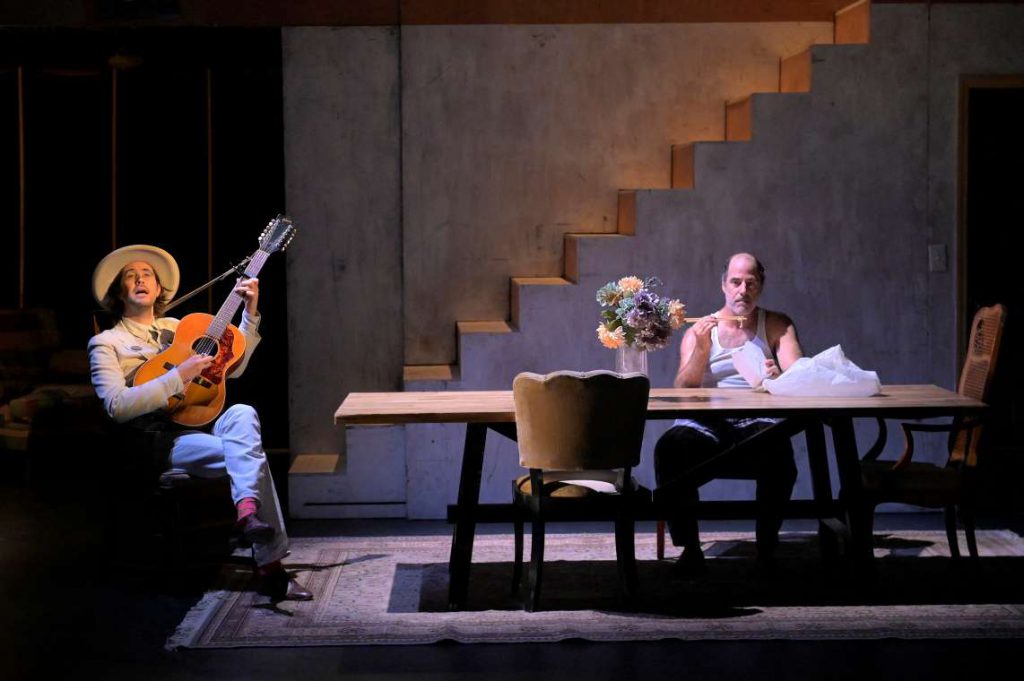
One of Seattle’s most prolific directors and actors, David Hsieh is well known for bring diverse work to the stage as the founding artistic director of ReAct. His many credits also include performances in Book-It’s productions of The Brothers K and Hotel on the Corner of Bitter and Sweet, as well as in The Happy Ones and The Best Christmas Pageant Ever at Seattle Public. Co-directing Kim’s Convenience with Taproot Theatre’s founding artistic director Scott Nolte, Hsieh is realizing a long-held ambition in bringing Ins Choi’s warm-hearted comedy about a Korean family and their friends to local audiences.


Rosemary Jones: Kimbits, as fans of the series Kim’s Convenience are known, largely come from watching the Canadian television sitcom starting in 2016 or streaming on Netflix since 2018. Did you first encounter Ins Choi’s Kim’s Convenience as the stage play or online?

David Hsieh: When the published version of the script was first printed in 2012, a copy of it landed on my desk. (I was the drama book buyer at a local bookstore at the time.) I knew nothing about it but being a play with Asian themes. I added it to my huge ever-shifting pile of plays to read. I didn’t actually get to it until a few years later after hearing Ins Choi being interviewed on the radio one night. He was talking about the play and its great success at the Toronto Fringe and subsequent Soulpepper tour as well as the new series in the works. I dug my copy out the pile and read it, and immediately fell in love with the script. I don’t have Netflix or anything but when Scott first asked me to help with the production, I binge-watched [the series] on YouTube and am now a huge fan of that as well.

Who is your favorite character in the Kim family?

I’m not one who likes to pick favorites. I actually like them all…and that’s what I find intriguing about the play and how it’s written. I think everyone can relate to each of the four family members in different ways, as well as the variety of other characters that visit the store. Growing up second generation in an immigrant Asian family, I can definitely relate to both [the Kim’s adult children] Jung and Janet’s characters and what they are going through in the play. But the parents of course are also so wonderfully written, in particular the part of [the father] Appa, who is such a fun role and an amusing take for the audience. On a personal level, I don’t have a strong relationship with my own father, so the storyline between Appa and Jung is particularly affecting for me.

What are the differences you see between the Canadian series and the original play?

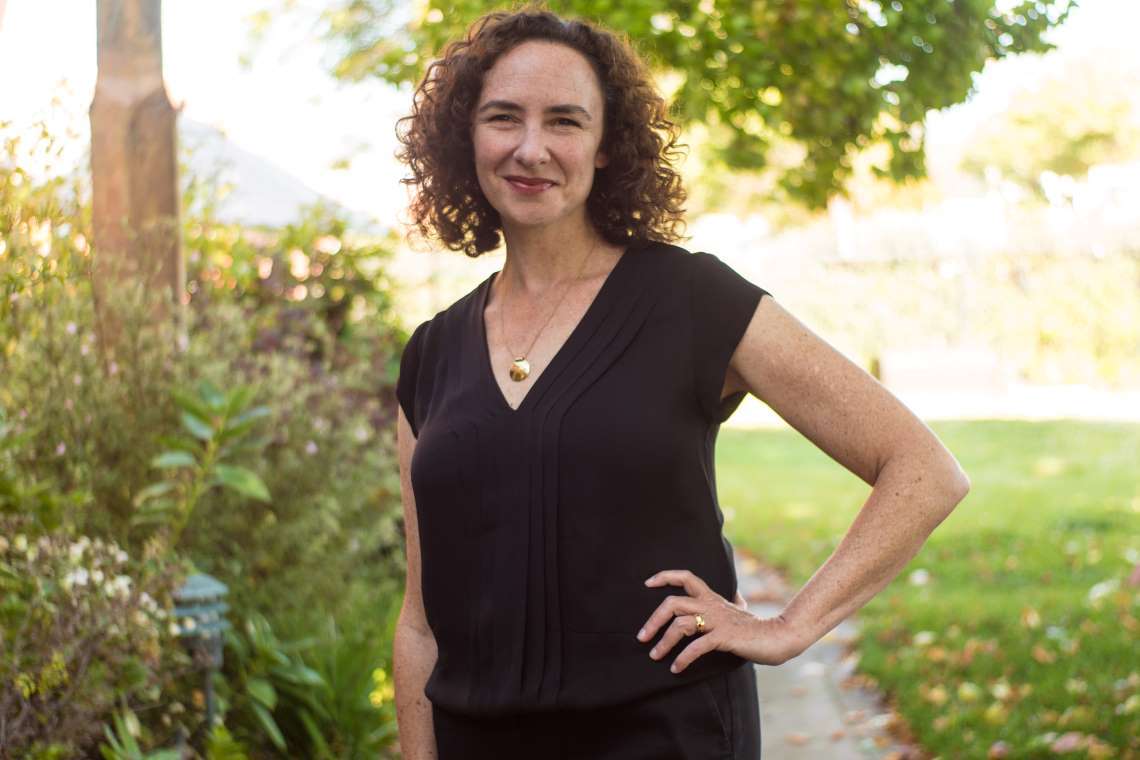
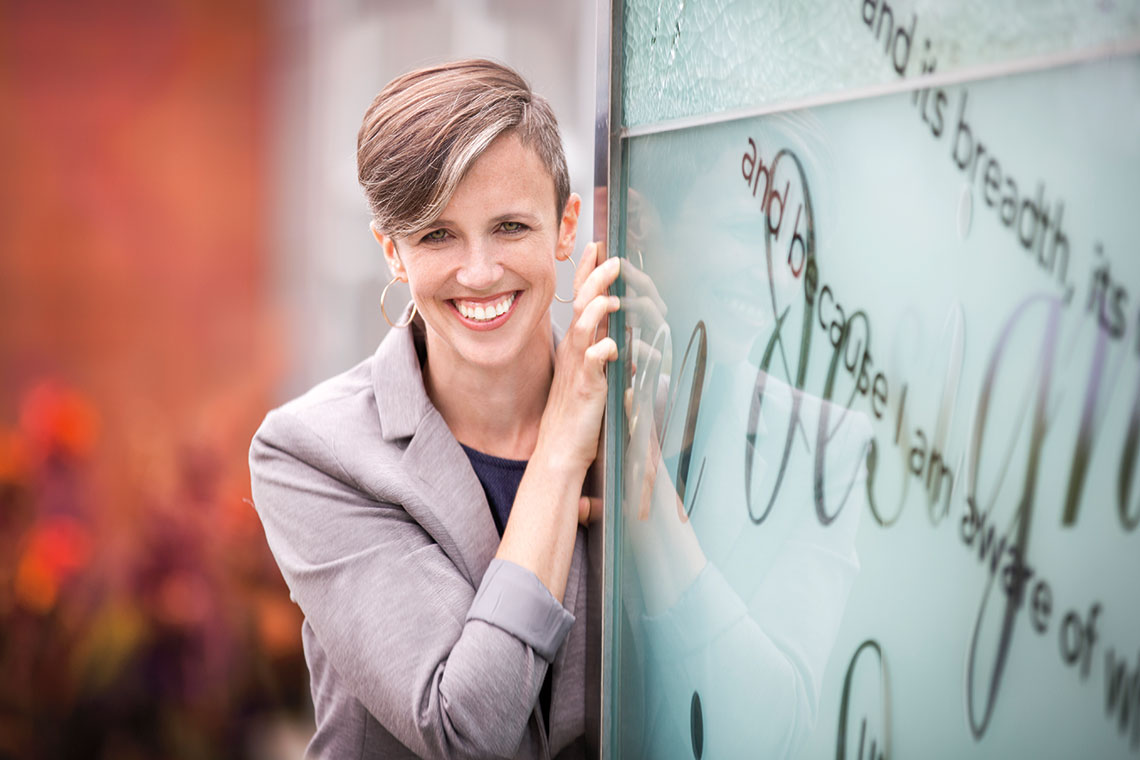
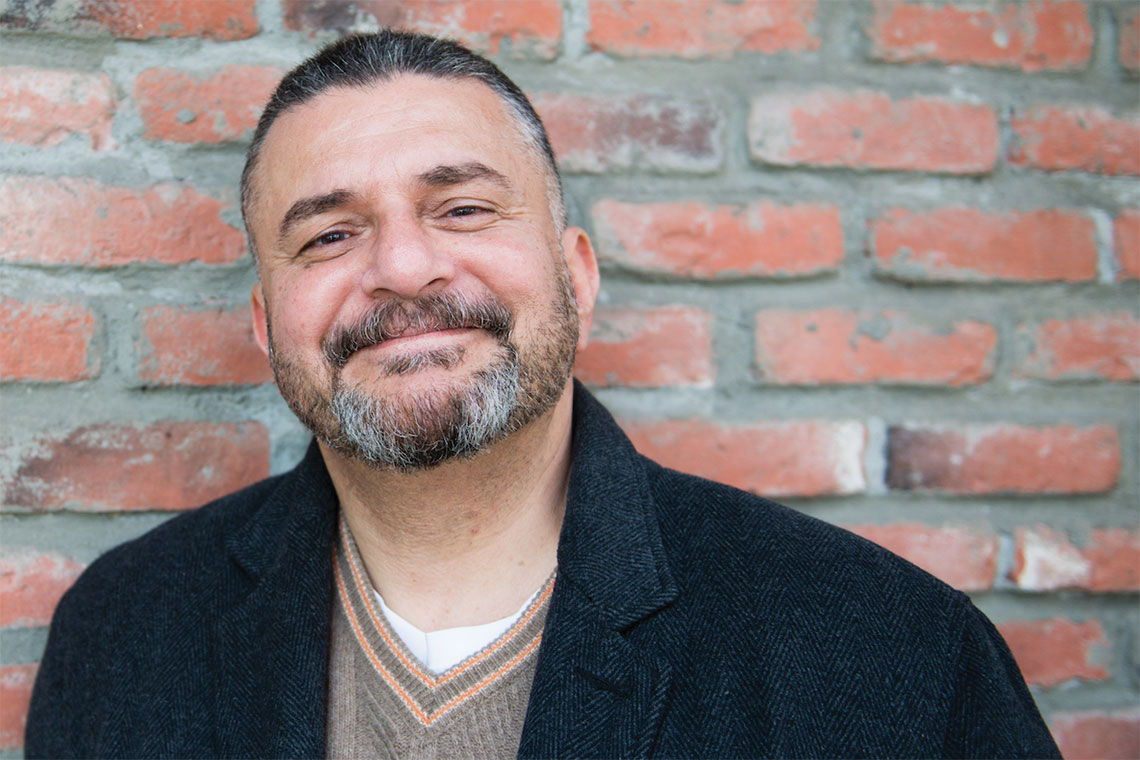
Director and actor David Hsieh. Photo by John Ulman

Well the TV series was inspired by the play, but there are differences. While the family and basic plot is similar, and there are some scenes and sections of dialogue from the play peppered into various episodes of the series, particularly the first season, there are many differences. For instance, in the play, Jung left 16 years ago and in the series it’s only been about nine years, so the characters are all younger and at a different point in their lives. As each season has unfolded the series has expanded and grown and diverged more and more. There are some things in the play that are quite different, and probably can’t happen in the timeline of the series any more, almost becoming an alternate reality. I think TV audiences will be intrigued to see the play and these differences and what inspired the TV show.

When did you hear about the Taproot Theatre production?

Scott Nolte notified me over a year ago that they were hoping to get the rights to do this American West Coast premiere and asked if I’d be interested in working on the project. I immediately and enthusiastically said yes and a few months later, the rights were confirmed.

How does co-directing work with Scott Nolte?

I think it works really well. This is my first chance to work at Taproot, a theatre that I’ve admired for decades. Scott and I have known each other for many years. We have the same sensibilities and appreciation of theatre as well as the same take on Kim’s Convenience. He obviously knows the space really well, and of course I have a unique perspective for this play and we make a good team.

As co-director, what’s your biggest challenge in preparing for opening night?

Well, as with any production I’ve helped direct, our biggest challenge is to create and present the best production of the play as we possibly can. We have an amazing cast. I think Seattle audiences are really going to enjoy this production. You know it’s going to be a good show when you’re still laughing and being moved to tears by the play deep into the rehearsal process, another testament to the brilliant script created by Ins. Our greatest joy will be to see Seattle audiences enjoying this timely and universal story of family love. It’s been so well received at every place it has been produced. I hope this show will be one of Taproot’s biggest successes.


Taproot Theatre’s production of Kim Convenience runs May 15 through June 22.

After Kim’s Convenience opens, Hsieh will be directing the West Coast premiere of Salty by AJ Clauss, a play about penguins and zookeepers, for ReAct Theatre at 12th Ave Arts.


Rosemary Jones has written about arts and culture in the Pacific Northwest for Cornish Magazine, Capitol Hill Times, Encore, Examiner.com and others. Additional work can be seen at rosemaryjones.com.
Taking Risks and Minimizing Failure—Part Two

This is part two of two of Johanna Pfaelzer and Lisa Steindler in conversation, in which they continue their discussion of intergenerational leadership in theatre and supporting artists in the Bay Area.

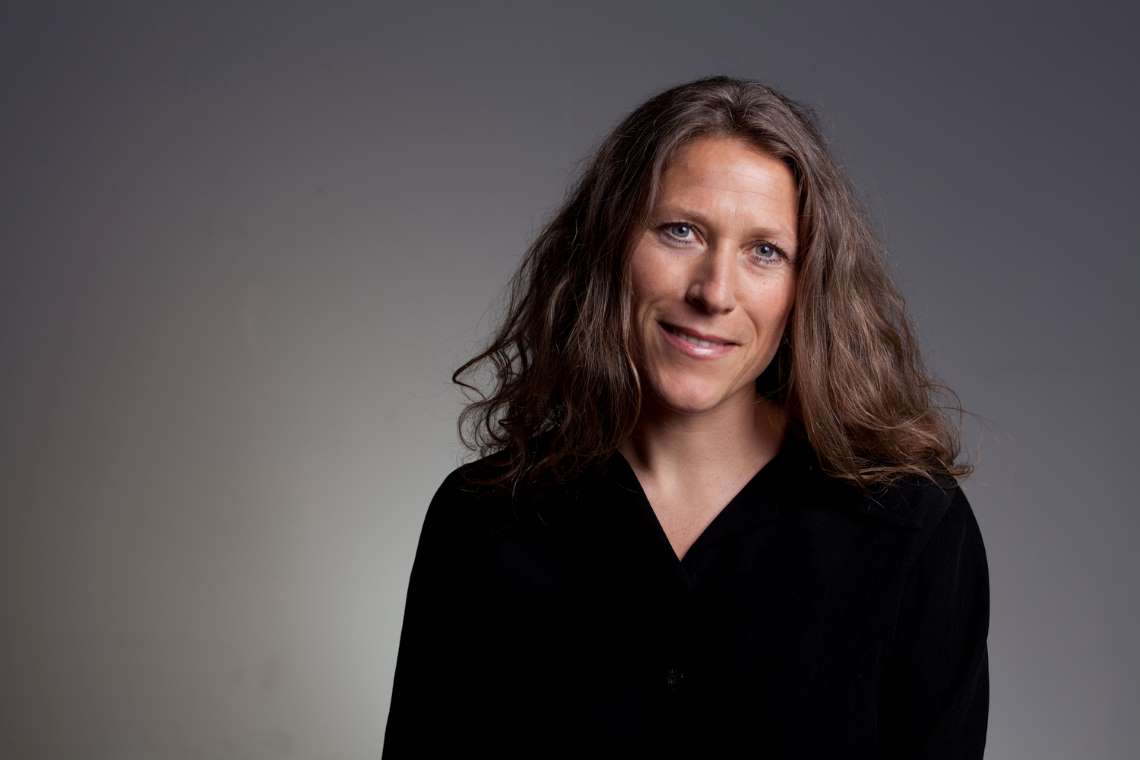
Johanna Pfaelzer is the incoming artistic director at Berkeley Rep Theatre and Lisa Steindler is the executive artistic director of Z Space.


Lisa Steindler: Hopefully we’ll have young leaders running mid-size organizations sooner rather than later and, in ten years, they will be running the regional theatres with so much more expertise under their belts. With so many people leaving the field after many years in leadership roles, I’m not sure we have adequately developed or created opportunities for the next generation to take up the reigns.

Johanna Pfaelzer: I think for women, especially, figuring out how to balance parenthood and these jobs is a real issue that we must pay attention to. How can we retain women as leaders and create the flexibility in our structures that will enable them to stay within these organizations? I was really lucky to be working for a working mother—Carey Perloff—when I became a parent.

Steindler: One hundred percent agree. I feel most excited about that right now, in this moment in my career, to foster and mentor three incredible millennial women who are all way smarter than me. They have a lot more knowledge about the world of twenty-year-olds and the technology that goes along with that, and I believe that is crucial to the relevance of an organization. That merged with the historical knowledge of the organization and the field that I bring to the table, we have a pretty robust cauldron.

Pfaelzer: I also think different generations of theatremakers are thinking about what theatre can do as an art form in really different ways. I don’t think it’s solely generational but I do think there’s a reason that, when we look at the twenty-year-olds and the thirty-year-olds in our field, they’re thinking about collaboration, about the process of how and why and you make work together, in a much broader way. They’re going to demand that of the institutions, and the structures are going to have to adapt to their vision, and they should.

Steindler: Absolutely, they should. Here at Z Space we’re all about failure in a good way, being able to take artistic and organizational risks without fear of failure. Taking on a leadership role involves a steep learning curve and the navigation of multiple relationships, during which myriad risks are encountered where one might potentially fail. But if we’re intentional about creating this new leadership model, supporting young leaders, and building from within the Z Space family to engage and invest in new and diverse leadership, we can quite possibly achieve much greater milestones while taking risks and minimizing failure.

Pfaelzer: Indeed! And that question of failure, not like I’m obsessed with it right now as I’m in the middle of season planning or anything, but the model of New York Stage and Film is based on the idea that you get to take huge risks. And that we as an organization can turn to a body of artists in any given year and say: “Go big. We’ve got you and we can keep the stakes low.”

One of the challenges for me, going into an institution with Berkeley Rep’s scale, is to make sure that some piece of me can keep that notion alive. For myself, for the artists in the building, and to bring an audience into that as well, to help them understand that the task of an artist isn’t to give them polished perfection. Because theatre is this ephemeral, living, breathing thing, how do we let that notion of transformation and risk and change and attempt and failure be part of the process, delight, and specificity of how the show is then experienced?

…failure can become a very nourishing aspect of the creation of great work. If we’re afraid of failing, we will get a certain type of work that can be calcifying…

Lisa Steindler

Steindler: Once you put it into a context of process, people are super excited about that. They’re generous. And failure can become a very nourishing aspect of the creation of great work. If we’re afraid of failing, we will get a certain type of work that can be calcifying, potentially. That frightens me. You and I have both dedicated our lives to new work and to creating space where these things can be explored and then actually happen.

We’ve been looking at a strategic plan and one of the classic questions that came out of it was: “Who are we serving?” And my answer was very different than the answer of these younger women leaders I am working with at Z Space now. My answer was: “We’re serving the artists.” And their answer was :“We’re serving the audience.”

Pfaelzer: The younger people working in your organization said serving the audience?

Steindler: Yeah.

Pfaelzer: Wow, that surprises me.

Steindler: It surprised me too, it’s fascinating. But they’re really clear about, “If we don’t have a fully inclusive audience, we don’t have an institution.” And I said, “If we don’t have artists creating excellent work, what are we serving the audience?” It is chicken and egg, but it exemplifies one of the many benefits of distributed and intergenerational leadership.

Performance of American $uicide at Z Space
Performance of American $uicide at Z Space. Photo by Clayton Lord

Pfaelzer: One thing you mentioned, which I thought was really interesting in these moments of transitions, was about new work, because it can take a company so long to partner with an artist to make something new. From first conversation through commission through early drafts through development, to realization in whatever form that is… When a transition happens at some midpoint along that trajectory, what happens to the piece? What happens to the institution? What is it for an artist who has a deep relationship with the artistic leader who first made that commitment to them and a real, honest expectation of realization within that structure? What is it for the incoming person to say: “Oh, great, here’s a bunch of stuff I get to fall in love with” or “The pipeline has been primed for me in fantastic ways.”

That’s not an entirely hypothetical thing, given where I sit right now, because the Berkeley Rep team has been so extraordinarily generous in saying: “Let it be a clean slate for you.” And, on the other hand, there are decades of relationships with artists that Tony Taccone, the outgoing artistic director, has established that I want to make sure I’m aware of and honoring in appropriate ways, and, frankly, can avail myself of.

Steindler: I think it’s tremendous that Berkeley Rep has handed you a clean slate. It’s a little scary to have that responsibility in a relatively new community for you, in which all those relationships already exist. But the blend is potentially so rich. And because you’ve been doing this for quite a long time, especially with new work in New York, and now again on the West Coast, you’ve got really established relationships with a vast roster of great artists. I imagine there’s a lot of crossover from those relationships. But the question is what do you inherit and what do you blend in of your own to open those doors wider to achieve your aesthetic.

I’ve always thought about creating pipelines and working in concert with other organizations here. So if an artist begins working at Berkeley Rep, moves to a project at the Magic, comes to Z Space, and then goes on to A.C.T., we’re really working in concert with one another, and together we make it possible for these artists to actually make a meager living. And hopefully we are creating a pool of artists who will stay and see a viable career here in the Bay Area.

Pfaelzer: That also provides the opportunity to marry an idea or a particular piece to the organization that would best serve it at a particular place in its lifespan.

Steindler: That’s true.

Pfaelzer: I think of the vibrancy of what Campo Santo does in a space that is inherently smaller than at the Geary Theater, which is part of A.C.T., for instance. If we can all be thinking a bit more collectively, one of the things to consider is what stories demand to be told in which mode? What is it to sit outside at California Shakespeare Theater and experience the story in that environment?

…I do think that there is a way that we as organizations can be better, do better, at creating those opportunities and being thoughtful about how we build and sustain a larger, more diverse pool of artists creating great new work.

Lisa Steindler

Steindler: When Mark Rucker first got to A.C.T. as associate artistic director, I remember he was very interested in how we keep the Bay Area artists here, how we create an environment they will invest in, so they stay here and don’t go to LA or New York? An idea he had that I loved, but we never got to bring to fruition, was to sit down as six, seven, eight organizations and say, “Let us create a season for these actors. Let’s look at these fifteen actors and make sure that six or eight of us can find roles for them.” It’s a challenging idea, but it’s something we could revisit. Because there really is an issue here.

The pool of artists has shrunk over the last decade plus, and it’s not being replenished to the degree it should be. I think it’s largely due to the cost of living. And I do think that there is a way that we as organizations can be better, do better, at creating those opportunities and being thoughtful about how we build and sustain a larger, more diverse pool of artists creating great new work. Which in turn will serve our audiences… Back to the interests of my younger colleagues.

I can’t wait for you to be here, to play with you and support you in any way I possibly can.

Pfaelzer: That makes me so happy and so reassured. The only thing that’s making this transition not entirely terrifying is that I feel like I am walking back into a place I know and love, one where I have such admiration for the people who are there, doing the work.


This piece, “Taking Risks and Minimizing Failure” by Johanna Pfaelzer and Lisa Steindler, was originally published on HowlRound Theatre Commons, on December 23, 2018 and has been lightly edited.

Taking Risks and Minimizing Failure—Part One

This is part one of two of Johanna Pfaelzer and Lisa Steindler in conversation, in which they discuss Pfaelzer’s upcoming transition and the division of leadership roles in theatre.

Johanna Pfaelzer is the incoming artistic director at Berkeley Rep Theatre and Lisa Steindler is the executive artistic director of Z Space.


Lisa Steindler: When do you start your tenure at Berkeley Rep Theatre?

Joanna Pfaelzer: I’ve started already, at least in a very part-time way, in that I’m planning the 2019–20 season. But I won’t be there full-time until next September. It’s been a while since the Bay Area has actually been home. I left American Conservatory Theater (A.C.T.) to come back to New York in June of 2007.

Steindler: So it’s been a decade. Things have changed, but you know the Bay Area still. We’ve been through a couple of booms and busts since then, artistically, economically, socially.

Pfaelzer: That seems to just happen there; the ups and downs are dramatic.

Steindler: They are. That’s a question I’m interested in because four of our large theatre institutions here—TheatreWorks, A.C.T., the Aurora Theatre, and Berkeley Rep—are all undergoing leadership transitions within two years. I’m very excited and hopeful about this next phase for the artistic community of the Bay Area. What will it look like in five or ten years? What sort of partnerships can be forged? What kind of work will be done? It’s the Wild West again.

How do you envision yourself in your new leadership role, working with the artistic community of the Bay Area? What are some of the partnerships you hope to forge; how do we become stronger together? I believe if Berkely Rep is strong as an arts organization then Z Space is strong as an arts organization. It’s not about competition. We all make each other stronger, ultimately. Although a little competition is inevitable, and healthy.

Pfaelzer: I couldn’t agree more. Programmatically, I don’t yet know what that could mean and it would be super presumptuous of me at this point to walk in and say, “Hey everybody, here’s the plan.” But I do feel like there’s a real openness and Pam MacKinnon, the new artistic director of A.C.T., and I have started talking about this, and I know Susie Medak, the managing director at Berkeley Rep, and Jennifer Bielstein, the new executive director at A.C.T., are having these conversations as well, about what we can collectively do to make the Bay Area a viable place for artists to lead grown-up lives, and therefore for them to continue to commit to the community.

A performance of Good Men Wanted at New York Stage and Film.  Photo by Buck Lewis
A performance of Good Men Wanted at New York Stage and Film. Photo by Buck Lewis

Steindler: That’s a great start. I’ve been thinking about creative ways to address those very challenges. I’m part of a kind of think tank put together by the Rainin Foundation. We’re focused on creating the best possible conditions for art to be made and looking at different models of sustainability.

Did you read the article David Dower wrote about these transitions in leadership positions?

Pfaelzer: Yes. I felt immediately years behind in my own thinking.


It’s hard to walk in as the new person, so how do you position yourself and implement your own ideas and aesthetics while honoring the past?

Lisa Steindler

Steindler: One of the things he touched upon is that any organization transitioning leadership will inevitably lose artists, board members, patrons, and subscribers. All organizations undergoing these transitions are vulnerable to these losses. It’s hard to walk in as the new person, so how do you position yourself and implement your own ideas and aesthetics while honoring the past? What are your thoughts on how to navigate that or where you do you see the challenges?

Pfaelzer: I went from New York Stage and Film to A.C.T. and then back to New York Stage and Film. So it was a funny trajectory, but I think you’re asking an incredibly important and really, really complicated question. When I first came into New York Stage and Film, it was a company with three founders—Leslie Urdang, Max Mayer, and Mark Linn-Baker—who deeply identified with and were hugely invested in the organization. And, at that point, in 1998, they were very hands on in its day-to-day operations.

One of the things that the four of us learned over a period of five years was how to share not just the management of the company but the relationships of the company. But we had time to do it because there was essentially a multiyear transition in that case, so there was time for those artists to get to know me and there was time for me to get to know them. And it was a conscious choice to say, “These are people who are extraordinary in their field and who have this deep sense of identification with this company and I want this to continue to be a home for them.”

Steindler: Was it two or three years that you worked side by side with them?

Pfaelzer: Two years before they made me an equal partner with the three of them. And then there was a slow shift where we evolved our leadership structure, but it didn’t really formalize until I came back in 2007, after five years at A.C.T., and they stepped back and made me the company’s first artistic director. I think the reason we all felt so comfortable with it is that we knew each other deeply, there was a real shared sense of values. And not just values, but practices. One of the things we’re anticipating here now as we embark on the beginning stages of a search for the next artistic leader for New York Stage and Film is realizing that we’re going to have to do it in a very different way. And that feels both exciting and a little daunting.

performance of HOME at Berkeley Rep
Performance of HOME at Berkeley Rep. Photo by Kevin Berne/Berkeley Rep

Steindler: Different in how it normally happens? As in you can’t just hire a headhunter and put it out to the field, but that you have to be much more creative, transitional and invested?

Pfaelzer: Yeah. New York Stage and Film is such a uniquely structured company, and I think there’s a real openness on the part of the founders and the board to think about what leadership might look like going forward.

Steindler: There was a study that Emiko Ono from the Hewlett Foundation wrote in 2016 called Moving Arts Leadership Forward. It was about looking at organizational structures and how we can rethink and prepare for the next twenty-five years, which I took to heart. We just celebrated Z Space’s twenty-fifth anniversary this year. And so what do the next twenty-five years look like. We have started the process of creating a distributed leadership model.


The idea of distributing leadership, and this burden or joy, depending on the moment or month, is to share all of that, but also to share the creation of the art as well.

Lisa Steindler

Pfaelzer: What does that mean to you, and what does it mean specifically about Z Space?

Steindler: Like all executive artistic directors, I bear the burden of the failure or success of my organization. It’s on my shoulders alone, or at least it feels that way. I think, organizationally, that can be a very precarious place to be. The idea of distributing leadership, and this burden or joy, depending on the moment or month, is to share all of that, but also to share the creation of the art as well. It doesn’t necessarily mean there are four artistic leaders—it’s about being very thoughtful in where everyone’s expertise lies. Someone may be more creative, someone better with finances, someone more operational. And you work together from those zones, but you are working as equals.

On an organizational chart those are equal leadership positions because they are all integral to the success or failure of the enterprise. But you have your expertise in each of those places, and that hopefully creates more ownership. You need to be very clear about who has the responsibility for what, who’s accountable to whom, who is consulted and who is informed, so there’s not redundancy. But it’s critical we create opportunities for the next generation to enter the field and let them know there is opportunity for growth and leadership potential.

Pfaelzer: Absolutely.

Steindler: Hopefully we’ll have young leaders running mid-size organizations sooner rather than later and, in ten years, they will be running the regional theatres with so much more expertise under their belts. With so many people leaving the field after many years in leadership roles, I’m not sure we have adequately developed or created opportunities for the next generation to take up the reigns.

Continued in “Taking Risks and Minimizing Failure—Part Two.”


This piece, “Taking Risks and Minimizing Failure” by Johanna Pfaelzer and Lisa Steindler, was originally published on HowlRound Theatre Commons, on December 23, 2018 and has been lightly edited.

A Roundtable Discussion with the TeenTix Press Corps

Encore recently sat down with four members of the new TeenTix Press Corps, along with Mariko Nagashima, the Press Corps manager, for a behind the scenes look at what arts journalism means to them.

Since 2006, the TeenTix Press Corps has collaborated with professional critics to mentor teens interested in arts journalism through workshops and intensives. In 2015, TeenTix put the Press Corps on hiatus in order to put racial equity and social justice at the center of the program. They relaunched in Spring 2018 and we couldn’t be more excited.

Danielle Mohlman: What about arts journalism most appeals to you? How did you get started in this field? 

Ben Capuano, senior at Mercer Island High School: I got introduced through my school paper. Compared to other articles that we would put out, reviewing had an increased emphasis on writer voice, which I really enjoyed. I got interested in criticism from watching reviews on YouTube—where you really need a personality that shines through all of your work. That was something that inspired me when I started out. And I think just over time it’s been easier to—well, I guess I’m actually still working on finding my voice. 

I think that’s a lifelong process as well. Or a career-long process. 

Capuano: Yeah. (Laughs.) 

Mariko Nagashima, Press Corps manager: For sure. 

Huma Ali, junior at Lake Washington High School: I definitely agree with what Ben said about how you get to have an opinion, but it’s also not just about your opinion. You actually have to look at the piece of art critically and assess what the artist did, how they did it and the constraints they had. And arts journalism also serves as a record for the artistic events that have happened over time. 

Erin Croom, senior at Garfield High School: I feel like writing arts criticism is a more formal expression of my opinion. Because it’s one thing to talk to my friend and say, “Oh I liked this movie.” Or “I didn’t like it.” But to analyze it in a more—not really intellectual or scholarly way—but in writing. In words that make sense on paper instead of how I’m talking right now. 

Nagashima: You kind of figure out your opinion about something as you’re writing about it? 

Croom: Yeah. 

Ali: And I think you can also figure out why you think that. Because when you’re talking to your friend, you’re like, “Yeah, I don’t like it.” But when you’re writing about it, you have to really dig deep and think, “Well, why don’t I like it?” 

There are joys that come with arts journalism, but there are also challenges. Talk to me about a challenge you’ve faced and how you worked through it. 

Joshua Fernandes, junior at Ballard High School: One of the challenges that I faced recently was figuring out how to review something that I’m not really familiar with the medium of. I recently reviewed an improv show—and that was my first improv show. And it was a horror show—and that was also my first horror-themed experience. So, approaching it from a position where you’re knowledgeable, but at the same time vulnerable. It’s really hard to strike a balance between the two and still make yourself sound authoritative. 

Right, because we’re expected to be experts for the readers, even if we’re not. 

Croom: I guess I had kind of an opposite experience when we saw the film White Rabbit. Film is where I feel the strongest, but with this one . . . it was just kind of odd and I didn’t really like it. And it was disappointing that I didn’t like it because I wanted to like the movie. I was kind of at a loss for what to say about it because I don’t want to tear it to shreds; it doesn’t deserve that. So, I researched. I looked at some other people’s reviews to see what they thought and how that compared to what I thought. And that helped me figure out my own ideas. 

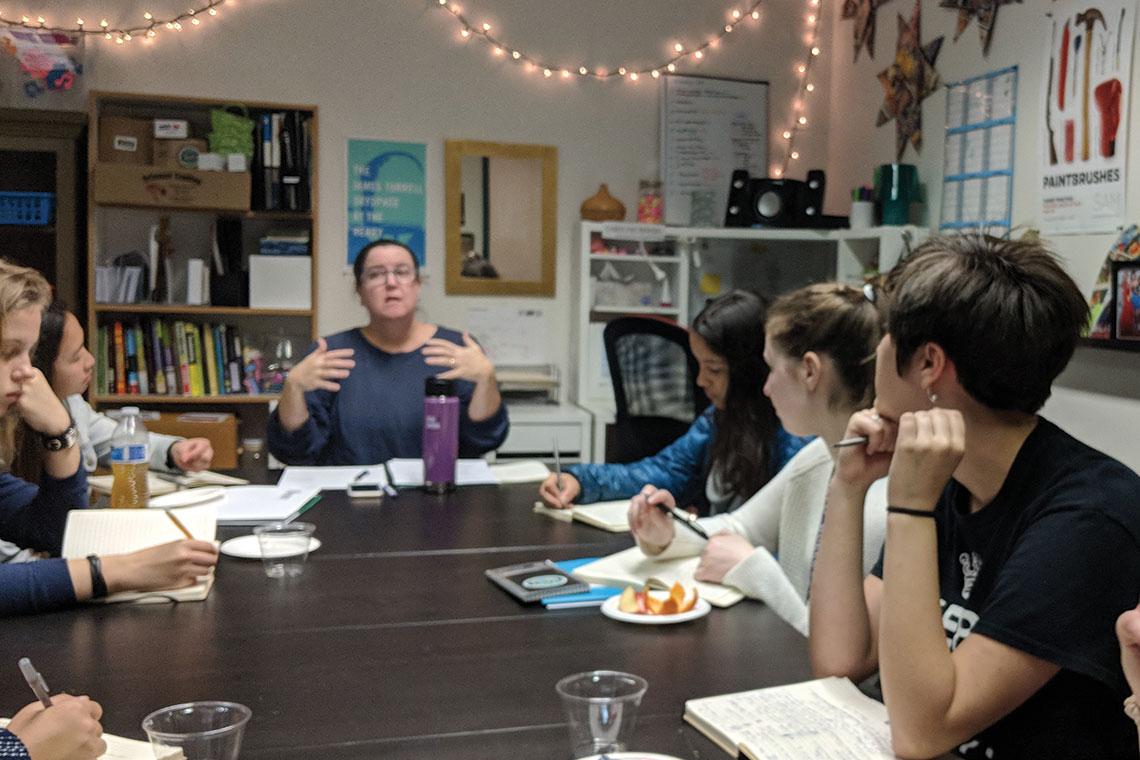
Fall Press Corps Intensive lesson

Once you sat down to write your review, did you feel the same way about the film as you had initially? 

Croom: I think so. It was just easier to articulate. 

Capuano: During my first review for TeenTix, it was hard for me to physically juggle my notepad. I’d never really taken a notepad to go review a show before. 

And writing in the dark!

Capuano: Yeah! And I didn’t know how much to focus on my notes at the expense of not focusing on the show. So, I went on a note taking hiatus for a lot of the performance and then when I went back to write my review I was like, “Ah, I wish I had taken notes on this.” 

Ali: Well, generally I think it’s hard to write how you’re authentically feeling when you’re seeing a new medium that you don’t know much about. It’s also hard to write about different types of art. Like we were just talking about: when you have a lot more practice with film, it might be harder to write about visual art. I enjoy theatre, so when I write about plays, it generally turns out better than when I write about visual art. It’s hard to find a balance. 

Nagashima: Also, there’s been a little bit of a challenge in deciding what kind of style or voice TeenTix reviews want to have and deciding what, editorially, that looks like. Because this is new for everybody. We’ve never done this before. 

If you ran your own arts publication, what would it look like? What would you prioritize in terms of journalists and coverage? 

Ali: It would look like the Press Corps program. I just like how everything’s set up. 

Nagashima: Because you helped set it up. 

Ali: Oh yeah that makes sense. (Laughs.) I like the process. It’s effective and it’s fun. It’s a very enjoyable process—especially how our editors go see shows with our writers. 

Croom: I really like how in the Press Corps Intensive everyone is female-identifying. And it’s just a totally different sense of community than in my classes, where it’s both girls and boys. I think that focus, even though it’s not intentional—it’s just people who applied and got in—but it really does have an effect on how we discuss art and how we are willing to share our impressions and responses. 

Ali: And the people who are involved want to be involved. At school, things are made more painful because people don’t want to be there. But when you’re doing Press Corps, everyone wants to be there and they do their part, so it makes it a lot more enjoyable. 

Fernandes: I would agree. It’s just a lot of people who are really passionate about art and they love doing what they do. And, ideally, they would never get burned out. And they’d continue to do what they love just because they love it. 

Capuano: I read the TeenTix review for A Star is Born, and I had seen that movie. And when I read that review, I was able to have a different perspective on it—even though I had already seen it. I guess my ideal publication would allow people to take things that they were already somewhat familiar with and view it with a different perspective.

This round table was lightly edited and excerpted from an interview conducted November 7, 2018. 

Ryan Henry Ward on Murals in Seattle

Encore recently sat down with the urban artist, Ryan Henry Ward, to discuss the role of children in today’s society, Amazon hackers and where he’d love to paint a mural next.

Even if you don’t know who Ryan Henry Ward is, you’ve seen his work around town. Maybe it’s that weird Sasquatch painting on a building in Fremont. Maybe it’s an elephant on a Value Village wall. Maybe it’s googly-eyed fish, a walrus, a gnome along Interbay. Marking his work “Henry,” his murals have been popping up all over the city for years. 

What sparked your interest in art as a kid? What artists did you look up to? Who do you look up to now?

I grew up in rural Montana and had very little influence besides Sunday comics, Saturday morning cartoons and children’s books. I really was influenced by illustrators. Quentin Blake was my favorite. I was in love with how it felt like his drawings took no time at all to make. I always pushed myself to draw cartoons fast because of him. I liked Shel Silverstein and then Jim Unger, Gary Larson and Ralph Steadman as I got older. Presently, I’m being influenced by Hieronymus Bosch and Alex Kuno. I’ve also had a thread of influence as an adult from Diego Rivera, Keith Haring and, as cliché as it sounds, Picasso and Dali.

Your murals are often full of odd delight and charmed whimsy. Do you picture yourself that way? If not, how would you categorize yourself?

I find myself to be a pretty lighthearted laid-back guy. I tend to have a lot of funny thoughts going through my head most of the time. But I am a full person; I have a definite shadow side and embrace it. It seems to come out in my private work more. I do have a basic philosophy as a public artist and that is to acknowledge that children are part of the public. I think a lot of public artists overlook their responsibility towards the children whose eyes are wide open and seeing everything. I’m no Mr. Rogers but I admire him, and Jim Henson too, and find as an adult that I should take into account the development of the generations that will be responsible for taking care of my soon-to-be geriatric a**.

What do you think is different about a kid appreciating your art over an adult?

It feels like I found an interesting voice that somehow finds people of all ages to speak to. Five-year-olds, teenagers and adults of all ages enjoying the work in the same show is interesting to watch. I think all ages know when something works; when it has intuitive balance and flow. When you look at something and for an unknown reason want to keep looking. I think that experience happens and transcends the age barrier. I’ve seen it happen with my black-and-white work, my bright color work and my imagery that has nothing to do with fun characters. I think I open the door and allow a big audience in, but I think they see something and can’t easily explain why it works for so many. That’s the fun for me. I get to be the scientist behind the concoctions, so to speak, and watch my experimental process take hold in the hearts and minds of people from all walks of life.

What’s your favorite piece that can be seen in Seattle right now? What murals do you miss that are no longer there? 

I always say my favorite piece of art is the one I’m about to paint. But of the stuff that exists, I’m most proud of the work I’ve done for Flatstick Pub and the ongoing relationship I’ve developed with those guys. The installation on the corner of Mercer and Westlake is really worth experiencing. I had been dreaming of full room interactive installations for a while and I was finally able to do it. I’ve lost a handful of murals, mostly due to the tearing down of old buildings and putting up new ones in their place. It’s hard to see your babies go but it’s also the nature of the game. It’s sad when I lose one because I know how attached the community gets to them and how they become a part of their lives. When someone gets a hold of me and asks for permission to replace or cover it with something new, I feel a responsibility to historic preservation of the work and basically tell them no. Of all of them, I wish my first one was still here. That was on the Triangle Lounge in Fremont.

You came close to being able to paint the top of the Space Needle in a competition. What happened there?

Oh, the Space Needle saga. Q13 hired a computer forensics scientist and found an Amazon employee hacked into the voting program and swayed the process. It was weird because I had to remain neutral although I was upset because so many people put so much time and effort into voting for that. In the end they found it was hijacked. I felt horrible for my fans that put the time in and also felt bad for the other artist that was chosen that had to deal with the whole thing on her end. Basically, I don’t enter competitions anymore and have no interest in being involved in games that involve artist’s careers or lives.

If you could paint a mural on anything in Seattle, what would it be?

It would be the Seattle Aquarium. I love that place and that wall is a beauty.


Heidi Durham on the Nonprofit Art with Heart

For 20 years, Art with Heart has been an innovator helping kids build resilience, self-regulation and social-emotional skills to heal from Adverse Childhood Experiences. They use art-based, age appropriate, therapeutic activity books to help abused and traumatized kids heal. They have served 190,000 children so far and are on a mission to provide resources to at least 10 percent of the 35 million kids facing trauma in America in the next 10 years.

How did you get involved with Art with Heart?

After over a decade at Starbucks, a year in Ethiopia and two years working at a local brand strategy and design firm, I met our founder who was ready to pass the torch after 20 years. I was so impressed with what she had built. Motivated by the reality that 35 million kids are struggling with various adversities and inspired by the power of art to help kids heal by accessing the part of the brain where trauma is stored, I jumped at the chance to join. 

What sorts of kids participate? What types of traumas/adversities have they faced? 

Heidi Durham, Art With Heart CEO

Kids who take part in Art with Heart curriculum are often trying to cope with an Adverse Childhood Experience (ACE). These kids are not alone. A staggering 35 million American children are struggling with one or more ACEs; 28 percent are dealing with physical abuse, 27 percent with substance abuse, 20 percent with sexual abuse, 13 percent with domestic violence and 11 percent with emotional abuse. After exposure to ACEs, kids have twice the risk of heart disease, three times the risk of depression and a greater risk of chronic disease, mental illness, violence and being victimized by violence. The National Child Traumatic Stress Network estimates that one in four kids has experienced a serious trauma by age 16—that’s eight children in a school class of 32. Eight kids who can’t pay attention, sit still long enough to read, or concentrate on the math problem on the chalkboard because their central nervous systems have been hijacked by traumatic stress. If they’re not helped, those eight kids can’t make up for lost time. They’re likely to be shuffled on to the next grade, labeled “disruptive” and isolated socially while struggling to cope with overwhelming emotions. Knowing so many children are struggling to cope with ACEs with no resources and not enough adults trained in trauma-sensitive interventions is what drives us. Their teachers, parents, family doctor and other caregivers are often at a loss for how to help. They may not understand the effects of trauma on a young, developing brain or have the skills to reach these kids. They may be too strapped for time and money to give kids what they truly need: trauma-sensitive, guided, therapeutic activities that help them safely express their challenging emotions and build resiliency skills for a healthier, happier future. 

What are some of the most powerful experiences you’ve had while interacting with the kids? 

Art with Heart is successful if kids finish an art project and feel like art is a coping strategy for them when faced with difficulty. There are so many stories of how art is a powerful tool to help kids through trauma. An 11-year-old said of the program, “Art helped me to get my feelings out on paper. Doing these actives let me know that there is someone out there in the world that has the same feelings as me.” A 16-year-old said, “Over the course of my life, I’ve experienced many negative emotions, there were some good ones as well. I have trouble expressing my emotions in a non-harmful way, so these art projects are a good way to express these emotions.”

Art With Heart painting activity

Why art? How does art reach a child when other things don’t?

Talking about trauma is difficult, in large part because it’s stored in the visual, nonverbal part of our brains. This is how creative expression has a unique role in healing—making art connects the head, heart and hands like no other method that exists. 

How can someone help?

Make a gift online. Come to an event. Volunteer.

You can learn more about Art with Heart’s curriculum, programs and how to get involved by visiting artwithheart.org.

SCT’s Courtney Sale on the Universal Appeal of ‘The Velveteen Rabbit’

Courtney Sale describes herself as a director who’s passionate about new work and devised theatre. As the artistic director of Seattle Children’s Theatre, Sale has directed adaptations of Black Beauty and The Little Prince. But her work isn’t just limited to theatre for young audiences. Sale proudly collaborates with a number of nationally produced playwrights, including Steven Dietz, Kirk Lynn and Allison Gregory. Encore had a chance to speak with her about the upcoming production of The Velveteen Rabbit at Seattle Children’s Theatre, a co-production with the Unicorn Theatre in London. The play runs November 1 to December 30 at Seattle Children’s Theatre. 

What drew you to The Velveteen Rabbit? Why this play now?

The Velveteen Rabbit is a story for multi-generational audiences always worth revisiting. For me, the play reminds us that love is a verb. The work of deepening kindness and compassion takes time, action and evolving understanding. Once we truly know those civilizing emotions, we can overcome anything—even if it means we experience loss.

I was at a funeral a few years ago where a religious scholar said the only way to take loss out of life is to take love out of life. That idea has stuck with me. As our world becomes more complicated and frightening, taking time to meditate on how to love one another is a radical act. The opportunity to gather in community and practice that idea across generations is wholly compelling. 

Ashley Byam as Boy, Christian Roe as Rabbit and Stephen Kennedy as Narrator in The Velveteen Rabbit
Ashley Byam as Boy, Christian Roe as Rabbit and Stephen Kennedy as Narrator in The Velveteen Rabbit at Unicorn Theatre

When did you become familiar with Margery Williams’ work? What is it about her writing that excites you? 

My mom read the story many times to me. Not only a fabulous parent, she is wonderful with children—one of her many gifts. My mom taught me how to treat young people. She was patient between each page, comforting in her voice and indulgent to every question I asked. The Velveteen Rabbit was one of the first books I read as a child that made me see my toys anew. I owned a few Care Bears and the night after I read the story I had to sleep with all of them tucked into my bed. I felt an indelible responsibility to make sure each of them knew how much I loved them! 

To me, what is exciting about Margery Williams’ language is that it takes the shape of the patience and generosity exhibited in the way my mom read to me as a child. The story holds a particular quality and slower time signature—something I find lacking in some of children’s entertainment today. 

The Velveteen Rabbit is directed by Purni Morell, former artistic director of the Unicorn Theatre in London. What drew you to Purni as a director? What was it about Unicorn that promoted you to partner with them on this play?

We are delighted to have Purni’s work on our stages at SCT. This is the first time we’ve worked together. What I love about Purni is her fierce intellect and uncanny sense of humor. We share a paramount value in that the work we make for children should flatter their intellect and imagination. This iteration of the play has received successful runs in both New York and London. We were thrilled we are able to bring the physical production from the UK to Seattle, as well as cast two local Seattle actors in the show. Those actors will rehearse in London in October. Like SCT, Unicorn Theatre holds a commitment to producing the highest quality work for children. We are like-minded in our dedication to new work. It’s a natural fit. 

What are you most looking forward to about this production?

This iteration of the story activates all the things I want in a theatre experience—rough magic, beautiful language, playful physicality, live music—all built upon a story with real meaning and substance. The ability to invite the audience in through multiple sensory experiences is always something I want to create in the theatre. 

Are there any female playwrights, directors, choreographers or musical theatre writers—working in Seattle or nationwide—that you’d like to shout out?

Absolutely! Seattle enjoys one of the most dynamic concentration of amazing female directors and playwrights in the nation. I am so inspired by the artistry around me. To name a few: Allison Gregory, Cheryl West, Karen Hartman, Desdemona Chiang, Rosa Joshi, Anita Montgomery, Valerie Curtis Newton, Elizabeth Heffron, Sheila Daniels, Jane Jones and the list goes on!

Is there anything else you’d like to share about The Velveteen Rabbit?

Whether you are young, recently young or previously young, this is a story for you. In the darkest time of the year as the days get shorter, it is such a great story to warm critical aspects of our humanity—namely, unconditional love.

Music Meets Literature with The Bushwick Book Club

Ever been inspired to write a song based on Moby Dick or Ready Player One; The Outsiders or Delta of Venus? The Bushwick Book Club is a group of musicians who create original compositions inspired by books they read. These compositions are then presented to a live audience and their fellow songwriters. 

Encore Stages recently sat down with Geoff Larson, Bushwick’s executive director, to discuss playing bass, Commander Toad and how music can help illuminate literature.

What’s your background?

I’m the executive director of Bushwick Northwest, the parent organization to The Bushwick Book Club Seattle and STYLE: Songwriting Through Youth Literature Education. I graduated from Western Washington University with a degree in Classical Performance on the upright bass while studying Jazz and Composition. I’ve spent 20 years working as a professional musician in a variety of styles, having the opportunity to tour the world. I now focus on my executive director role at Bushwick and producing events, education programs and recorded music in the Seattle area.

Geoff Larson
Geoff Larson

What is Bushwick Book Club and how did you get involved in it? 

Our goal is to ignite passion for literature and support musicians in their creative endeavors. More than anything, Bushwick is a community for artists to gather and share their compositions while supporting those around them.

I moved to NYC in 2009 with my jazz quartet, Das Vibenbass. While living in the city I ended up performing with a variety of groups and seeing some amazing performances, including The Bushwick Book Club right there in Bushwick, Brooklyn. It was one of the most electric songwriting showcases I had ever seen. When I made the move back to Seattle, I knew I would need to start up a Bushwick chapter. I gathered a crew and we performed our first event in 2010.

How can music help illuminate literature? How can literature help illuminate music?

Music is something that can bring out emotions in an unexpected way. The way a performer choses to represent their inspiration certainly challenges each listener with their own experience with the same text. Each reader has a unique take on a single passage and will represent their experience accordingly. And then a listener will even have a different inspiration from the music. It’s a beautiful cycle of ideas and creation. Attaching a story to music can help bring a listener on a journey. This is something I always love to do with my instrumental music. I love hearing what journey a listener created while listening to my music. It’s actually a game I like to play inside the classroom with our education program, STYLE.

What books growing up touched you? What books have you gravitated towards as an adult?

In my youth, I loved adventure and exploration. These have been found in the simplicity of Beverly Cleary or in Commander Toad, although I could not deny the beautiful poetry of Shel Silverstein or Dr. Seuss. I have fond memories of my parents reading me those stories. As I grew into high school age, I found Kurt Vonnegut, still one of my favorite writers, and John Steinbeck. As an adult, I’ve counted heavily on those around me to guide me towards what they love. Science fiction is something I love beyond all. The creativity and thought towards the future cannot be matched with these incredible writers. I have to note that Mary Doria Russell’s The Sparrow has become one of my top reads. It feels so real to me.

How does one become involved in Bushwick? Are you seeking out singers?

Bushwick is always looking for more musicians to perform in our programs. All you need to do is share one song inspired by the written word with us, and provide us with your online presence. We love meeting new performers and bringing more artists together to foster support and collaboration.

We also love volunteers! It’s a wonderful way to help our organization charge forward and get the chance to support local artists and see our performances. You can volunteer by contacting us through our web page.

Favorite Bushwick memories?

Bushwick has too many to count—from our multiple performances at Benaroya Hall and McCaw Hall, to performing with a full orchestra at Town Hall Seattle. My favorite moment is picking up a guitar and performing that first song back in 2010. It was my first performance on guitar and vocals and my goal was to make sure everyone was comfortable to bring their own songs to this audience.

What are you looking forward to most next season?

I am ecstatic that we will have a place to call home next season. Thank you to the Hugo House for providing us with a location for most of our events. Our partnerships are a big deal to us. This also includes Town Hall Seattle, Seattle Arts & Lectures, The Vera Project, Jack Straw Cultural Center and Seattle7Writers.

As for our events, I’m looking forward to our Parable of the Talents event on April 20, 2019 at Town Hall Seattle. Working with our curator, KEXP’s Riz Rollins, is a fantastic experience, and I cannot wait for this second performance (we did Parable of the Sower last season). Octavia Butler is one of the best science fiction writers I’ve read, and the musicians found so much to create.

If you could perform in front of any author, living or dead, who would you pick? What sort of tune would you play?

This answer could change on any given day, but I’ll pick one for today. I’m going with Mary Doria Russell. I know that the song I would write would be inspired by The Sparrow and would be performed with my upright bass with my dropped D. There would be a solid drone with that low note and throughout the rest of the bass giving sense of urgency and waiting (I know it’s weird). I think I might focus on the loneliness our characters might feel while on a long journey through… Ok I won’t give anything away. Read the book!

How can someone help Bushwick?

Come to a show. Bring your friends! You won’t be disappointed, and you’ll be supporting local musicians.

Seattle Modern Orchestra’s Jérémy Jolley

Seattle Modern Orchestra (SMO) is the only large ensemble in the Pacific Northwest solely dedicated to the performance of contemporary classical music. The professional new music ensemble, conducted by Julia Tai, has 18 musicians performing in many different configurations, adding to Seattle’s artistic landscape and cultural dialogue.

Jérémy Jolley, SMO’s co-artistic director (along with Tai), is eager for SMO’s distinct voice to be heard. He recently sat down with Encore to discuss the meaning of modern music, the challenges in performing it and Echoes of Tinder.

Tell me a bit about yourself.

I was born in Lyon, France and grew up in the French Alps. I moved to Seattle in 1997, pursued composition studies and received my Bachelor of Arts and Master of Music degrees in Composition from the University of Washington. I’m the co-artistic director of SMO, also the artistic collaborations manager at the Seattle Symphony.

What is Seattle Modern Orchestra? How is it different than other orchestras in the area?

Seattle Modern Orchestra focuses on music that relates to the present or recent past. It is a modern orchestra that explores what music can be.

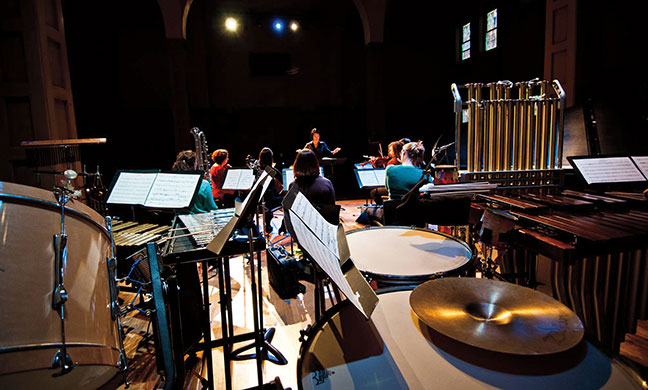
Seattle Modern Orchestra

How did you get involved with SMO? Why was it important to you?

In June 2010, Julia Tai organized a concert featuring Steve Reich’s Tehillim under the name Seattle Modern Orchestra. In August of that year, after returning from a new music festival in Germany, I was looking forward to creating a way to consistently present contemporary music in Seattle. Julia and I had met during our studies at the University of Washington, where she had conducted one of my works, so I contacted to see if I could join her effort with SMO and we launched SMO’s first season in 2010–2011. Seattle area audiences must have access to all of the different types of music being created today. Experiencing different types of thought and expression is key to living in today’s society.

People have a perception of what classical music is. What does SMO do to change those perceptions?

Today’s performing groups, including SMO, are taking a critical look at whose music has been performed and whose has not. SMO’s mission to perform the music of today gives us the chance to challenge all these preconceived notions associated with “classical” music. We are always experimenting with the concert format and asking our audience for their input. Overall, there is an attitude of welcoming people to a concert as if they were being welcomed into our homes.

Who are some of your favorite modern composers?

Ah! There are too many to list here, but if you insist; some composers that I return to regularly and recommend exploring are Giacinto Scelsi, Luigi Nono and G’rard Grisey. Their unbound love for sound and its expressive potential is very compelling to me.

What are some of your favorite SMO memories?

All of my favorite memories of SMO are a variation on the same experience, that is, at a concert, while listening to the works being played; or after the performance, looking at the facial expressions of the audience. The faces of wonder, excitement, bewilderment. I typically sit on the side of the auditorium, and to see the humble and thankful looks that audiences and performers give one another is magical.

What are you looking forward to in the coming season?

This season is very exciting for me because I’ve only heard one of the pieces of our season performed live! I’m looking forward to discovering them deeply as we prepare them for our three concerts. This coming season we will get to play with Yigit Kolat and his Echoes of Tinder for ensemble and electronics. We will also have a concert celebrating flutist/composer/conductor Robert Aitken. Aitken is from Toronto, Canada and will play with and conduct the ensemble music by Toru Takemitsu, Brian Cherney, Iannis Xenakis and his own. Our last concert of the season will feature the American composer and vocalist Erin Gee who will perform a few of her Mouthpieces with the ensemble. These are works in which she explores the nature of vocal sounds and their relation to instrumental sounds. It is a uniquely beautiful experience.

Playwright Yussef El Guindi on the Immigrant—and American—Experience

Encore Stages talks with playwright Yussef El Guindi on the immigrant’and American’experience.

If you’re an avid theatre-goer in Seattle, chances are you’ve seen a Yussef El Guindi play. This prolific playwright has become an artistic staple here in Seattle, a city he has called home since 1994. (Upon reflection, he shared that he’s lived in Seattle longer than he’s lived anywhere else—even England, where he was raised after his family emigrated from Egypt.) We had the opportunity to speak with him about his writing, being a theatre artist in Seattle and ACT’s 2018 Core Company.

Many of your plays examine the immigrant experience through a theatrical lens. Is there something that you wish Seattle residents better understood about immigration in America?

It’s not easy. Immigrating is sort of akin to walking a wobbly, wooden bridge over a precipice in a deep fog—a bridge that appears to be disappearing behind you and whose intact structure up ahead is not assured. And even if you “make it across” and achieve citizenship, world events and political shenanigans might occur that might suddenly imperil your standing as an immigrant.

Different racial and immigrant groups at different times will frequently get slandered in the headlines. I think it’s a phenomenon among immigrant groups, and more broadly, different racial groups within the United States, to hold their collective breaths every time there is some horrendous act of violence that makes the news. We all secretly pray it isn’t someone from our “tribe.” When a white person commits a horrific act of violence, I don’t get the sense among European Americans that they feel they have to carry the burden of that crime. The crime is not foisted on them as a collective group. There is no sense of guilt or worry that this might in some way impact their standing in society.

But for certain immigrant groups and people of color, that worry is real. You feel pressured to publicly disavow any connection or feeling for the individual who perpetrated that crime. If the perpetrator is an Arab or Muslim, the mainstream press won’t speak of that individual as troubled or suffering from mental health issues. Instead, they’re terrorists, monsters, and live outside the pale where everything good and civilized apparently lives.

At such times, you feel you’re back on that bridge over that precipice. And the bridge feels even more wobbly than usual.

How has our country’s current political climate impacted your writing?

The United States has been “Trump-land” for some time: a place where an alarming degree of xenophobia and racism are the norm. I’ve been in “crisis mode” when crafting plays for some time now. And when responding to current political events, I have to tread carefully. Mainly because, with rare exceptions, the turnaround between completing a first draft and a full production can range from two to three years, sometimes longer. Whatever political crisis that triggered the play may be old news by the time your piece is staged. You have to sift through the news event, or zeitgeist of that moment, to find what resonates on a more universal level—and that might transcend the particular political moment that triggered the play. Which means breaking things down into very personal, human matters—locating your protagonists, with all their personal issues, within the social and political web in which they operate and understanding that what makes us human are also the political structures that prop us up as social creatures.

That’s the goal anyway: to turn something very specific, local and political into a more universal exploration of our status as citizens and humans just trying to survive.
As for my home country of Egypt, after the revolution in 2011 I wrote several plays in response. One of them, The Mummy and The Revolution, I wrote too soon—feeling much too hopeful for a future that didn’t come to pass. The other two plays, Threesome and The Tyrant, I took a different tack. I know these plays are still expressive of both past and present circumstances. The shock waves from the revolution and its aftermath continue to ripple through me and will probably impact my writing in some way for some time to come.

You’ve worked with a number of local theatre companies in the production and development of your plays. Do you have a favorite theatre company to collaborate with? Why?

I’m very thankful to all the theatre companies who have extended their hand out to me. Most theatres are very squeamish when it comes to putting on plays by and about Muslim and MENA (Middle Eastern, North African) writers. They’re not quite sure where these stories and people fit in the received narratives of the day. For all the talk of diversity, most theatres lack a truly global vision that encompasses the full array of voices from around the world. Not to mention an inability to see beyond the limited diversity schemata that determines who is and is not heard from.

So, I really appreciate those adventurous local theatres that have reached out to me, like West of Lenin, Theater Schmeater, 18th & Union, and ACT. ACT in particular has shown a keen interest in my work. To have a theatre of this size give me a platform for my plays has been very important in my development as a writer.

You were recently named to ACT’s 2018 Core Company. Could you talk to me about what it means to be part of this company of artists?

I joke with colleagues that as theatre people we are door-to-door salesmen and women—itinerant individuals knocking on numerous doors, trying to get theatres to invite us in. And how humiliating it is, when more often than not, those doors are either shut on us or our knocks are ignored altogether. So, for ACT to invite me in to be part of their 2018 Core Company is huge. As for how that plays out in the future, we’ll see. We’re all sort of making up this position as we go along. As John Langs, the artistic director, likes to put it, I get to be the first pancake. But psychologically, for me, the promise of having a home where I might get to exercise my talents, where my plays may have a good chance of being staged, to have a place where I can try out new material with exceptionally good actors, well, that’s just a lovely position for a playwright to be in.

What excites you most about being an artist in Seattle? How do you hope to grow and challenge the theatre community here?

What’s interesting to me is the degree to which I have been shaped as a playwright by Seattle theatre audiences. There are personal and cultural influences of course that will always infuse the heart of everything I write, and to which I am both grateful for, and to which I am a prisoner of—to the degree that we are all shaped and imprisoned by the particulars of our individual pasts. But as a playwright, having spent now twenty-four years in Seattle seeing many plays at different theatres, I realize I have not only been learning from the plays I watch, but from the reactions by the Seattle audiences to those plays. Without realizing it, my plays are being influenced by those audience reactions. I have some appreciation of what might and might not stir a Seattle audience. There are, of course, no guarantees that what you write will be to their liking. But I think any playwright who spends a long enough time in one city will invariably start unconsciously adjusting their work for the audiences they’ve attended plays with. Sort of like knowing what jokes and stories will fly at a family gathering.

But that is very much countered by my non-Seattle subject matter. And that’s the challenge for me. To write about peoples and conflicts that people here don’t necessarily relate to. To humanize individuals and situations that too often get flattened in the press. People do like to see themselves up on stage in some way. My job is to bridge the gap between the non-Seattle folk I portray and the Seattle audiences who, hopefully, come to see my work. (Thank you to all those who do attend!)

Do you have any plugs? How can folks find more about you and your work?

I do have a play of mine called Hostages, written almost thirty years ago (!), that’s going to be done at 18th & Union in October, directed by David Gassner. I’m curious to see how it stands up after all these years. Come see it if you can.