Back in Black: The Legacy of Black Nativity Returns to Seattle’s Holiday Stage

It happens like clockwork every year. Seattle’s Intiman Theatre begins taking calls from patrons looking to buy tickets to one Christmas production in particular. But there is just one problem.

Black Nativity hasn’t been running for ten years,” said Wesley Frugé, Intiman’s Managing Director. “What is it about that performance that they are missing it every year?”

The good news—theatregoers won’t be missing it in 2023. Black Nativity is coming back to the stage for Intiman’s holiday season. After ten years away, and under the fresh direction of Valerie Curtis-Newton, it won’t look exactly as it did the first time around, but for a production so closely tied to Black culture and community, its evolution proves equally fascinating as its history.

Written for the stage by poet and social activist Langston Hughes, Black Nativity is an adaptation of the Nativity story incorporating gospel music and Christmas carols, traditionally performed by an all-Black cast. The show was first performed off-Broadway in 1961, and productions have continued in the United States and abroad ever since.

Intiman first staged the production in 1998. It was such a success it returned the following year, and kept returning, only ending after a 15-year run. Why it has been so missed ever since might have something to do with the powerhouse team that put the original run together.

The production was directed by theatre veteran Jacqueline Moscou. It featured the vision of civil rights leader and longtime Mount Zion Baptist Church pastor, Reverend Dr. Samuel McKinney, as well as the “First Lady of Gospel,” Patrinell “Pat” Wright, and members of her Total Experience Gospel Choir, among others.
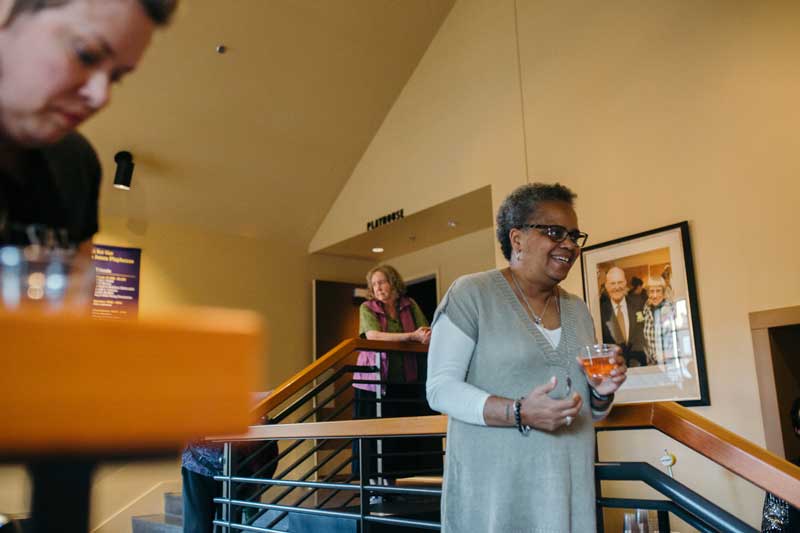
Valerie Curtis-Newton speaks at opening night of “Bulrusher” at Intiman Theatre (2019). PHOTO BY JOE MOORE

The show may have not been running since 2012, but it was clearly alive and well in the minds of those who now have the chance to bring it back.  

“I’ve had so many conversations in last ten years around this project,” said Jennifer Zeyl, Artistic Director of Intiman. The recipient of 2006 Stranger Genius Award in Theatre, Zeyl was named “Best Scenic Designer in Seattle” by Seattle Weekly in 2005. The Stranger said about her, “Jennifer Zeyl is the most exciting scenic designer working in Seattle today….no one rivals Zeyl in pure conceptual power…she has invented as often as she has arranged, and actively conceived as much as she passively evoked. And her work just keeps getting better.”

Zeyl had the chance to sit with Wright, Moscou, and others from the original production in regular anticipation of bringing back Black Nativity, but admitted that for one reason or another the time was never quite right to bring the show back until now.

Part of the hurdle to bringing the show back was that Intiman found itself, for a time, without a permanent home. Founded in 1972, the theatre has presented more than 240 productions to Seattle audiences. Intiman has a track record for producing work that supports diverse voices, encourages conversation, honors activism, and forges and a personal connection between the performers and its audiences. Intiman was formerly housed at Seattle Center in the Intiman Playhouse, but had to forgo the space while addressing mounting debt. From 2015-2020, the company produced in various venues throughout Seattle. In 2020, the theatre moved to Capitol Hill and is now a long-term tenant at Seattle Central College, producing at the Erickson Theatre and Broadway Performance Hall.

Since the original run of Black Nativity, the community has lost both Pat Wright and Reverend McKinney. Zeyl sees the production as an opportunity to pay homage to them and the legacy they helped build, and to do so “to a diminishing Black population.” She admitted that staging Black Nativity in 2023 means something different than it did even a decade ago, and as such has prompted changes to the production.
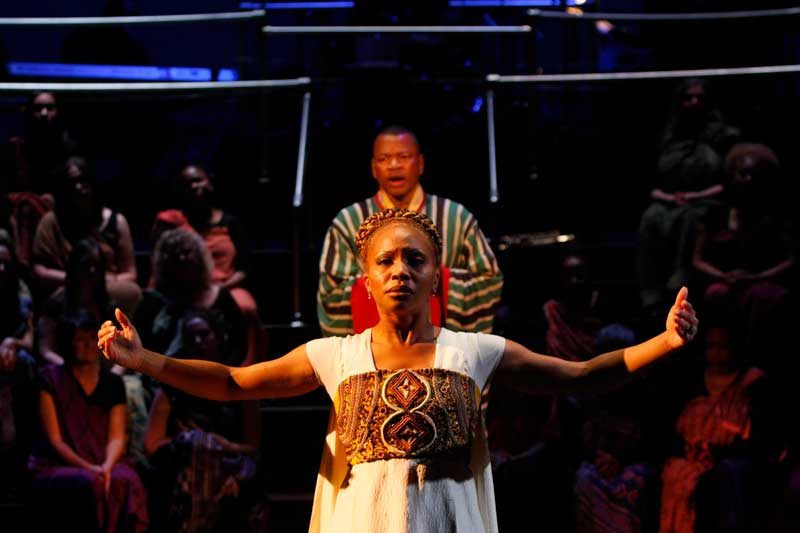
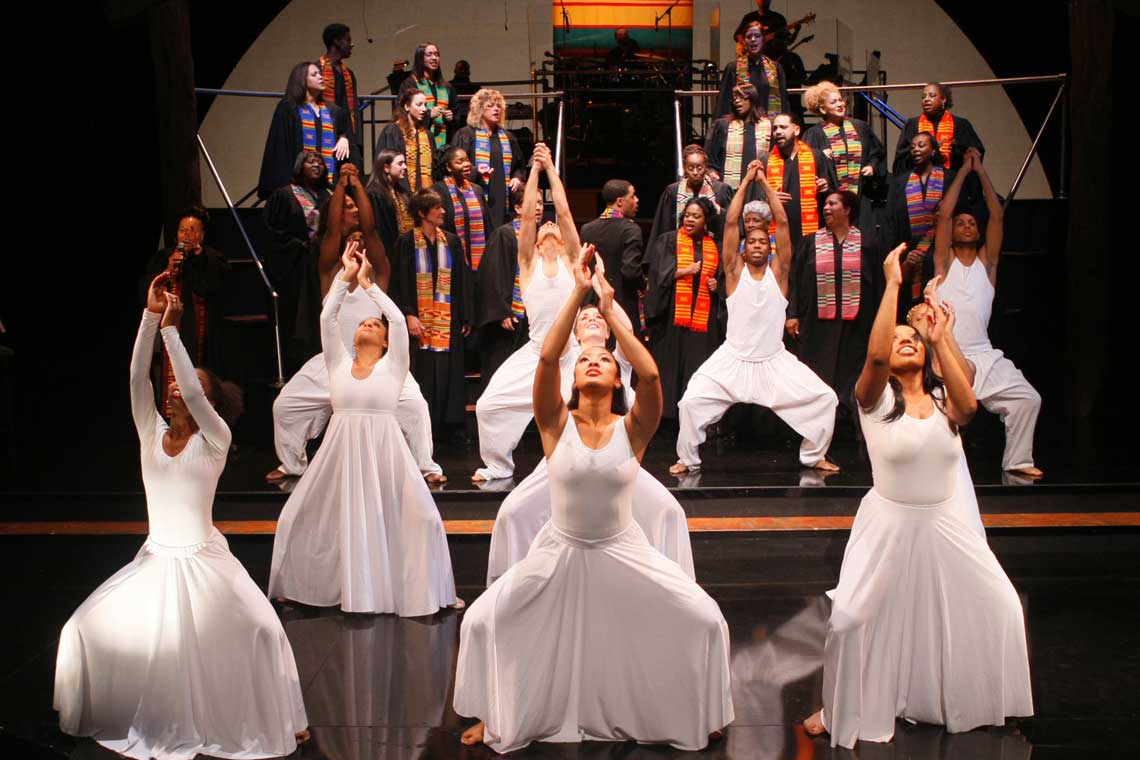
“Black Nativity” at Intiman Theatre. PHOTO BY CHRIS BENNION

“The nativity story has not evolved, but our hunger to be in shared space and to share a common experience that is unifying instead of divisive—that is the moment we are in right now.” Zeyl believes the newly remounted show offers a point of view that invites an audience from an even wider array of faith practices, including those of faith who identify as queer.

The original Hughes play is essentially a one-act. Musical Director for Black Nativity,Sam Townsend, said that the music Wright used in what was act one of the original production was “pretty traditional,” and that he is keeping with that tradition, while also revamping to include some contemporary gospel music.

The second half of the show at Intiman originally featured a “revival scene,” or perhaps more descriptively a “fire and brimstone” sermon. That will be no more, replaced instead with a “rousing” audience sing-along, including Christmas carols.

“Coming out of pandemic and not being able to congregate, this production is an opportunity for fellowship,” said Townsend. “We are going to do a sing-along, inviting the audience to be part of the show, the experience.”

Townsend understands he had big shoes to fill on the music and choral side. But Townsend also had the benefit of studying under Pat Wright. In fact, Townsend joined Wright’s Black Nativity chorus three years into the original run and, in time, Wright began asking him to assist in the directing, setting him up well for the current opportunity.

“As a young lad following her lead,” Townsend said, “I saw the way she commanded a choir, bringing an entire audience, believers and non-believers to an equal plane. Black Nativity was the most intimate experience to learn from and under her.”

Director Valerie Curtis-Newton also had a hand in the new direction for the second half of the show.

“We are all interested in reconnecting after three years of not being in the same room together,” said Curtis-Newton. “Singing is one of the things that connects us. The world is in a time that is fraught. Let’s join voices, lets occupy the same space and see what can happen.”
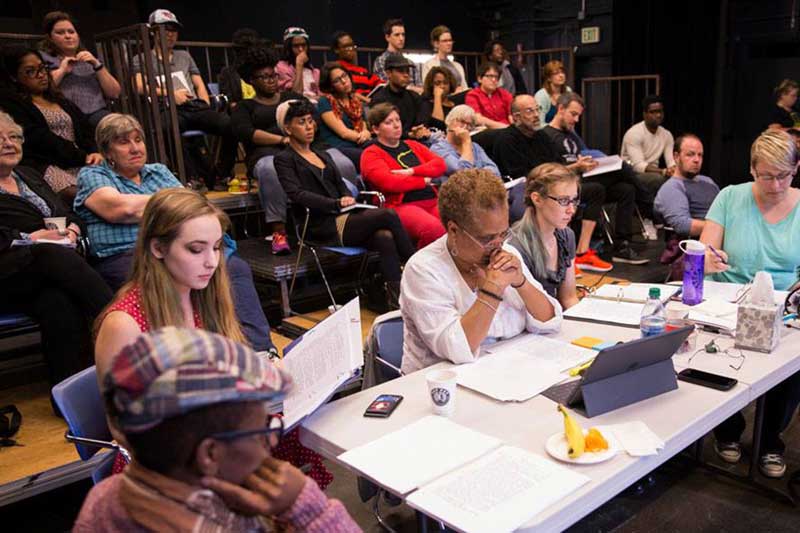
Valerie Curtis-Newton at first rehearsal for “Wedding Band” at Intiman Theatre (2016). PHOTO BY ALEX GARLAND

Decorated director and the Head of Directing and Playwriting at the University of Washington School of Drama, Curtis-Newton also had a special connection to the original Black Nativity production.

“When I first moved to Seattle, one of my early mentors was Jackie Moscou,” she said. “I watched her with great interest and appreciation as the whole [Black Nativity] team ultimately pulled something together that really brought the community together.” Curtis-Newton was only a student then, “finding her feet” as a professional, as she described it. “Now,” she added, “I am at a place in my career to be a part and bring back the spirit of the event.”

Curtis-Newton brings more than just her directorial experience, she also brings with her The Hansberry Project that she built. The organization celebrates the work of Black theatre artists, and is a partner in the production of Black Nativity.

All in all, it seems that everyone agrees the time is right, and that the message of Black Nativity is needed more than ever. Is Black Nativity setting itself up for another 15-year run? “Yes,” said Curtis-Newton, “why not?”

Black Nativity has definitely been missing from our holiday offerings,” said Zeyl. “When your audience cares, you listen.”


Black Naitivity will play at Broadway Performance Hall from December 12 to 30, 2023. Tickets are available at intiman.org.


David Drury is a Seattle-based writer, journalist, and Best American fiction author whose creative work can be found at daviddruryauthor.com.
Finding New Delight in Familiar Holiday Performances

If it is fair to say that audiences return to the performing arts for meaningful connection, perhaps there is no richer time of year for doing just that than during the holiday season. As days grow shorter, darker, and colder as the end of each year approaches, Seattle stages and performance halls are warm, well-lit, and busy, offering top-tier productions to replenish one’s inner sanctum through the arts of music, dance, and drama.

Particular to every holiday season are the returning shows; those performances and stories that audiences come back to year after year. These are often part of a tradition that began in earliest childhood, and after so many years are still rekindling the holiday spirit. Holiday shows are often family affairs as the tradition is passed on to children and grandchildren.

How do arts organizations in the Seattle area keep their holiday shows fresh and relevant for audiences year after year?

“It’s all in the mindset of the creative team and the artists who approach the show,” said John Langs, Artistic Director at ACT (A Contemporary Theatre) and director of this year’s production of A Christmas Carol. “The theatre is different every night and we as humans are different with each new event we experience. I think the key is to not deny who we are or the events in the world outside as you speak the words of the play but let whatever is moving in you be part of the story you are telling. Use it.” Langs said that the business of bringing the real world and circumstances to bear in serving story in fresh and relevant ways required something of a “spiritual rigor.”

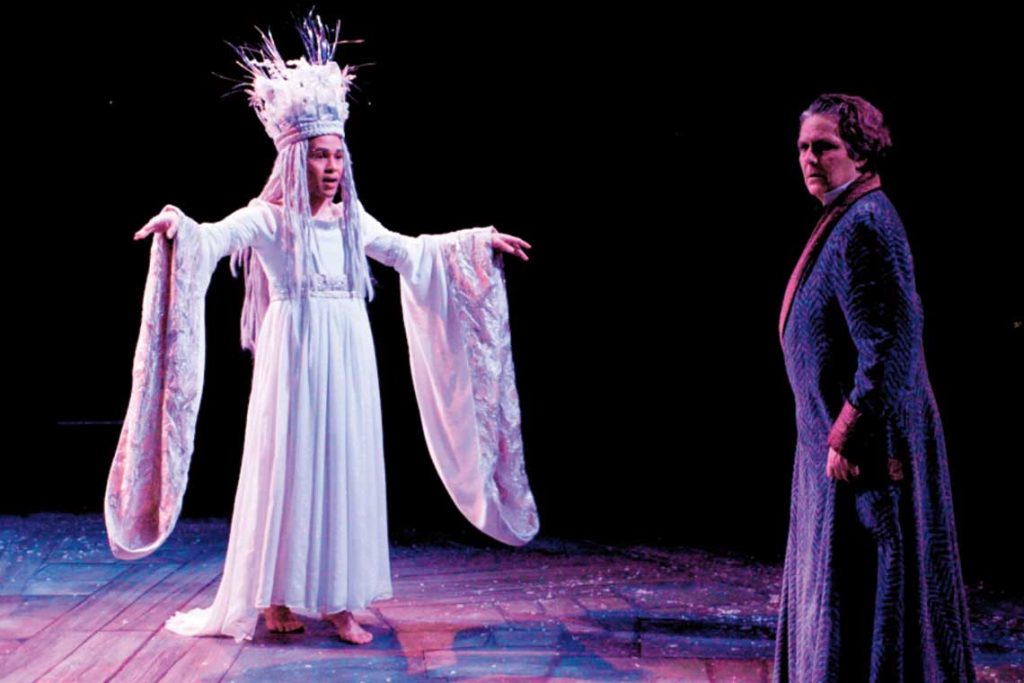
On a stage, two actors stand together talking. One is dressed all in white as the ghost of Christmas Past and the other in a dressing gown as Scrooge.
Chip Sherman and Amy Thone in “A Christmas Carol” at ACT Theatre. PHOTO BY HOWARD SHACK

He pointed out that A Christmas Carol, a 47-year tradition at the ACT Theatre in downtown Seattle, is a story of redemption and renewal that takes place at the very end of the calendar year—already a built-in time of reflection. “The power of tradition is strong,” he added. “Many audience members come to A Christmas Carol as their first professional theatre experience. Many of them were brought as children and they are now bringing their grandkids to ‘share the magic.’”

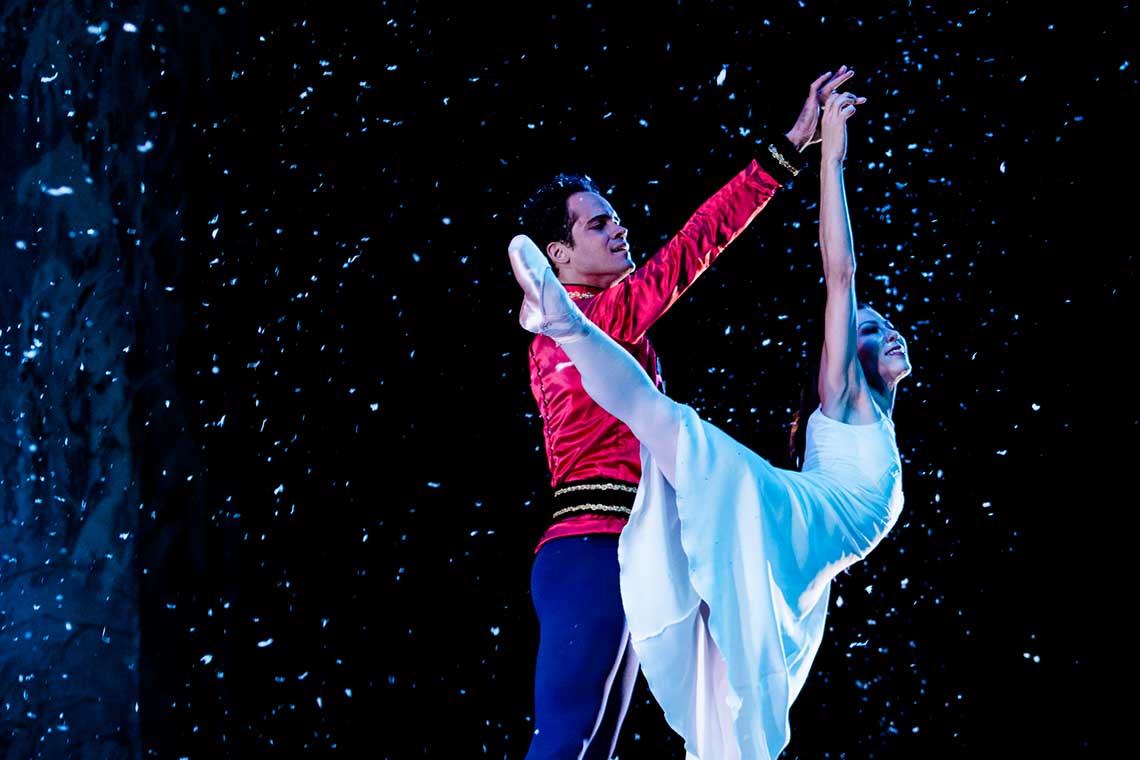
“No two shows are alike, and every cast is different,” said Peter Boal, Artistic Director of Pacific Northwest Ballet (PNB), the company responsible for bringing George Balanchine’s The Nutcracker to audiences every holiday season. “Even the orchestra plays Tchaikovsky’s score slightly differently under the baton of different conductors, or with a new violin soloist. This is the beauty of seeing (and hearing) art in person.” Boal confirmed that PNB, in fact, restages Nutcracker each and every year, teaching each step and interaction from scratch to company dancers and PNB School students. Many dancers and most student dancers are in roles for the very first time, some even experiencing live performance for the first time.

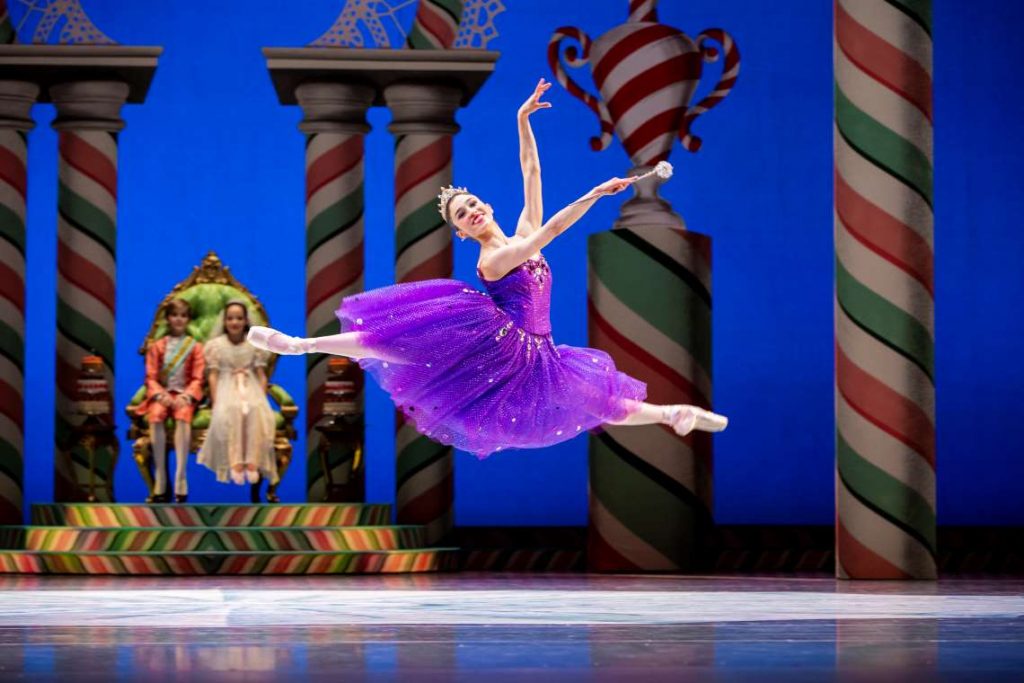
A ballerina dressed as the sugar plum fairy leaps across the stage with her arms outstretched in "The Nutcracker."
Leta Biasucci in “George Balanchine’s The Nutcracker” at PNB. PHOTO BY ANGELA STERLING

Boal also referenced the role of tradition, and the fact that for many in the audience, this is their first experience seeing a live ballet performance, something he called a “perfect portal for discovery of the world of classical ballet.”

PNB’s isn’t the only long-running Nutcracker in town. Former professional dancers John and Helen Wilkins founded Olympic Ballet Theatre in Edmonds in 1981, and The Nutcracker has been an annual mainstay at Edmonds Centre for the Arts ever since. In 2011, Oleg Gorboulev and Mara Vinson took over the show, teaming up as artistic directors.

The Nutcracker is a holiday tradition,” said Gorboulev. “We occasionally make choreography changes, or adjust technical aspects, or update the costumes, but [otherwise] not much changes. But on the artistic side we have new dancers each year, and with new dancers, you get fresh energy. I don’t know if the audience notices, but we notice.” He pointed to the working relationship between himself and Vinson as a necessary component of bringing the show back each year. “We work very well together,” he said. “We found our responsibilities, we found us. We found our stride and it has become natural.”

A stage production of "The Nutcracker." Toy soldiers fight the rat king.
Olympic Ballet Theatre presents “The Nutcracker.” PHOTO BY INTO DUST PHOTOGRAPHY

The celebrated Seattle Symphony has proved to be another natural local fixture each season. The Symphony offers a range of returning holiday shows. This year’s Holiday Pops is being led by conductor Stuart Chafetz. “Handel’s Messiah,” features the Seattle Symphony, Chorale and a cast of soloists to honor Handel’s most famous work.

“When it comes to keeping a returning show fresh and relevant,” said Taproot Communications Manager Daytona Danielsen, “part of it comes down to the audience’s delight and a sense of nostalgia.” Taproot Theatre Company, founded in 1976 is Seattle’s largest mid-size theatre company, serving the Pacific Northwest with two performance venues, regular touring programs and Acting Studio. They have regularly returned A Charlie Brown Christmas to the stage at holiday time. “A Charlie Brown Christmas is one of those plays that the audience likes to see repeatedly; children, who make up a significant part of the audience, delight in experiencing a familiar story again and again. And then, children grow up, and new audiences come, experiencing the production for the first time.”

But just as no two pieces of performance art are ever exactly the same twice, no two seasonal calendars in Seattle are exactly the same. Taproot is not presenting A Charlie Brown Christmas this year, but is planning to remount the production in 2023. Instead, the company’s holiday offering this year includes both tradition and newness all at once. The theatre company is staging the Jane Austen-inspired The Wickhams: Christmas at Pemberley, which is a new production, but also a sequel to the play they presented to success in 2018, Miss Bennet: Christmas at Pemberley. The sequel takes place on the same day in a different part of the very same house, promising familiarity, but also freshness, and as the production is recommended for ages 10-plus, plenty of opportunity for shared family experience. Danielsen described Taproot’s fingerprint, whether at Christmas or any other time of the year, as “theatre of hope.”

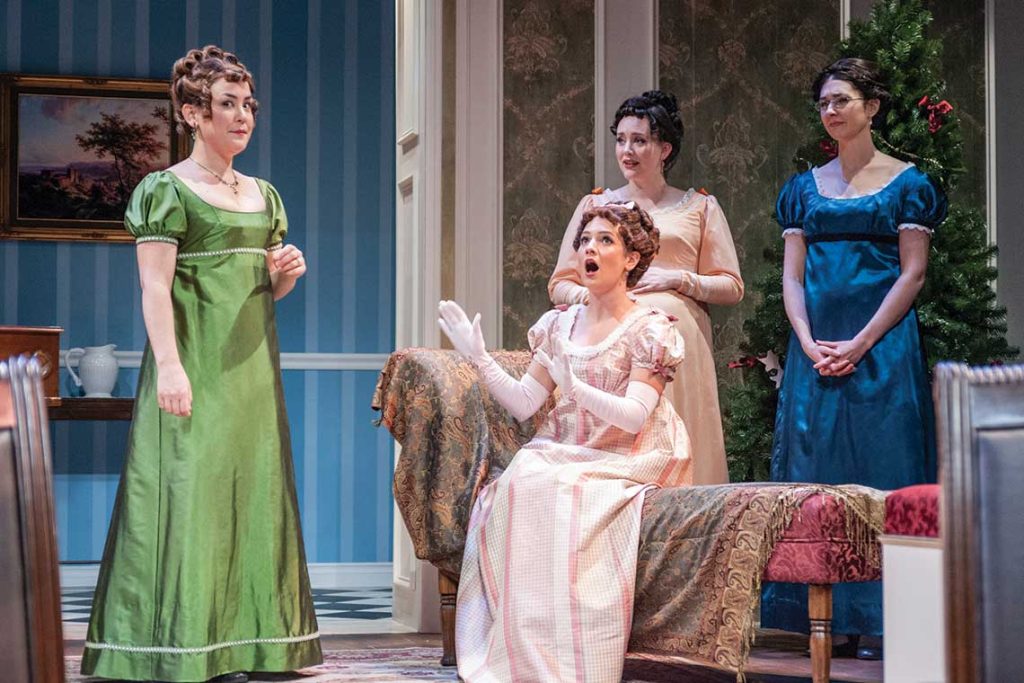
Four actors stand on stage in regency era clothing in a drawing room talking. Stage image of Christmas at Pemberley at Taproot Theatre.
Cast of “Miss Bennett: Christmas at Pemberley. PHOTO BY ERIK STUHAUG

Whether it is childhood discovery, shared family experiences, or reconnecting to aspects of faith and hope, certainly the holiday season seems to offer what audiences are looking for, and producers and performers in the Seattle area seem to be doing something right.

“There are so many debuts in different roles during the run of The Nutcracker,” said PNB’s Boal, “and the wings are packed with peers who are pulling for their friends as they dance the Soldier, Candy Cane, or Sugar Plum for the first time. Students often dance the company roles, unseen offstage. Honestly, the dancers love Balanchine’s choreography and see each performance as a fresh inspiration. Audiences too feel this sense of excitement and discovery.”

“We understand there are traditions baked into the way we stage A Christmas Carol that are very important to people,” said ACT’s Langs. “There is a beautiful story I was told about a family who lost a family member during the Christmas season. One of their fondest memories was watching their loved one experience a very specific moment of the show when the Ghost of Christmas Present sprinkles the Christmas spirit into the audience via glitter from their golden cup. It was related to me that the joy of this moment was one of the fondest and last memories of being together as a family they shared, and that this family now comes each year to A Christmas Carol to commemorate the loved one who is no longer with them. Whenever I approach that moment in the rehearsal room, I think of them. I often tell this story to the cast. It brings home the power of tradition. There are dozens of different ways to perfume that moment that allows for creativity and breath, but it’s moments like these that make it clear that we are a part of a bigger story that has connected the community for 47 years.”

Where company’s and producers are committed to nurturing the art and performances they shape and re-gift each holiday season, it seems that the “bigger story” will be bringing audiences back for years to come.


A Christmas Carol will play at ACT Theatre November 25–December 24, 2022. The Nutcracker will play at Pacific Northwest Ballet November 25–December 27, 2022. Olympic Ballet Theatre’s The Nutcracker will be presented December 9–20, 2022. Taproot Theatre will show The Wickhams: Christmas at Pemberley November 23–December 30, 2022. Seattle Symphony will present Holiday Pops December 9–11, 2022 and “Handel’s Messiah” December 16–18, 2022.


David Drury is a Seattle-based writer, journalist, and Best American fiction author whose creative work can be found at daviddruryauthor.com.